
Mung Beans Market Shows Promising Potential in Functional Foods
The Mung Beans Market is witnessing steady growth driven by increasing consumer preference for nutritious, protein-rich, and plant-based food products.

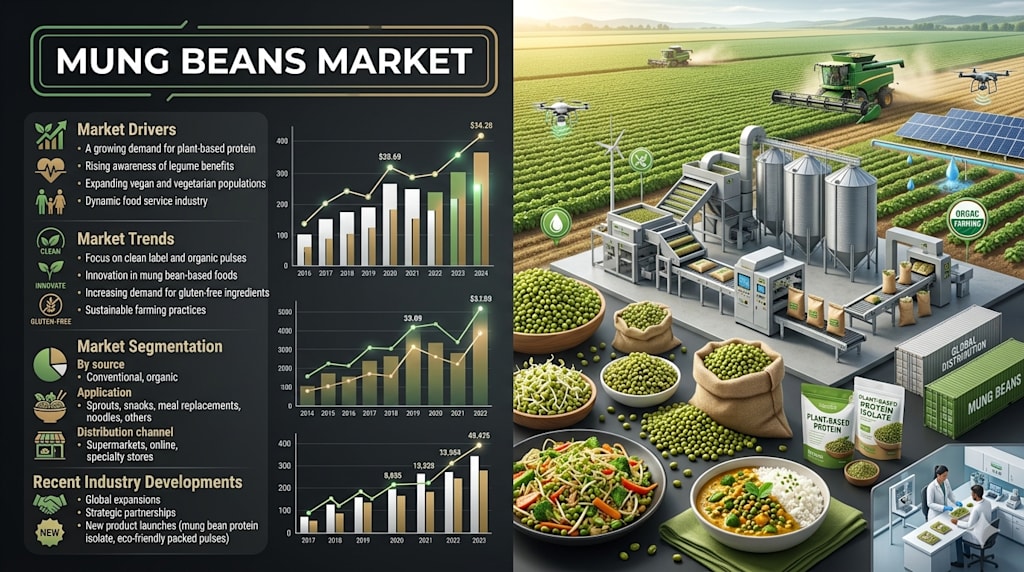
According to IMARC Group's latest research, The global mung beans market size reached USD 4,616.5 Million in 2025. Looking forward, IMARC Group expects the market to reach USD 5,897.7 Million by 2034, exhibiting a growth rate (CAGR) of 2.68% during 2026-2034.
How AI is Reshaping the Future of Mung Beans Market
- Crop Yield Optimization and Precision Agriculture: AI-powered farm management systems analyze soil conditions, weather patterns, and crop health data to maximize mung bean yields. Farmers using machine learning models report improved productivity by up to 25 percent while reducing water and fertilizer usage, directly lowering production costs.
- Supply Chain Forecasting and Demand Planning: Advanced AI algorithms predict mung bean demand across regional markets by analyzing consumer behavior, seasonal trends, and pricing patterns. Companies utilizing these systems achieve inventory accuracy improvements of 30 percent, reducing waste and stockouts simultaneously.
- Quality Assessment and Sorting Automation: Machine learning vision systems automate mung bean grading and sorting with greater consistency than manual methods. Automated sorting detects defects, size variations, and discoloration at processing speeds 10 times faster than traditional approaches.

Mung Beans Industry Overview
India dominates global mung bean production, accounting for approximately 60 percent of worldwide output, followed by China and Myanmar. The beans have been cultivated in South Asia for thousands of years due to favorable climatic conditions. Rich in proteins, fibers, vitamins, and minerals, mung beans serve diverse culinary and nutritional applications across traditional cuisines and modern health-conscious diets worldwide.
Mung Beans Market Trends & Drivers
Growing Plant-Based Protein Movement and Veganism Expansion: The global shift toward plant-based diets drives robust mung bean demand as consumers seek sustainable, nutrient-dense protein alternatives. Approximately 36 percent of American consumers prefer plant-derived proteins, with 28 percent incorporating legumes into regular meal preparation. Food manufacturers increasingly adopt mung bean ingredients in vegan snacks, protein powders, and gluten-free formulations, reflecting consumer preference for clean label, nutritious products aligned with health and environmental values.
E-Commerce Proliferation and Digital Distribution Channels: Online retail platforms reshape mung bean distribution, offering convenience, competitive pricing, and flexible payment options that traditional brick-and-mortar channels cannot match. Digital commerce expansion enables processors and retailers to reach secondary cities and rural markets previously underserved by conventional supply chains. Consumers increasingly purchase mung beans online due to consistent quality assurance, home delivery convenience, and access to organic and specialty variants unavailable in local stores.
Organic Certification and Health Consciousness Campaigns: Rising regulatory campaigns highlighting negative impacts of inorganically-produced foods catalyze organic mung bean demand, creating premium market opportunities. Health-conscious consumers recognize mung beans' capacity to prevent obesity, promote digestion, reduce inflammation, and lower blood pressure. Government and health authority initiatives promoting legume consumption, coupled with increasing recognition of mung beans' antioxidant and phytoestrogen content, sustain consistent demand across demographic segments.
Mung Beans Market Segmentation
By Region
India: Dominant global producer and consumer
China: Major production and consumption hub
Myanmar: Significant production contributor
Others: North America, Europe, Latin America, Middle East and Africa
By Product Form
Whole Dried Mung Beans
Mung Bean Sprouts
Mung Bean Powder
Mung Bean Flour
Ready-to-Eat Mung Bean Products
Mung Bean Supplements and Dietary Products
By Application
Soups and Traditional Dishes
Salads and Fresh Preparations
Stir-Fries and Cooked Meals
Fried Snacks
Dietary Supplements
Ready-to-Eat Food Products
Protein Powders and Functional Foods
Cosmetic and Personal Care Products
Leading Companies Operating in the Global Mung Beans Industry
AGT Food and Ingredients Inc.
Australian Mungbean Company
Cono Group
ETC GROUP
Olam Agri Holdings Pte Ltd. (Olam Group Limited)
Royal Nut Company
Archer Daniels Midland Company (ADM)
Viterra Inc.
Cargill Inc.
Bunge Limited
Recent News and Developments in Mung Beans Market
- March 2024: The International Mung Bean Congress was held in Bangkok, Thailand, bringing together industry stakeholders, agricultural experts, and researchers to discuss global mung bean production trends, cultivation best practices, market opportunities, and technological innovations. The congress facilitated knowledge exchange on sustainable farming methods and emerging market demand drivers across Asia and international markets.
- December 2025: Mung beans prices in the USA reached 5,098 USD per metric ton, declining amid slower procurement from bulk importers and softened demand from ethnic food processors. Sufficient carryover inventories and stable inbound shipments reduced purchasing urgency among buyers, reflecting balanced supply-demand dynamics in the North American market.
- March 2026: Mung beans prices in Japan reached 1,700 USD per metric ton, slightly declining due to steady supply and moderate demand from food processing sectors. Import dependence ensured consistent market availability, while stable consumption patterns and sufficient inventory levels maintained market equilibrium without significant price volatility pressures.
- 2025-2026: Trade tariff policies introduced significant impact on mung bean market dynamics, with steep tariffs affecting agricultural imports and processed foods. Tariff-related pressures increased input costs for farmers and food processors, triggering retaliatory measures from major trading partners and creating uncertainty in global supply chains and pricing structures.
- Ongoing 2026: Mung bean powder market experiences fluctuating growth influenced by tariff changes and geopolitical uncertainties. Despite supply chain challenges, market growth continues driven by Gen Z consumer preference for better-for-you products, digitalization enhancing operational resilience, and economic improvements supporting legume ingredient adoption across food manufacturing segments.
Note: If you require specific details, data, or insights not currently included in the scope of this report, we are happy to accommodate your request. As part of our customization service, we will gather and provide the additional information you need, tailored to your specific requirements. Please let us know your exact needs, and we will ensure the report is updated accordingly to meet your expectations.
About the Creator
Michael Richard
Michael Richard is a Market Research Expert specializing in market intelligence, competitive analysis, and data-driven insights. He helps organizations understand trends and emerging opportunities through in-depth research.
Enjoyed the story? Support the Creator.
Subscribe for free to receive all their stories in your feed.
Comments
There are no comments for this story
Be the first to respond and start the conversation.