
Mung Beans Market Gains Momentum Through Sustainable Demand Surge
The Catering Services Market is experiencing strong growth driven by increasing demand for professional food service solutions across corporate events, weddings, hospitality, healthcare, and educational institutions.

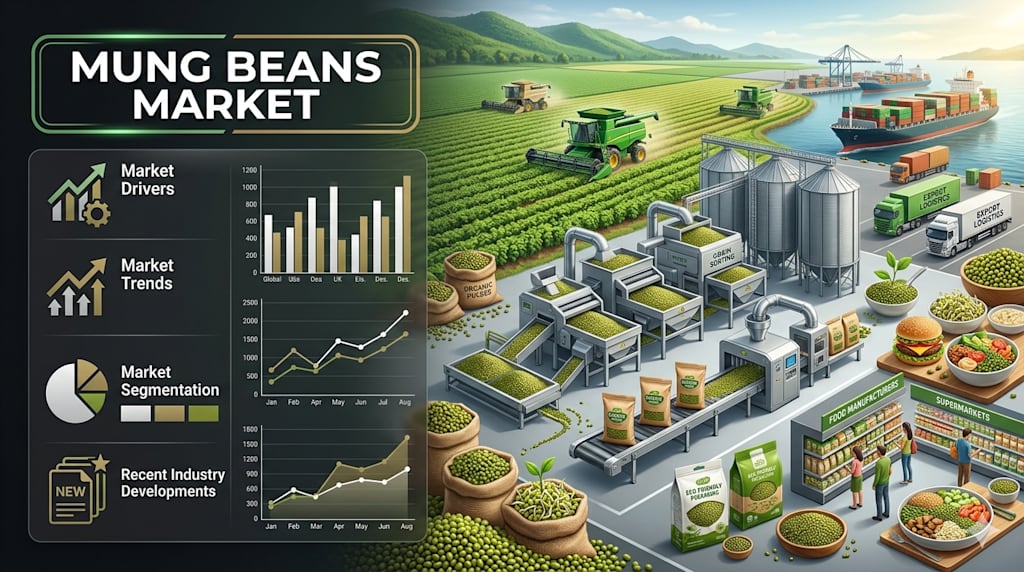
According to IMARC Group's latest research, The global mung beans market size reached USD 4,616.5 Million in 2025. Looking forward, IMARC Group expects the market to reach USD 5,897.7 Million by 2034, exhibiting a growth rate (CAGR) of 2.68% during 2026-2034.
How AI is Reshaping the Future of Mung Beans Market
- Crop Yield Prediction and Agricultural Optimization: AI algorithms analyze soil composition, weather patterns, and historical crop data to predict optimal planting times and harvest schedules. Farmers employing machine learning models report yield improvements of 15-20 percent, maximizing productivity while reducing resource consumption and water usage.
- Supply Chain Visibility and Demand Forecasting: AI-powered systems track mung bean inventories across warehouses, processors, and distributors in real-time. Predictive demand modeling reduces stockouts by 25 percent while minimizing excess inventory, ensuring consistent availability for food processors and retail channels throughout distribution networks.
- Quality Sorting and Processing Optimization: Machine learning-enabled computer vision systems grade mung beans by size, color, and defect characteristics during processing. Automated sorting improves quality consistency while increasing throughput by 30 percent, delivering premium-grade beans for food manufacturers and direct consumers.
Mung Beans Industry Overview
India dominates global mung bean production and consumption, accounting for approximately 60 percent of worldwide output due to ancient cultivation traditions and favorable climatic conditions. Myanmar and China rank as major secondary producers, while cultivation spans across South Asia, Southeast Asia, and increasingly North America and Europe. The crop's versatility, high nutritional density, and suitability for traditional and contemporary cuisines continue establishing mung beans as a staple legume across diverse culinary cultures and dietary preferences globally.
Mung Beans Market Trends & Drivers
Health Consciousness and Plant-Based Protein Demand: Growing consumer awareness of mung beans' nutritional benefits as excellent protein, fiber, vitamin, mineral, and antioxidant sources is driving significant market expansion. Health-conscious consumers increasingly incorporate mung beans into daily diets to prevent obesity, promote digestion, reduce inflammation, and lower blood pressure. The rising vegan and vegetarian populations actively seek plant-based protein alternatives, with 42 percent of consumers now preferring plant protein diets, creating sustained demand for mung beans in breakfast products, snacks, and functional foods.
E-commerce Expansion and Digital Distribution Channels: Online retail platforms have transformed mung bean purchasing behavior, offering convenience, competitive pricing, and flexible payment options that traditional brick-and-mortar stores cannot match. Market participants have observed accelerated adoption of delivery platforms, particularly post-pandemic consumer shifts toward digital shopping. E-commerce channels now capture growing market share as younger demographics embrace online food purchasing, while geographic reach expands into previously underserved regions, democratizing access to quality mung beans beyond urban centers.
Organic and Sustainable Agriculture Movement: Rising campaigns highlighting negative impacts of conventional farming have catalyzed demand for organic mung bean variants. Food processors and health-conscious consumers increasingly prefer organically grown products, creating premium market segments. Farmers adopt precision farming technologies, sustainable crop rotation practices, and reduced chemical inputs to capture emerging organic market opportunities. Government initiatives promoting pulse cultivation and sustainable agricultural practices further support expansion of organic mung bean production across major producing regions.
Mung Beans Market Segmentation
By Type
Whole Beans (largest segment with traditional consumption dominance)
Bean Sprouts (rapid growth due to nutritional benefits and ready-to-eat convenience)
Mung Bean Flour (expanding in plant-based food applications)
Mung Bean Paste (utilized in traditional and processed food products)
Other Products (protein concentrates, starches, and specialty items)
By Application
Food Processing (largest application covering sprouts, flour, snacks, noodles)
Dietary Supplements (growing segment with nutraceutical formulations)
Animal Feed (sustainable crop rotation and livestock nutrition)
Ready-to-Eat Products (processed foods targeting health-conscious consumers)
Direct Consumption (whole beans for household cooking)
By Region
Asia Pacific (58% market share): India, China, Myanmar, Vietnam, Thailand, Indonesia
North America (16% share): Growing plant-based food adoption
Europe (14% share): Organic and specialty product demand
Middle East & Africa (12% share): Emerging pulse trade opportunities
India currently dominates with approximately 60 percent of global production, followed by Myanmar and China as secondary producers. Myanmar accounts for approximately 30 percent of global output, while China contributes nearly 16 percent and Indonesia approximately 5 percent of worldwide production.
Leading Companies Operating in the Global Mung Beans Market
- AGT Food and Ingredients Inc.
- Australian Mungbean Company
- Cono Group
- ETC GROUP
- Olam Agri Holdings Pte Ltd. (Olam Group Limited)
- Royal Nut Company
- Yesraj Agro Exports Pvt. Ltd.
- Gaurav International Limited
- Arkar Oo Co., Ltd.
- Geo Agrotech
Recent News and Developments in Mung Beans Market
- April 2024: An American organic food manufacturer launched a new line of mung bean-based snacks targeting plant-based protein enthusiasts and health-conscious consumers seeking natural protein alternatives with clean ingredient labels.
- April 2024: A multinational food corporation launched plant-based beverages derived from mung beans in the Asia-Pacific market, addressing growing demand from vegan, vegetarian, and lactose-intolerant consumer segments.
- November 2023: Asia-Pacific region adopted precision farming techniques to increase mung bean harvests while simultaneously reducing production costs, demonstrating technology integration in traditional agriculture.
- October 2023: An American health food firm added mung bean protein powders to its product line, responding to accelerating demand for substitute protein sources among fitness and wellness-focused consumers.
- January 2024: Chinese mung bean exports increased significantly to neighboring Asian nations, reflecting robust regional demand for mung bean-based processed food products and ingredient applications.
- December 2024: Cargill expanded partnership with ENOUGH to support production of over 1 million tons of mycoprotein through fermentation technology, advancing sustainable protein supply innovation.
Note: If you require specific details, data, or insights not currently included in the scope of this report, we are happy to accommodate your request. As part of our customization service, we will gather and provide the additional information you need, tailored to your specific requirements. Please let us know your exact needs, and we will ensure the report is updated accordingly to meet your expectations.
About the Creator
Michael Richard
Michael Richard is a Market Research Expert specializing in market intelligence, competitive analysis, and data-driven insights. He helps organizations understand trends and emerging opportunities through in-depth research.
Enjoyed the story? Support the Creator.
Subscribe for free to receive all their stories in your feed.
Comments
There are no comments for this story
Be the first to respond and start the conversation.