
More Than Half of Every Electric Car Sold Right Now Is an SUV — Here Is Why That Changes Everything
From USD 622 billion to USD 11.4 trillion — the electric SUV is not the future of motoring, it is the present

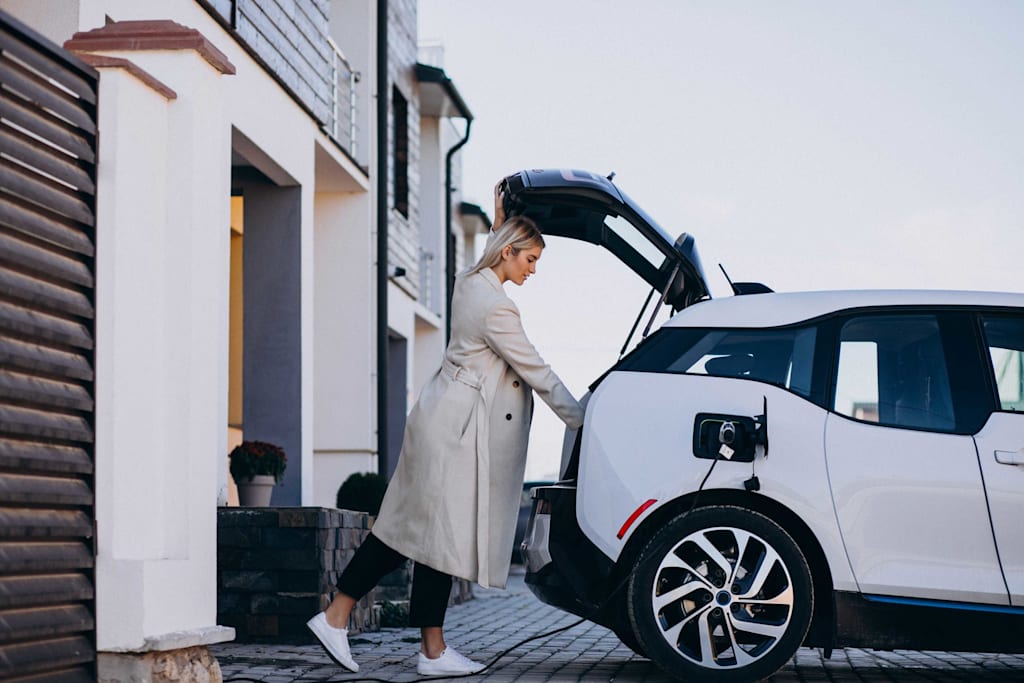
Walk into any car showroom in Europe right now and something has quietly changed. The electric vehicles on the floor are not small, sensible hatchbacks built for eco-conscious minimalists. They are SUVs. Big, comfortable, practical SUVs — with touchscreens, panoramic roofs, and enough boot space for a family holiday. The image of the electric car as a compromise vehicle for people willing to sacrifice space and comfort for their principles has not just faded. It has been completely replaced.
In 2023, SUVs crossed 55% of all new electric car sales globally. More than half of every EV sold on the planet was a sport utility vehicle. That single statistic reshapes the entire conversation about what the electric transition actually looks like in practice.
The Scale of What Is Happening
The global electric SUV market was valued at USD 622.42 billion in 2025 and is projected to reach USD 11,445.39 billion by 2035 — a compound annual growth rate of 33.8%. That growth rate is not a projection built on optimism. It is built on factories already under construction, models already in showrooms, and regulatory deadlines that every major automaker is now engineering toward.
To put the trajectory in human terms — this market is expected to grow by nearly eighteen times in a single decade. Industries that move that fast do not slow down because of temporary headwinds. They have structural momentum behind them that individual quarters cannot reverse.
Why Europe Leads — and Why That Surprises People
Most people assume China leads everything in the EV world. For overall volume that is broadly true. But in the electric SUV market specifically, Europe holds the dominant position with a 48.2% market share valued at USD 273.8 billion in 2025.
The reason is regulation, plain and simple. The EU's CO2 fleet emissions targets effectively require automakers to sell a rising percentage of zero-emission vehicles or face serious financial penalties. When the rules make selling petrol cars expensive, manufacturers build electric alternatives — and buyers, given attractive options at competitive prices, choose them.
What is interesting is that European buyers did not need much convincing once the products improved. The Volkswagen ID.4, BMW iX, Volvo EX60 — these are not vehicles people buy reluctantly because they feel guilty about the environment. They buy them because they are genuinely good cars that happen to be electric. That distinction matters enormously for understanding where adoption goes from here.
Asia Pacific grows fast behind Europe, driven by China's domestic brands pushing affordable electric SUVs into a market hungry for larger family vehicles. BYD's Tang and Yuan series have made electric SUVs accessible to middle-class urban buyers at price points that European or American rivals cannot match. When price stops being the barrier, volume follows quickly.
Compact Rules — But Watch the Mid-Size Segment
Within the electric SUV category, compact models dominate with a 55.2% share. The logic is straightforward — they cost less, fit more easily into city life, and deliver enough range for the vast majority of daily driving. Most compact electric SUVs offer between 250 and 350 miles per charge, which is more than enough for commuting, school runs, and weekend trips without carefully planning every charging stop.
Mid-size electric SUVs are the segment to watch for the next growth wave. As battery costs fall and ranges extend, the price premium over compact models shrinks, and buyers who want more cabin space start finding the numbers work in their favor. Models in this tier typically support 300 to 450 miles of real-world range — enough to address even the most persistent range anxiety.
Full-size electric SUVs sit at the premium end, where Tesla, Rivian, and Mercedes-Benz compete on performance, technology, and genuine towing capability. These are the vehicles proving that going electric does not mean giving up capability — in many cases it means gaining it.
Battery Electric vs Plug-In Hybrid — the Balance Is Shifting
Pure battery electric vehicles hold a 70.2% share of the electric SUV propulsion market. For most urban and suburban buyers, a fully electric SUV now makes financial sense over a comparable petrol model when total five-year ownership costs are calculated honestly — fuel savings, maintenance savings, and tax incentives combined.
Plug-in hybrids retain a meaningful 29.8% share because they solve a genuine problem for a genuine group of buyers. Someone without home charging, or someone who regularly drives long distances in areas where fast chargers are still sparse, is making a rational decision choosing a plug-in hybrid SUV. It offers electric-only range for daily commuting while a petrol engine eliminates range anxiety on longer journeys.
That share will likely decline as infrastructure expands and battery ranges grow. But dismissing plug-in hybrids as a halfway measure misses the point — they are bringing buyers into electrification who would not otherwise be there yet, and that is genuinely valuable for the market's overall momentum.
The Charging Question Is Closer to Answered Than You Think
The most striking technology development in the electric SUV space recently came from Zeekr, whose updated 7X SUV launched in late 2025 with 900-volt architecture capable of charging from 10% to 80% in approximately ten minutes. Ten minutes. That is a number that changes the conversation about charging time entirely.
High-power chargers rated at 150 to 350 kilowatts are now being deployed along major highway corridors across Europe, North America, and China. The experience of charging an electric SUV on a long journey in 2026 is meaningfully different from what it was in 2022 — and it will be different again in 2028.
For daily drivers with home charging, the question barely arises. You plug in overnight. You wake up to a full charge. The petrol station becomes somewhere you occasionally buy coffee, not something you build your week around.
Who Is Winning the Market
Tesla's Model Y has become one of the best-selling vehicles on the planet — not best-selling electric vehicles, best-selling vehicles full stop. That distinction matters. It means the electric SUV has crossed from an alternative purchase into a mainstream one.
BYD covers the volume end with competitive pricing and vertical integration that lets it absorb cost pressure better than most. Volkswagen attacks the mainstream with the ID.4 and ID.6. Hyundai and Kia have earned genuine critical acclaim for their Ioniq 5 and EV6 platforms. Ford is betting on American brand loyalty with the Mustang Mach-E.
For a detailed breakdown of where the market is heading through 2035 — including segment forecasts, regional analysis, and competitive positioning — the full research is available at the Electric SUV Market report from Evolvance Market Research.
The electric SUV has already won the consumer preference battle. The remaining question is just how fast the rest of the market catches up with what buyers have already decided.
About the Creator
Suge kun
Research Analyst passionate about data & market insights. I turn complex information into clear, actionable strategies. Detail-driven & results-focused — helping businesses make smarter decisions. — Suge Kun
Enjoyed the story? Support the Creator.
Subscribe for free to receive all their stories in your feed.
Comments
There are no comments for this story
Be the first to respond and start the conversation.