
Mobile Phone Insurance Market: Device Protection Trends, Digital Claims & Growth Outlook
The mobile phone insurance market is growing due to rising smartphone adoption and increasing device repair and replacement costs worldwide.

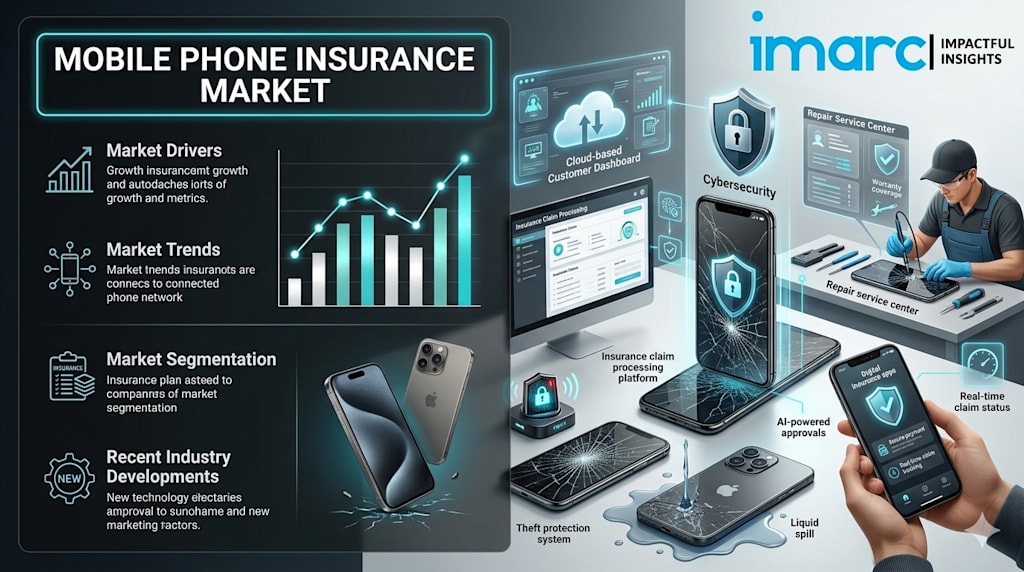
According to IMARC Group's latest research publication, global mobile phone insurance market size reached USD 43.7 Billion in 2025. Looking forward, IMARC Group estimates the market to reach USD 87.0 Billion by 2034, exhibiting a growth rate (CAGR) of 8.00% during 2026-2034.
How AI is Reshaping the Future of Mobile Phone Insurance Market
- AI-Powered Fraud Detection and Prevention: Machine learning models analyze claim patterns across millions of transactions, flagging suspicious activities in real time.
- Automated Claims Processing and Damage Assessment: AI-driven platforms assess photo damage submissions within minutes using computer vision technology, compressing settlement timelines from days to hours.
- Predictive Risk Analytics and Personalized Pricing: Machine learning algorithms analyze customer device usage patterns, theft risks, and demographic factors to forecast claim likelihood accurately.
Mobile Phone Insurance Industry Overview
The mobile phone insurance market is experiencing rapid growth as smartphone penetration deepens globally and device costs escalate. Premium flagship models now command prices exceeding $1,200, making insurance protection an essential financial safeguard for consumers. North America dominates with 38.8% market share, driven by high disposable incomes and advanced digital infrastructure.
Mobile Phone Insurance Market Trends & Drivers
Smartphone prices have reached unprecedented levels, with flagship devices frequently exceeding $1,000, making repair and replacement costs prohibitive for average users. Modern phones feature fragile glass designs and larger screens, increasing vulnerability to accidental drops and impacts. Screen damage alone costs $200-400 to repair, while full device replacement often exceeds original purchase prices.
Device theft has become a persistent global problem with theft incidents surging significantly across major markets. In the UK, mobile phone thefts soared 153% in the year ending March 2024, with estimated 200 snatch thefts occurring daily in England and Wales, with London alone experiencing approximately 50 million pounds worth of stolen devices.
Subscription-based insurance plans are transforming market accessibility by replacing large upfront premiums with manageable monthly payments, dramatically broadening addressable customer bases. Online platforms now account for 49.8% of distribution channels, making policy comparison and purchase frictionless for consumers.
Leading Companies Operating in Global Mobile Phone Insurance Industry
- American International Group, Inc
- Allianz SE
- AmTrust International Limited
- Apple Inc.
- AT&T Inc.
- AXA Group
- Deutsche Telekom AG
- Liberty Mutual Insurance Group
- Pier Insurance Managed Services Ltd.
- Samsung Electronics Co. Ltd.
- SoftBank Group Corp.
- Sprint Corporation
- Telefónica Insurance S.A.
- Verizon Communications Inc.
- Vodafone Group Plc
- Xiaomi Corporation
- Orange S.A.
Mobile Phone Insurance Market Report Segmentation
By Phone Type
- New Phone (69.6% market share - largest segment)
- Refurbished
New phones dominate as customers prioritize protecting high-value devices with advanced features. Manufacturers and retailers bundle insurance at point of sale, ensuring seamless adoption.
By Coverage
- Physical Damage (58.6% market share - largest segment)
- Electronic Damage
- Virus Protection
- Data Protection
- Theft Protection
Physical damage coverage leads the market due to frequent screen cracks, water exposure, and hardware failures that result in costly repairs.
By Distribution Channel
- Mobile Operators
- Device OEMs
- Retailers
- Online (49.8% market share - largest segment)
- Others
Online dominates through convenience, transparent pricing, instant policy activation at checkout, and easy comparison of coverage options across providers.
By End-User
- Corporate
- Personal (74.7% market share - largest segment)
Personal users represent the dominant segment due to high smartphone dependency for daily communication, work, entertainment, and financial transactions.
Regional Analysis
- Europe
- North America (38.8% market share - largest region)
- Asia Pacific
- Middle East and Africa
- Latin America
North America leads due to high smartphone penetration, premium device ownership, strong partnerships between carriers and insurers, and established consumer awareness about device protection benefits.
Recent News and Developments in Mobile Phone Insurance Market
- February 2024: Verizon Business introduced Total Mobile Protection for Business (TMP for Business), a comprehensive plan covering loss, theft, accidental damage, and post-warranty malfunctions. The plan features same-day device repairs, battery replacements, and 24/7 technical support, demonstrating strong enterprise demand for robust mobile protection.
- May 2024: Econet Insurance launched Moovah Mobile Phone Insurance in Harare, providing coverage for accidental damage including cracked screens and impact damage. Customers register via USSD dialing and pay premiums through EcoCash USD Wallet, with approved claims eligible for repair or device replacement.
Note : If you require specific details, data, or insights not currently included in this report, we are pleased to accommodate your request. As part of our customization service, we will gather and provide additional information tailored to your specific requirements. Please let us know your exact needs, and we will ensure the report is updated accordingly to meet your expectations.
About the Creator
sujeet. imarcgroup
With 2 years of hands-on experience at IMARC Group, I have conducted in-depth market research and analysis across diverse industries including technology, healthcare, agriculture, and consumer goods.
Enjoyed the story? Support the Creator.
Subscribe for free to receive all their stories in your feed.
Comments
There are no comments for this story
Be the first to respond and start the conversation.