
Metal Forging Market: Supply Chain Evolution, Capacity Expansion & Market Growth
How electric vehicle manufacturing, lightweight component requirements, and supply chain advancements are boosting demand for forged metal parts worldwide

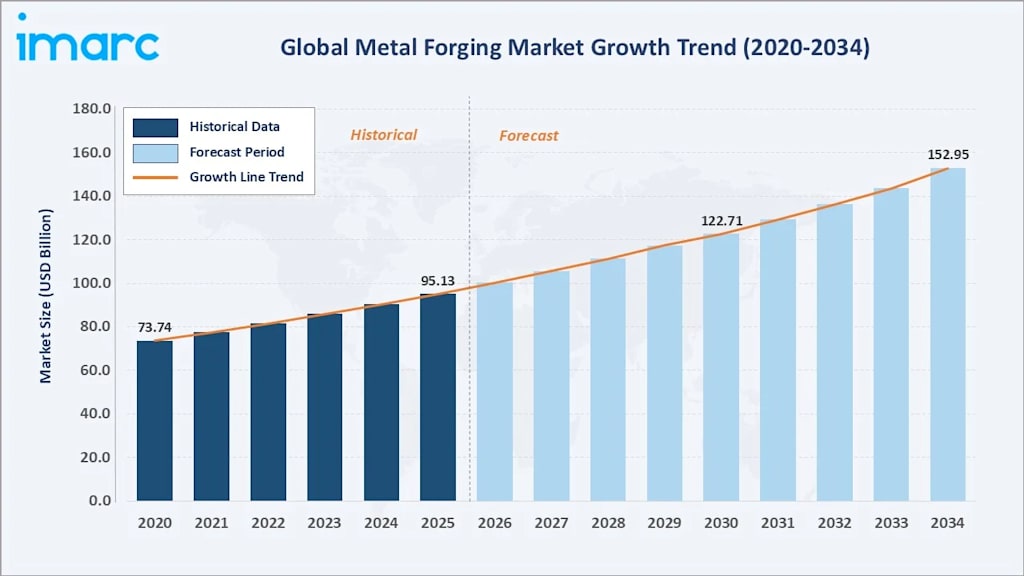
Rising demand from the automotive and aerospace sectors, rapid industrialization across Asia Pacific, and technological advancements in precision forging are driving metal forging demand, supported by growing investments in infrastructure, lightweighting trends, and advanced manufacturing processes. According to IMARC Group’s latest data, The global metal forging market size reached USD 95.13 Billion in 2025. Looking forward, IMARC Group estimates the market to reach USD 152.95 Billion by 2034, exhibiting a CAGR of 5.22% during 2026-2034.
Metal forging now represents a massive cornerstone of the global manufacturing sector, exceeding tens of billions of dollars and displaying resilient operational growth. Demand is fundamentally anchored by the structural necessity for high-strength, fatigue-resistant components across heavy industries, commercial transport, and high-tech defense applications. Market expansion is further accelerated by the ongoing transition toward electric vehicle architecture, regional supply chain localization, and the integration of smart manufacturing technologies into traditional pressing lines.
Metal Forging Market Growth Drivers:
- Surging Automotive Manufacturing and Electric Vehicle Integration
Automotive manufacturing serves as a foundational pillar for forged components, relying heavily on their structural integrity for safety-critical parts like crankshafts, steering knuckles, and axle beams. The accelerating transition toward electric vehicles alters component designs but sustains high volume requirements, particularly for high-strength drivetrain gears and robust rotor shafts. Global manufacturing hubs produce tens of millions of passenger and commercial vehicles annually, creating a continuous pipeline of demand for raw billets transformed via closed-die processes. Forgers actively optimize production to deliver near-net-shape components that minimize finishing times and reduce material waste.
- Aerospace Fleet Expansion and Defense Procurement
The global aerospace and defense sectors demand structural components capable of withstanding extreme thermal stress and mechanical fatigue, making high-performance metal forging indispensable. Commercial aviation networks require significant numbers of new airframes and jet engines to meet rising passenger traffic and replace aging fleets worldwide. Forged titanium, nickel superalloys, and specialized aluminum alloys form the backbone of critical landing gear assemblies, fuselage bulkheads, and turbine disks. Heightened geopolitical activities also trigger increased national defense budgets globally, accelerating procurement contracts for military aircraft, naval vessels, and armored vehicles utilizing high-grade forged parts.
- Rapid Industrialization and Infrastructure Development
Widespread infrastructure modernization, urban development, and expanding industrial networks create robust demand for heavy-duty forged hardware and mechanical equipment. Structural construction projects, deep-sea oil and gas extraction operations, and large-scale agricultural machinery require rugged components like valves, flanges, and heavy transmission shafts. Developing nations invest billions into domestic utility grids, transport networks, and pipeline installations, expanding the market footprint for heavy open-die and seamless rolled ring forgings. These industrial applications require high load-bearing capacities and corrosion resistance, properties achieved effectively through controlled thermal-mechanical forging processes rather than casting alternatives.
Metal Forging Market Trends:
- Advanced Automation and Smart Forging Integration
Tier-1 forging facilities actively implement robotic automation, servo-controlled hydraulic presses, and automated material handling systems to optimize efficiency and minimize human error in hazardous high-temperature environments. Smart forging operations integrate internet-of-things sensors directly into die sets and mechanical presses, gathering real-time data to track thermal gradients, tonnage signatures, and cycle consistency. This real-time data flow directly feeds predictive maintenance software, successfully reducing unplanned operational downtime by nearly a quarter in modern manufacturing plants. The automated feedback loop ensures high repeatability, lowers product rejection rates, and elevates safety standards across large-scale industrial press shops.
- Electric Vehicle Lightweighting and Aluminum Adoption
Automotive engineers face intense regulatory and competitive pressure to maximize electric vehicle range, driving an aggressive industry trend toward vehicle lightweighting. Traditional heavy iron and steel components are increasingly replaced by high-strength, lightweight forged aluminum and magnesium alternatives. Forged aluminum suspension arms, control components, and subframes deliver the required mechanical strength while stripping away substantial structural weight from heavy battery-laden vehicle platforms. Major tier-one component suppliers are securing significant long-term supply agreements focused exclusively on aluminum forging lines to feed dedicated electric vehicle assembly operations in North America and Europe.
- Adoption of Green Steel and Eco-Friendly Processes
Global environmental regulations and structural carbon tax frameworks force metal forgers to shift away from carbon-heavy manufacturing setups. Industrial operators increasingly utilize raw steel processed via electric arc furnaces powered by renewable energy sources and high volumes of recycled industrial scrap metal. This strategic operational pivot aligns directly with international supply chain decarbonization targets and shields localized manufacturers from strict cross-border carbon border adjustment mechanisms. Forging firms also implement highly efficient induction heating systems and advanced lubricants to reduce total factory emissions and trim energy bills during intensive heating cycles.
Recent News and Developments in Metal Forging Market
- October 2024: Bharat Forge Ltd. completed a definitive agreement to acquire AAMIMCPL, a strategic corporate move specifically engineered to bolster its global component manufacturing capabilities and integrate advanced engineering expertise for specialized automotive and aerospace parts.
- May 2024: Balu Forge Industries Ltd. successfully completed the acquisition of massive 72,000-tonne forging lines located in Karnataka, India, expanding its operational footprint to address rising domestic and international demand for precision-engineered powertrain hardware.
- February 2024: European steel manufacturer Ovako established a comprehensive supply chain partnership with Tibnor focused on distributing low-carbon footprint steel solutions, enabling metal forgers to meet strict science-based environmental targets.
Note: If you require specific details, data, or insights that are not currently included in the scope of this report, we are happy to accommodate your request. As part of our customization service, we will gather and provide the additional information you need, tailored to your specific requirements. Please let us know your exact needs, and we will ensure the report is updated accordingly to meet your expectations.
About the Creator
Andrew Sullivan
Hello, I’m Andrew Sullivan. I have over 9+ years of experience as a market research specialist.
Enjoyed the story? Support the Creator.
Subscribe for free to receive all their stories in your feed.
Comments
There are no comments for this story
Be the first to respond and start the conversation.