
Meat Market Outlook: Protein Demand Growth and Market Opportunities
The Meat Market is experiencing steady growth driven by rising global demand for protein-rich food products and expanding consumption across both developed and emerging economies.

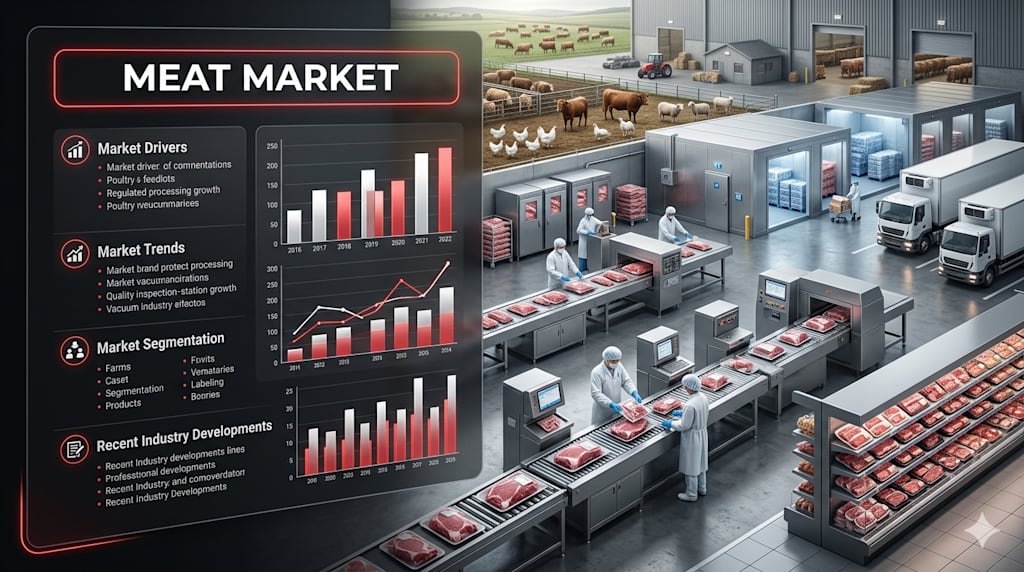
According to IMARC Group's latest research publication, The global meat market size was valued at USD 1.5 Trillion in 2025. Looking forward, IMARC Group estimates the market to reach USD 1.8 Trillion by 2034, exhibiting a CAGR of 1.95% from 2026-2034.
How AI is Reshaping the Future of the Meat Market
- Predictive Demand Forecasting and Supply Chain Optimization: AI-powered forecasting systems analyze real-time sales data, consumer behavior patterns, and seasonal demand cycles to optimize procurement and inventory across meat supply chains. Supermarkets and hypermarkets, which command approximately 60% of meat distribution globally, leverage data analytics to align stock with regional preferences and reduce spoilage.
- Automated Quality Control and Defect Detection: Machine learning algorithms integrated with computer vision enable high-speed, automated inspection of meat cuts during processing, identifying contamination, inconsistencies, and surface defects with precision beyond manual capability. This technology is particularly critical in large-scale facilities handling chicken, which holds a 35% share of the global meat product market.
- Cold Chain Intelligence and Spoilage Prevention: AI continuously monitors temperature-sensitive logistics data across refrigerated transport and storage networks, predicting equipment failures before they cause product losses. In Asia Pacific, where China alone imported 2.7 million tons of beef, 1.55 million tons of pork, and 1.3 million tons of poultry in a single year, cold chain integrity is mission-critical. AI-driven monitoring systems reduce spoilage incidents, maintain compliance with import health standards, and protect the value of high-volume cross-border meat shipments.
Meat Industry Overview
The global meat industry is undergoing structural transformation driven by population growth, urbanization, and rising protein consumption across developing economies. The global population trajectory toward 8.6 billion by 2030 and 9.8 billion by 2050 is placing sustained pressure on protein supply systems, with meat remaining a dietary staple across cultural and regional contexts. In Asia Pacific, economic expansion in China and India has driven a growing middle class that is rapidly shifting toward higher protein consumption, including poultry, beef, and pork, anchoring the region's dominant 57.8% global market share. Brazil's meat industry exemplifies the scale of production growth in Latin America, where the country slaughtered 15 million tonnes of chicken meat, exported 5.3 million tonnes internationally, and recorded per capita chicken consumption of 45.6 kilograms. Pork production reached 4.5 million tonnes and is projected to increase further.
Meat Market Trends and Drivers
Rising global protein demand, fueled by expanding urban populations and income growth in emerging markets, represents the primary driver of meat market expansion. The United Nations projects that 68% of the global population will reside in urban areas by 2050, up from 55% as of 2018, a shift that consistently elevates meat consumption as urban lifestyles embrace higher protein intake and greater dietary variety. Urbanization is directly accelerating demand for convenient, ready-to-cook, and pre-packaged meat products across supermarkets, hypermarkets, and online grocery platforms.
Health and wellness trends are simultaneously reshaping product preferences within the market. Consumers across North America and Europe are increasingly seeking lean cuts, grass-fed beef, organic poultry, and antibiotic-free products with transparent supply chain labeling. This is prompting manufacturers to diversify premium product lines and invest in certifications that communicate quality assurance. Coleman All Natural Meats, for example, launched a new line of ground pork sausage in five flavors, specifically targeting consumers seeking convenient and health-aligned meal options.
The rise of plant-based alternatives is creating a parallel demand dynamic. Beyond Meat launched its Beyond Sun Sausage line, certified by the American Heart Association, through Sprouts Farmers Market in July 2024, reflecting institutional retail validation of alternative protein products alongside conventional meat. Major producers including Tyson Foods and JBS are responding by developing hybrid product portfolios that capture both traditional and health-oriented consumer segments.
Leading Companies Operating in the Global Meat Market
- BRF Global
- Cargill, Incorporated
- Clemens Food Group
- Conagra Brands Inc.
- Hormel Foods Corporation
- JBS S.A.
- Minerva Foods SA
- NH Foods Ltd.
- OSI Group
- Sysco Corporation
- Tyson Foods, Inc.
- Vion Group
- WH Group Limited
Meat Market Report Segmentation
By Type:
- Raw
- Processed
Raw meat represents the dominant category, driven by consumer preference for fresh, unprocessed products perceived as healthier and more natural. Improved cold chain logistics and refrigeration technology sustain the freshness and safety of raw meat across extended distribution networks.
By Product:
- Chicken
- Beef
- Pork
- Mutton
- Others
Chicken leads the product segment with approximately 35% of global market share, supported by its affordability, nutritional profile, and versatility across cuisines. The expansion of quick-service restaurant networks globally continues to drive sustained chicken demand across foodservice and retail channels.
By Distribution Channel:
- Supermarkets and Hypermarkets
- Departmental Stores
- Specialty Stores
- Online Stores
- Others
Supermarkets and hypermarkets dominate distribution with approximately 60% of market share, benefiting from one-stop shopping convenience, private label product growth, and integration of digital payment and loyalty systems. Online stores are the fastest-growing channel as e-commerce platforms deliver expanded product variety and convenience to urban consumers.
Regional Insights:
- North America (United States, Canada)
- Asia Pacific (China, Japan, India, South Korea, Australia, Indonesia, Others)
- Europe (Germany, France, United Kingdom, Italy, Spain, Russia, Others)
- Latin America (Brazil, Mexico, Others)
- Middle East and Africa
Asia Pacific exhibits clear dominance with a 57.8% global market share, driven by China and India's rapid urbanization, rising middle-class incomes, and high per-capita meat consumption. North America sustains growth through premium product innovation and robust export-oriented production infrastructure.
Recent News and Developments in the Meat Market
- November 2024: Brazilian meat processor BRF concluded a binding agreement to acquire a processing food plant in China's Henan province for USD 43 million, with a further USD 36 million earmarked for expansion to double capacity to 60,000 metric tonnes per year. Operations under BRF management were targeted to commence in the first quarter of 2025.
- October 2024: Sysco GB acquired Scotland-based Campbell's Prime Meat, which employs 325 staff at its Linlithgow facility and supplies meat, fish, and deli products across the United Kingdom.
- October 2024: Minerva Foods finalized its acquisition of Brazilian assets from Marfrig for USD 1.53 billion, acquiring 13 slaughter and deboning facilities along with one distribution center. The deal expanded Minerva's slaughter capacity to 22,336 heads per day across 21 Brazilian plants, establishing it as South America's second-largest beef producer.
- September 2024: Clemens Food Group, the fifth-largest pork producer in the United States, acquired Kunzler and Co. Inc. based in Lancaster, Pennsylvania, adding three processing facilities to enhance production capacity in alignment with its regional agricultural support strategy.
- August 2024: Cargill acquired two case-ready meat plants in North Kingstown, Rhode Island, and Camp Hill, Pennsylvania, from Infinity Meat Solutions. The plants produce beef, pork, and value-added products for U.S. grocery retailers, strengthening Cargill's supply partnership with Ahold Delhaize USA.
Note: If you require specific details, data, or insights that are not currently included in the scope of this report, we are happy to accommodate your request. As part of our customization service, we will gather and provide the additional information you need, tailored to your specific requirements. Please let us know your exact needs, and we will ensure the report is updated accordingly to meet your expectations.
About the Creator
Olivia Smith
Olivia Smits is a Research and Marketing Analyst who specializes in market research, trend analysis, and consumer insights. I help businesses make smarter marketing and strategy decisions by turning data into clear, actionable insights.
Enjoyed the story? Support the Creator.
Subscribe for free to receive all their stories in your feed.
Comments
There are no comments for this story
Be the first to respond and start the conversation.