
Lobster Market Outlook: Premium Seafood Consumption and Growth Opportunities
The Lobster Market is experiencing steady growth driven by increasing demand for premium seafood products across restaurants, hospitality, and retail sectors.

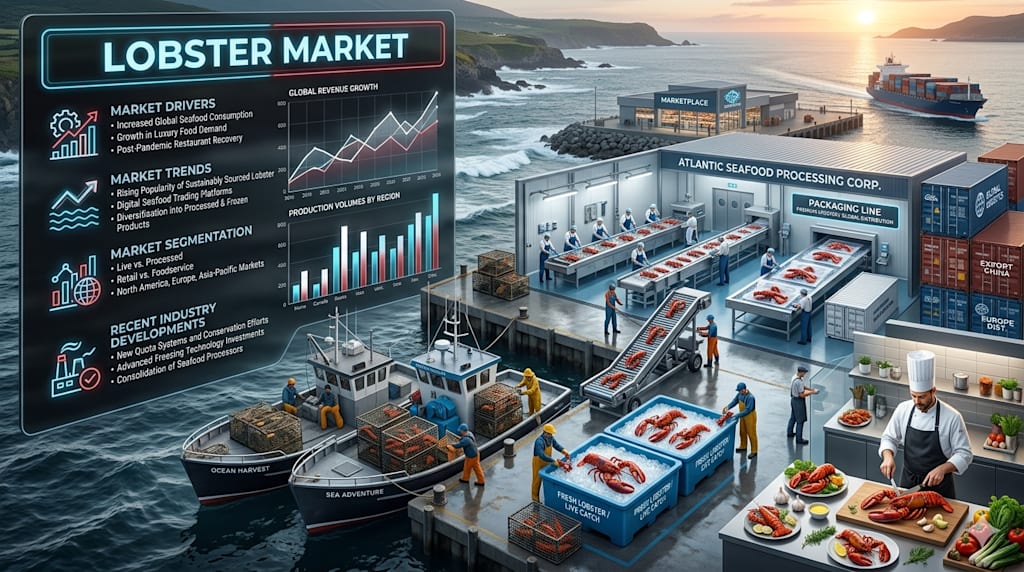
According to IMARC Group's latest research publication, The global lobster market size reached USD 9.0 Billion in 2025 and is projected to reach USD 17.5 Billion by 2034, exhibiting a CAGR of 7.7% during 2026-2034.
How AI is Reshaping the Future of Lobster Market
- Computer Vision for Lobster Growth Monitoring and Grading: AI-powered systems utilizing YOLO algorithms enable automated lobster data collection, gender identification, and precise size grading. These computer vision technologies track lobster development in real-time across farming operations, storing measurement data for forecasting models while enhancing stock management accuracy and operational efficiency.
- Predictive Analytics for Population Management: Machine learning platforms analyze extensive fisheries data to forecast lobster population trends, optimize catch quotas, and prevent overfishing. IoT-connected monitoring devices read real-time lobster data through pipelines, tracking development over specific periods while generating predictive models that maintain sustainable population levels and protect natural habitats.
- Cold Chain and Logistics Optimization: AI-driven temperature monitoring systems track lobster shipments throughout international supply chains, predicting equipment failures before they compromise product freshness. Intelligent sensors detect temperature anomalies during transport from coastal regions to global markets, ensuring optimal storage conditions while reducing spoilage rates and maintaining premium quality standards.

Lobster Industry Overview:
North America landed over 111 Million pounds of lobster with market value exceeding USD 625 Million. The region benefits from established fisheries in Maine and Atlantic Canada, advanced cold chain logistics, and robust domestic consumption. Growth in fresh and frozen seafood consumption per capita climbed from 63 percent in 1990 to almost 80 percent. Sustainable fishing practices including V-notching breeding females and self-imposed trap limits maintain healthy populations while certification programs enhance global market access.
Lobster Market Trends & Drivers
Sustainability initiatives and certifications are transforming lobster sourcing practices as environmental consciousness reshapes consumer purchasing decisions. Twelve different lobster fisheries globally hold Marine Stewardship Council certification as sustainable, with 164 MSC-labeled lobster products sold worldwide. Consumers demonstrate willingness to pay an average 9.7 percent premium for sustainably produced or sourced goods, directly influencing retail and restaurant procurement strategies. Organizations like the MSC certify fisheries meeting stringent environmental standards, ensuring harvesting practices minimize habitat degradation and maintain healthy stock populations. In 2020, 28 lobster fisheries in North America achieved MSC certification covering significant market portions, reflecting industry commitment to responsible sourcing. Advanced traceability technologies including trace element fingerprinting and digital tagging achieve 95 percent accuracy in verifying seafood origins, combating fraud while enhancing supply chain transparency.
Online retail and direct-to-consumer sales channels are revolutionizing lobster distribution by connecting coastal suppliers directly with consumers worldwide. U.S. Census Bureau statistics show online seafood sales surged 99 percent in 2020 compared to the previous year, accelerating adoption of e-commerce platforms for premium lobster purchases. Direct-to-consumer models enable suppliers to showcase product quality, freshness guarantees, and traceability information, fostering consumer trust and brand loyalty beyond traditional wholesale channels. Digital platforms provide convenient access to live, frozen, and pre-cooked lobster products delivered from Maine, Atlantic Canada, and other fishing regions directly to doorsteps globally, eliminating intermediaries. Real-time market insights through online channels facilitate targeted marketing strategies and personalized shopping experiences, with retailers offering subscription services and customized seafood selections. Mobile ordering capabilities and transparent pricing models democratize access to premium lobster previously limited to specialty seafood markets and upscale restaurants.
Premiumization and product diversification are expanding lobster market opportunities as consumers seek luxury seafood experiences and convenient meal solutions. European Union imports of live, fresh, or chilled lobsters demonstrate consistent growth reflecting increasing demand for high-quality seafood products. Rising disposable incomes in emerging markets drive consumption of whole-cooked lobsters, lobster tails, and gourmet dishes as symbols of quality and indulgence. China's lobster imports from Vietnam surged 39 percent demonstrating robust Asia-Pacific appetite for premium seafood across international trade channels. Seafood suppliers expand portfolios with value-added options including pre-cooked lobster meat, frozen tails, and ready-to-eat meals appealing to busy consumers seeking convenience without compromising taste or quality.
Leading Companies Operating in the Global Lobster Industry:
- Boston Lobster
- Clearwater Seafoods
- East Coast Seafood Group
- Geraldton Fishermen's Co-operative
- High Liner Foods Incorporated
- PESCANOVA ESPANA SL
- Supreme Lobster
- Tangier Lobster
- Thai Union Manufacturing Company Ltd.
Lobster Market Report Segmentation:
By Species:
- American Lobster
- Spiny Lobster
- Rock Lobster
- European Lobster
American lobster stands as the largest species, holding around 43.3% of the market. The species dominates due to its widespread availability along the North American Atlantic coast and reputation for superior taste and quality.
By Weight:
- 0.5 to 0.75 lbs
- 0.76 to 3.0 lbs
- Over 3 lbs
0.5 to 0.75 leads the market with around 42.4% of market share. This size range is preferred for its tenderness, flavor, and versatility in culinary preparations including lobster rolls, pasta dishes, and gourmet seafood entrees.
By Product Type:
- Whole Lobster
- Lobster Tail
- Lobster Meat
- Lobster Claw
Whole lobster leads the market with around 72.8% of market share due to its premium status and high demand in both domestic and international markets, with consumers preferring whole lobsters for freshness and culinary versatility.
By Distribution Channel:
- Food Service
- Retail
Food service leads the market with around 81.7% of market share, owing to high demand from fine dining restaurants, luxury hotels, and seafood-oriented establishments featuring lobster as high-end ingredient in gourmet dishes.
Regional Insights:
- North America (United States, Canada)
- Asia Pacific (China, Japan, India, South Korea, Australia, Indonesia, Others)
- Europe (Germany, France, United Kingdom, Italy, Spain, Russia, Others)
- Latin America (Brazil, Mexico, Others)
- Middle East and Africa
North America accounted for the largest market share of over 48%, due to robust domestic consumption and significant export volumes, with the United States landing over 111 Million pounds of lobster valued at exceeding USD 625 Million.
Recent News and Developments in Lobster Market
- January 2025: Australia launched its first onshore lobster farming facility at Toomulla Beach, Townsville. Developed with ARC research hubs and Ornatas, the high-tech hatchery nurtures 90,000 Tropical Rock Lobsters from hatchery to harvest, employing 30 staff and positioning Australia as a leader in sustainable onshore aquaculture innovation and premium seafood production.
- November 2024: Sea Grant's American Lobster Initiative awarded USD 5.4 Million to support 15 research projects and outreach efforts addressing lobster growth, distribution, ecosystem changes, and socio-economic impacts. Funded by NOAA Sea Grant, the projects aim to sustain the American lobster fishery amid environmental and economic challenges through scientific research and community engagement.
- September 2024: Red Lobster announced that RL Investor Holdings LLC acquired the restaurant chain after receiving court approval for its Chapter 11 restructuring plan. The acquisition, backed by Fortress Investment Group, TCW Private Credit, and Blue Torch, includes USD 60 Million in new funding to support the brand's revitalization and operational expansion.
- March 2024: Aquamar launched new shellfish products at Seafood Expo North America in Boston, including Aquamar Wild Red Shrimp in Lobster Sauce, featuring all-natural wild-caught red shrimp from Argentina. The brand also introduced baby clams, seafood medleys, shrimp skewers, and mussels, emphasizing sustainability, convenience, and premium seafood quality for diverse consumer preferences.
- 2024: Cousins Maine Lobster expanded operations by adding 10 new food trucks across markets including New York, South Florida, and Rhode Island, with plans to introduce 10 more by year's end, totaling 20 new units for the year. This expansion reflects the company's strategic growth and increasing popularity in the seafood industry across multiple regional markets.
Note: If you require specific details, data, or insights that are not currently included in the scope of this report, we are happy to accommodate your request. As part of our customization service, we will gather and provide the additional information you need, tailored to your specific requirements. Please let us know your exact needs, and we will ensure the report is updated accordingly to meet your expectations.
About the Creator
Michael Richard
Michael Richard is a Market Research Expert specializing in market intelligence, competitive analysis, and data-driven insights. He helps organizations understand trends and emerging opportunities through in-depth research.
Enjoyed the story? Support the Creator.
Subscribe for free to receive all their stories in your feed.
Comments
There are no comments for this story
Be the first to respond and start the conversation.