
LED Light Face Mask Market Growth Hits Surprising New Highs
From CES launches to clinical trials, here's why skincare's glowing gadgets are booming worldwide.
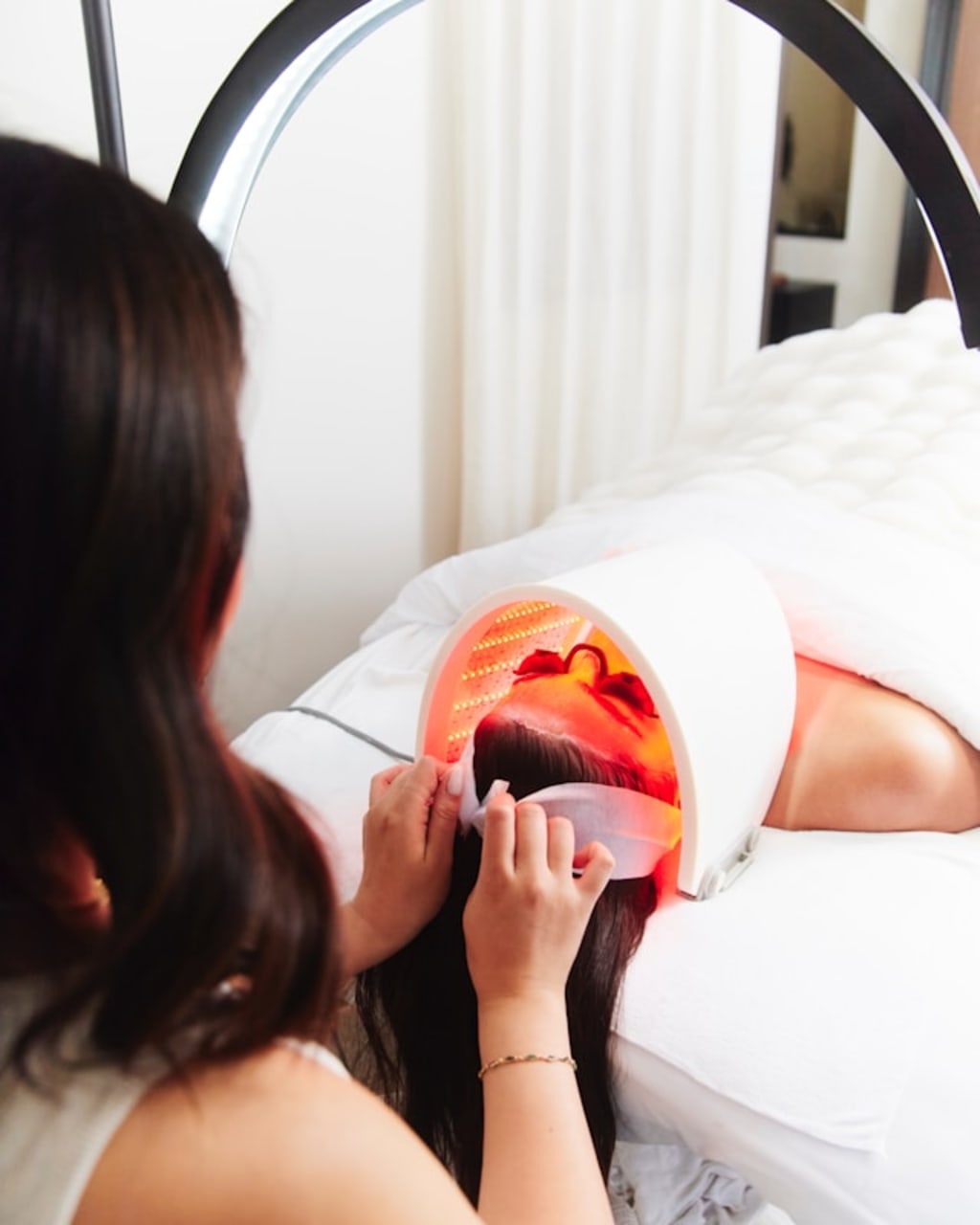
LED Light Face Masks Are Taking Over Bathroom Counters Worldwide
In January 2025, at CES in Las Vegas, a company called Nanoleaf — better known for its colorful smart lighting panels — unveiled an FDA-cleared LED light therapy face mask with seven treatment modes, priced under $150. That single product launch tells you almost everything about where skincare is headed. The LED light face mask market growth story isn't a niche trend anymore; it's becoming a mainstream consumer category, and the numbers behind it are starting to look less like a fad and more like a shift in how people think about their skin.
A breakdown of this is available in this LED light face mask industry overview, which lays out just how fast valuations have climbed over the past two years.
From Dermatology Offices to Bathroom Shelves
Ten years ago, if you wanted LED light therapy for acne or wrinkles, you booked an appointment and paid a clinic. Now you can buy a device online, strap it to your face while watching television, and get a version of that same treatment for a fraction of the cost. This behavioral shift has moved LED face masks from a niche clinical tool into a mainstream personal care category, opening new retail and distribution pathways that did not exist five years ago.
That shift shows up in the sales figures. Estimates vary depending on which research firm you ask — some peg the 2025 market value closer to $290 million, others put it near $488 million — but nearly every analyst agrees on the trajectory: double-digit annual growth through the early 2030s, with most projections landing in the 11% to 13% CAGR range. One forecast even sees the category climbing past $1.5 billion by 2035. Whatever the exact figure, the direction is unmistakable, and that's where most of the LED light face mask market share conversation tends to start.
Who's Actually Buying These Things
North America still dominates, and by a wide margin. North America leads the global market with a 36.70% share, valued at USD 179.0 Million, according to one widely cited industry estimate. The reasons aren't mysterious — American consumers have spent years getting comfortable with the idea of "skincare as self-care," helped along by dermatologist endorsements on social media and an e-commerce infrastructure that makes buying a $200 device as easy as ordering socks. Market.us
But Europe is closing the gap, and the reasons there are slightly different. Regulatory maturity plays a bigger role; European consumers tend to trust products more once they carry recognizable safety certifications, similar to the FDA clearance that's become a competitive flex for American brands. Europe follows closely, supported by professional skincare influence and regulatory maturity. Wochuan
The Science Is Catching Up to the Marketing
For years, LED masks sat in a strange limbo — popular with consumers, but viewed with some skepticism by dermatologists who weren't sure the at-home versions did much beyond make people feel like they were doing something. That's changing. According to a peer-reviewed study published in the Medicine journal in 2025, 89.3% of participants in the per-protocol set showed improvement in periorbital wrinkles at 12 weeks using a home-use LED and IRED face mask. Market.us
That's not a small number. And it matters for the business side too, because published clinical validation of this magnitude shifts buyer confidence from trial purchases to repeat investment in higher-end devices, directly supporting average selling price growth across the category. In other words, when people start believing the science, they stop buying the cheapest mask on Amazon and start saving up for the one with a dermatology study behind it. Market.us
Color matters too, and not in a cosmetic sense. By type, red and blue LED holds the dominant share at 58.9% in the LED face mask market, largely because those wavelengths address two of the most common complaints — aging and acne — in a single device. Manufacturers know this, which is why nearly every new launch leads with "dual-action" red-and-blue technology rather than niche wavelengths like near-infrared or amber, even though those are gaining traction among more advanced users. Market.us
What Comes Next
The next phase probably won't be about brighter lights or more LEDs crammed into a mask. It'll be about software — app-connected devices that track skin changes over time, adjust treatment intensity automatically, and nudge users toward consistency, which is the one thing that actually determines whether light therapy works. Expect more dermatologist-branded products, more clinical studies funded by the manufacturers themselves, and a slow but steady migration of these devices from "beauty gadget" to something closer to a recognized at-home medical tool. Whether regulators in markets outside the US and Europe keep pace with that shift is the real open question, and it's one that will shape how quickly this category spreads beyond its current strongholds.
About the Creator
Mark K. Belton
I’m Mark K. Belton, 26 years old, currently working as a Digital Marketing Intern. I have a strong interest in digital marketing and have been developing my skills in SEO, social media marketing, content creation, and online campaign
Enjoyed the story? Support the Creator.
Subscribe for free to receive all their stories in your feed.
Comments
There are no comments for this story
Be the first to respond and start the conversation.