
Keratin Market Gains Momentum Through Advanced Cosmetic Formulations
The keratin market is growing due to rising demand for hair care, skincare, and personal care products worldwide.

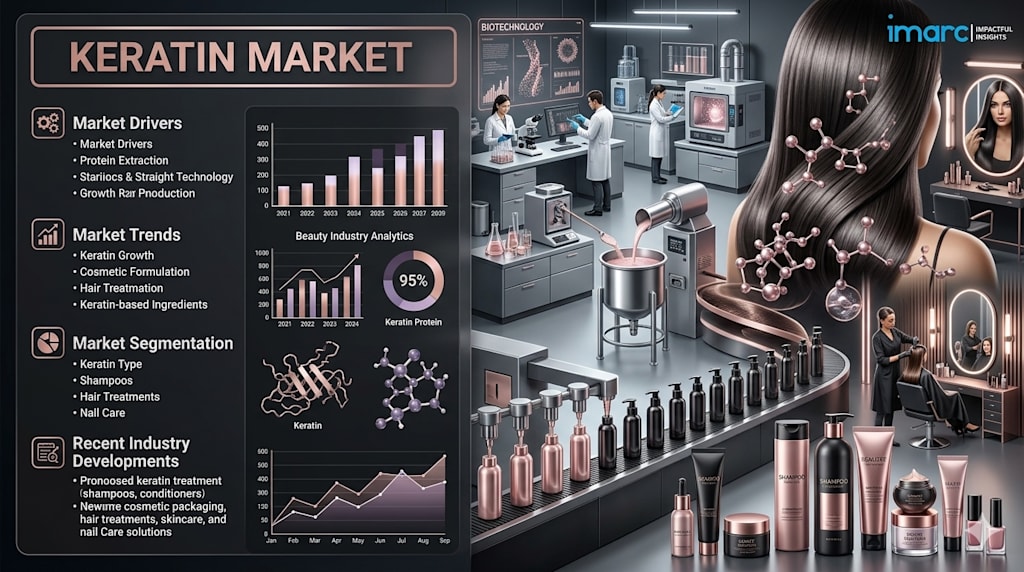
According to IMARC Group's latest research publication, global keratin market size reached USD 1.64 Billion in 2025. Looking forward, IMARC Group expects the market to reach USD 2.76 Billion by 2034, exhibiting a growth rate (CAGR) of 5.72% during 2026-2034.
How AI is Reshaping the Future of Keratin Market
- Predictive Demand Forecasting and Inventory Optimization: AI-powered systems analyze consumer preferences and seasonal trends to forecast keratin product demand with impressive accuracy. Retailers using these tools have cut excess inventory by up to 35% while ensuring product availability across channels.
- Quality Control and Defect Detection: Machine learning algorithms equipped with computer vision technology enable real-time quality inspections during keratin production and packaging. AI systems detect inconsistencies in texture, color, and formulation composition with precision that surpasses manual inspection.
- Personalized Product Recommendations and Customization: AI analyzes individual consumer hair profiles, styling habits, and previous purchase patterns to recommend tailored keratin solutions. E-commerce platforms using AI-driven personalization have increased average transaction values by up to 28% while improving customer loyalty.
Keratin Industry Overview:
The keratin market is expanding rapidly as consumers worldwide prioritize hair health, personal grooming, and premium beauty formulations. Rising disposable incomes across developing economies are driving demand for keratin-enriched shampoos, conditioners, and professional smoothing treatments that address frizz, damage, and dullness. Cultural emphasis on hair quality in Asia-Pacific, combined with K-beauty and J-beauty trend influences, sustains robust consumer spending on protein-enriched personal care products.
Keratin Market Trends & Drivers:
Consumers globally are increasingly investing in keratin-based shampoos, conditioners, masks, and professional salon treatments to repair heat damage and chemical-induced hair stress. The professional salon segment drives significant momentum, with keratin smoothing services gaining traction for their proven ability to reduce frizz and restore shine to damaged strands. Social media beauty influencers and content creators amplify consumer awareness, encouraging product experimentation across diverse age groups and demographics.
Regulatory pressure and health-conscious consumer preferences are driving rapid adoption of formaldehyde-free keratin products across major markets. California's Toxic-Free Cosmetics Act, effective January 2025, banned formaldehyde and 23 other chemicals from personal care products, compelling manufacturers to reformulate existing product lines immediately.
Keratin is gaining significant traction beyond traditional cosmetics, emerging as a high-potential ingredient in pharmaceutical delivery, wound healing, and tissue engineering applications. Pharmaceutical companies and research institutions are actively developing keratin-based biomaterials including hydrogels, scaffolds, and nanoparticles for next-generation therapeutic delivery systems.
Leading Companies Operating in the Global Keratin Market:
- Active Concepts LLC
- Akola Chemicals Limited
- BASF SE
- Greentech Biochemicals Co. Ltd.
- Hefei TNJ Chemical Industry Co. Ltd.
- Keraplast Technologies
- Keratin Express LLC
- MakingCosmetics Inc.
- NutriScience Innovations LLC
- Parchem Fine & Specialty Chemicals
- ProgenaCare Global
- Rejuvenol Inc.
- Wellgreen Technology Co. Ltd.
Keratin Market Segmentation:
By Type:
- Alpha-Keratin (72.4% market share)
- Beta-Keratin
Alpha-keratin dominates the market due to its natural occurrence in human hair, nails, and skin.
By Application:
- Personal Care and Cosmetics (64.8% market share)
- Healthcare and Pharmaceuticals
- Food and Beverages
Personal care and cosmetics lead the market, encompassing professional salon treatments, retail hair care products, nail formulations, skin preparations, and color cosmetics. Formulation innovations address consumer demands for practical solutions to frizz, brittleness, and hair damage.
By Region:
- Asia-Pacific (36.5% market share) - Leading Region
- North America
- Europe
- Latin America
- Middle East and Africa
Asia-Pacific dominates globally, driven by cultural emphasis on hair quality, K-beauty and J-beauty trend influences, rising disposable incomes, and rapid urbanization.
Recent News and Developments in Keratin Market:
- March 2026: Schwarzkopf launched KERATÎME Care & Styling range featuring exclusive Multiplex Bonding Technology™, delivering professional salon-quality results for at-home use. The product line includes Deep Repair Shampoo formulated for dry, damaged hair with keratin and silk extract, targeting consumers seeking premium keratin treatments.
- February 2026: Leading Asian beauty manufacturers announced expanded keratin product lines specifically formulated for diverse hair types across different regions, reflecting growing demand for localized beauty solutions addressing regional hair characteristics and consumer preferences.
Note: If you require specific details, data, or insights that are not currently included in the scope of this press release, we are happy to accommodate your request. As part of our customization service, we will gather and provide the additional information you need, tailored to your specific requirements. Please let us know your exact needs, and we will ensure the press release is updated accordingly to meet your expectations.
About the Creator
sujeet. imarcgroup
With 2 years of hands-on experience at IMARC Group, I have conducted in-depth market research and analysis across diverse industries including technology, healthcare, agriculture, and consumer goods.
Enjoyed the story? Support the Creator.
Subscribe for free to receive all their stories in your feed.
Comments
There are no comments for this story
Be the first to respond and start the conversation.