
Japan's Pet Food Market Is Thriving as Pet Owners Prioritize Health, Wellness, and Premium Nutrition
Growing pet humanization, rising demand for functional nutrition, and increased spending on companion animals are reshaping Japan's pet food industry.

Japan's relationship with pets has undergone a remarkable transformation over the past decade. Dogs and cats are no longer viewed simply as household animals—they have increasingly become beloved family members, companions, and even emotional support systems for millions of people across the country.
This cultural shift is changing how Japanese consumers care for their pets, particularly when it comes to nutrition. Pet owners are paying closer attention to ingredient quality, health benefits, age-specific diets, and overall wellness, creating strong demand for premium and functional pet food products.
As a result, Japan's pet food industry is experiencing significant growth despite broader demographic challenges. Pet owners are spending more per animal than ever before, prioritizing quality and health-focused products that can support longer, healthier lives for their companions.
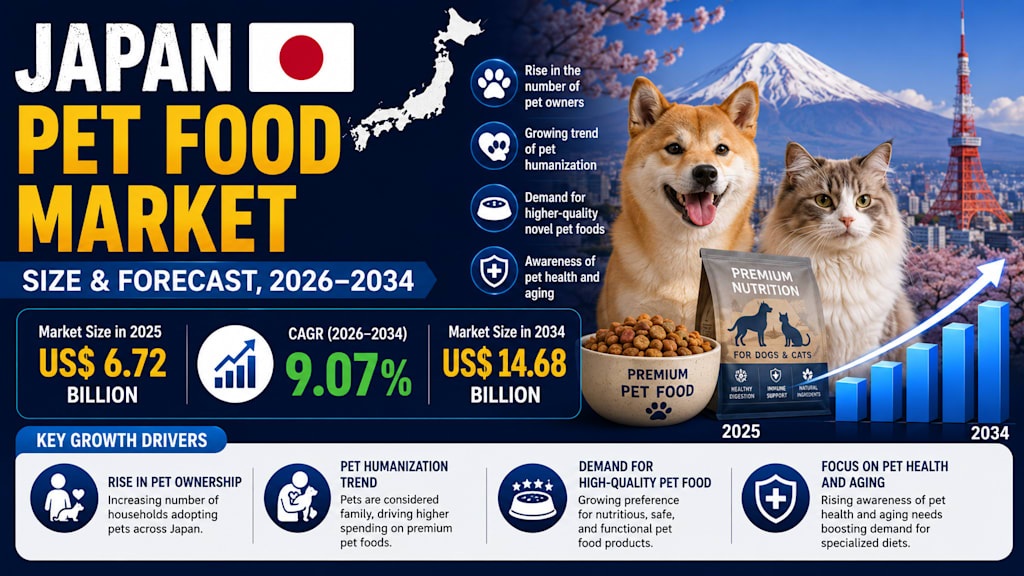
According to Renub Research, the Japan Pet Food Market is projected to grow from US$ 6.72 billion in 2025 to US$ 14.68 billion by 2034, expanding at a compound annual growth rate (CAGR) of 9.07% between 2026 and 2034. This impressive growth highlights the increasing importance of pet nutrition within Japan's consumer economy and reflects broader social trends influencing pet ownership across the country.
As pets continue to play a larger role in Japanese households, the demand for innovative, premium, and scientifically formulated pet food products is expected to rise steadily throughout the coming decade.
Pets Have Become Family Members
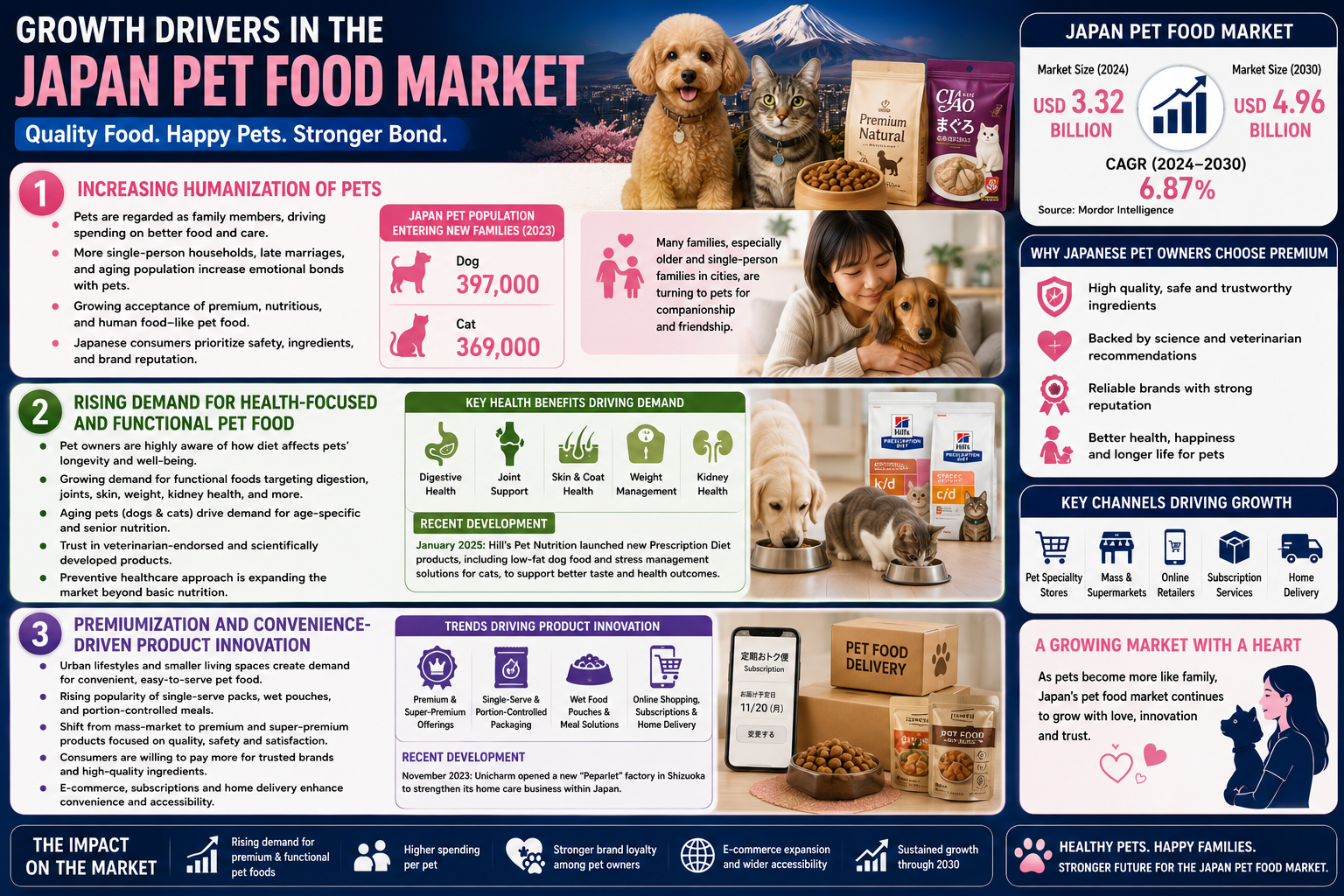
One of the most important factors driving growth in Japan's pet food market is the increasing humanization of pets.
Humanization refers to the tendency of pet owners to treat their animals as family members rather than simply pets. This trend has become especially pronounced in Japan, where changing lifestyles and demographic shifts have strengthened emotional bonds between people and their companion animals.
The country faces a combination of declining birth rates, increasing numbers of single-person households, and a rapidly aging population. For many individuals, pets provide companionship, emotional support, and a sense of connection that enriches daily life.
As a result, pet owners are becoming more willing to invest in products and services that enhance their animals' well-being. Nutrition has emerged as one of the most important areas of spending.
Many consumers now apply the same standards to pet food that they use when purchasing food for themselves. Ingredient transparency, safety, quality control, and nutritional value are becoming major purchasing considerations.
This shift is transforming the pet food industry and creating opportunities for premium brands that can meet evolving consumer expectations.
Health and Wellness Are Driving Purchasing Decisions
Just as health-conscious consumers increasingly seek healthier diets for themselves, they are also focusing more attention on the nutritional needs of their pets.
Japanese pet owners are becoming highly informed about the connection between nutrition and long-term health. Many actively research products designed to support specific health conditions, prevent disease, and improve overall quality of life.
Functional pet foods have become one of the fastest-growing segments within the market. These products are formulated to address targeted health concerns such as digestive health, joint mobility, skin conditions, weight management, kidney function, and immune support.
The growing popularity of veterinary-recommended diets further reflects this trend. Consumers increasingly trust scientifically developed products that are backed by research and professional recommendations.
As awareness of preventive healthcare continues to expand, demand for specialized nutrition solutions is expected to remain a major growth driver across the industry.
Japan's Aging Pet Population Creates New Opportunities
Aging is not only affecting Japan's human population—it is also influencing the country's pet population.
Advances in veterinary care, improved nutrition, and greater owner awareness have contributed to longer life expectancy among companion animals. As pets live longer, their nutritional requirements become more complex.
Senior pets often require specialized diets formulated to address age-related health concerns. Joint support, cognitive function, digestive health, kidney care, and weight management have become important considerations for older dogs and cats.
Manufacturers are responding by developing age-specific formulas that cater to the unique needs of senior pets.
These products often include functional ingredients such as glucosamine, omega fatty acids, antioxidants, and carefully balanced nutrient profiles designed to support healthy aging.
The growing senior pet population represents one of the most significant opportunities within Japan's evolving pet food market.
Premiumization Is Transforming the Industry
Premiumization has become one of the defining trends within Japan's pet food sector.
Rather than focusing solely on affordability, many consumers are prioritizing quality, nutrition, and safety when selecting products for their pets.
Premium and super-premium pet foods often feature higher-quality protein sources, natural ingredients, limited additives, and specialized nutritional formulations. Some products are inspired by human food trends, including grain-free recipes, organic ingredients, and gourmet meal concepts.
Japanese consumers are particularly attentive to product quality and brand reputation. Trust plays a crucial role in purchasing decisions, and pet owners are often willing to pay higher prices for products that demonstrate strong safety standards and nutritional benefits.
This premiumization trend allows manufacturers to generate growth even as overall pet ownership numbers face demographic pressures.
Convenience Matters in Urban Living
Japan's urban lifestyle is also influencing pet food purchasing behavior.
Many pet owners live in apartments or smaller homes where storage space is limited. Busy work schedules and compact living environments have increased demand for convenient, easy-to-use pet food solutions.
Manufacturers are responding with innovations such as single-serve packaging, portion-controlled meals, resealable pouches, and ready-to-serve products.
These formats offer several benefits. They help maintain freshness, simplify feeding routines, reduce waste, and accommodate smaller living spaces.
Convenience is particularly important among younger consumers and working professionals who seek efficient solutions without compromising on quality.
As urbanization continues to shape consumer lifestyles, convenience-focused innovation is expected to remain a key competitive differentiator.
The Dog Food Segment Continues to Lead
Dog food remains the largest segment within Japan's pet food market.
Small dog breeds such as toy poodles, chihuahuas, and dachshunds are especially popular among Japanese households. These breeds are well-suited to urban living environments and often require specialized nutritional support.
Pet owners are increasingly seeking breed-specific formulas, age-targeted nutrition, and functional products designed to support joint health, digestion, and weight management.
Premium dry food products continue to perform strongly due to their convenience, nutritional balance, and long shelf life.
At the same time, demand for natural ingredients, limited additives, and transparent sourcing practices is influencing product development across the dog food category.
Despite a gradual decline in the overall dog population, spending per pet continues to rise, supporting market growth.
Cats Are Becoming Increasingly Popular
While dogs remain important, the cat food segment is growing even faster in many areas.
Urbanization has played a major role in this trend. Cats generally require less space, are often easier to care for, and adapt well to apartment living.
As more people choose cats as companions, demand for specialized cat food products has expanded significantly.
Japanese consumers place considerable emphasis on flavor, texture, and palatability when selecting cat food. Manufacturers have responded by introducing a wide variety of flavors, premium ingredients, and product formats designed to appeal to feline preferences.
The increasing popularity of cat ownership is expected to remain a major contributor to future market expansion.
Wet Pet Food Gains Momentum
Among product categories, wet pet food is experiencing particularly strong growth.
Many pet owners perceive wet food as more natural, flavorful, and hydrating than traditional dry alternatives. This perception has contributed to increased adoption, particularly among cat owners.
Wet food is often recommended for pets with certain health conditions, including urinary tract concerns, kidney disease, and hydration-related issues.
Single-serve pouches and portion-controlled packaging have further enhanced the appeal of wet food products by providing convenience and freshness.
Premium wet food products featuring high meat or fish content, minimal additives, and functional ingredients are especially popular among health-conscious consumers.
As awareness of pet wellness continues to grow, wet food is expected to capture an increasingly important share of the market.
Veterinary Nutrition Is Becoming More Influential
Veterinary clinics play a unique role within Japan's pet food ecosystem.
Unlike traditional retail channels, veterinary clinics primarily focus on prescription and therapeutic diets designed to address specific health conditions.
These products support pets dealing with issues such as obesity, kidney disease, digestive disorders, allergies, and metabolic conditions.
Pet owners often place significant trust in veterinary recommendations, making this channel particularly influential despite its smaller size.
The aging pet population and growing focus on preventive healthcare are expected to drive continued growth in veterinary nutrition products over the coming years.
E-Commerce Is Changing How Pet Food Is Purchased
Although traditional retail stores continue to dominate sales, e-commerce is becoming an increasingly important distribution channel.
Online platforms offer convenience, subscription services, home delivery, and access to a wider range of products than many physical stores.
Pet owners can easily compare ingredients, read reviews, and order specialized products from the comfort of their homes.
Subscription-based services are particularly attractive because they ensure a consistent supply of food while reducing the inconvenience of frequent shopping trips.
As digital commerce continues expanding across Japan, online pet food sales are expected to grow steadily.
Challenges Facing the Market
Despite strong growth prospects, the industry faces several challenges.
Declining Pet Population
Japan's shrinking population and low birth rate have contributed to slower growth in overall pet ownership.
Fewer new pet adoptions can limit volume growth, forcing manufacturers to focus on premiumization and higher-value products to maintain revenue expansion.
Intense Competition
The market is highly competitive, with both domestic and international brands competing for consumer attention.
Japanese consumers maintain exceptionally high expectations regarding product safety, quality, and transparency. Meeting these standards requires significant investment in research, development, manufacturing, and quality control.
Companies must carefully balance innovation, quality, and pricing to remain competitive.
The Future of Japan's Pet Food Industry
Looking ahead, the future of Japan's pet food market appears highly promising.
Continued growth in pet humanization, health awareness, premiumization, and digital commerce is expected to support strong market expansion. Manufacturers are likely to invest further in personalized nutrition, functional ingredients, and science-backed formulations tailored to specific health needs.
Sustainability may also become an increasingly important consideration as consumers seek environmentally responsible packaging and sourcing practices.
Technological innovation, including data-driven nutrition solutions and subscription-based services, could further reshape the industry in the years ahead.
Final Thoughts
Japan's pet food market is evolving rapidly as companion animals become increasingly integrated into family life. Pet owners are placing greater emphasis on health, wellness, convenience, and quality, creating strong demand for premium and specialized nutrition products.
With the market expected to grow from US$ 6.72 billion in 2025 to US$ 14.68 billion by 2034, the industry's long-term outlook remains highly positive. Although demographic challenges such as a declining pet population present obstacles, rising spending per pet and growing interest in functional nutrition are creating significant opportunities for manufacturers and retailers.
As Japanese consumers continue investing in the well-being of their pets, nutrition will remain at the heart of this transformation, helping shape the next chapter of one of Asia's most dynamic pet care markets.
About the Creator
Enjoyed the story? Support the Creator.
Subscribe for free to receive all their stories in your feed.
Comments
There are no comments for this story
Be the first to respond and start the conversation.