
Japan Pet Food Market Set to Surge as Premiumization and Pet Humanization Redefine Industry Dynamics
Rising Demand for Health, Convenience, and Quality Nutrition Drives a New Era of Growth in Japan’s Pet Care Economy

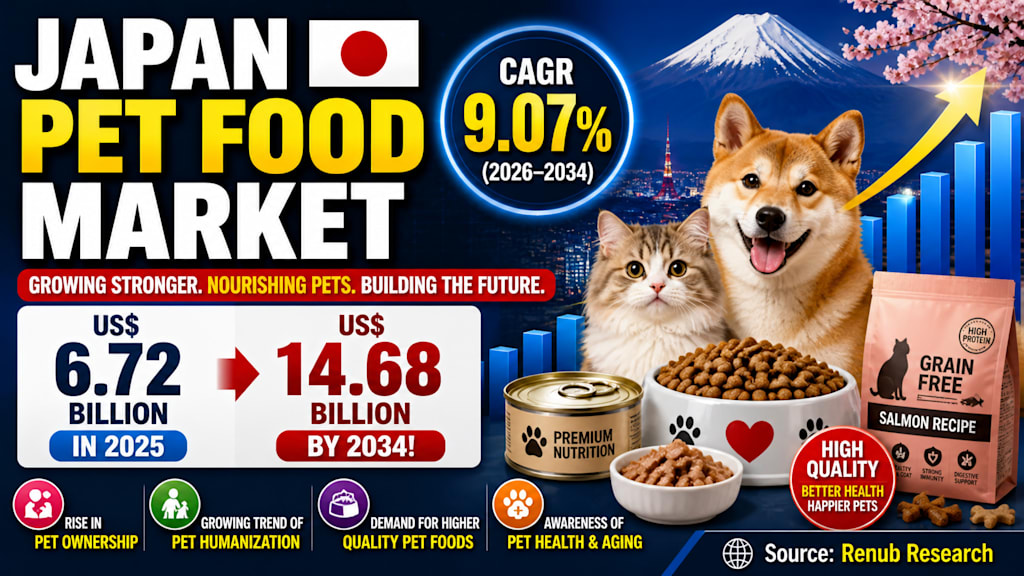
Japan’s pet food market is entering a transformative growth phase, driven by evolving consumer behavior, demographic shifts, and a deepening emotional bond between humans and their pets. Once considered a niche segment, the industry has now matured into a highly sophisticated market where quality, functionality, and trust play central roles in purchasing decisions.
According to recent insights, the Japan Pet Food Market is projected to grow from US$ 6.72 billion in 2025 to US$ 14.68 billion by 2034, registering a CAGR of 9.07% during 2026–2034 . This robust growth reflects not only increasing pet ownership but also a broader societal shift toward treating pets as integral family members.
Understanding the Japan Pet Food Market Landscape
Pet food in Japan encompasses a wide range of nutritionally balanced products designed specifically for domesticated animals such as dogs, cats, and even ornamental fish. These products include dry kibble, wet food, treats, and specialized diets targeting specific health conditions or life stages.
Unlike traditional feeding methods, commercial pet food in Japan is backed by scientific research, veterinary expertise, and strict regulatory oversight. This ensures consistent quality and nutritional adequacy, making it the preferred choice among Japanese pet owners.
What sets Japan apart is its unique socio-demographic environment. With a rapidly aging population and a growing number of single-person households, pets have increasingly become companions that offer emotional support. This shift has significantly elevated spending patterns, with consumers prioritizing premium, safe, and functional pet food options.
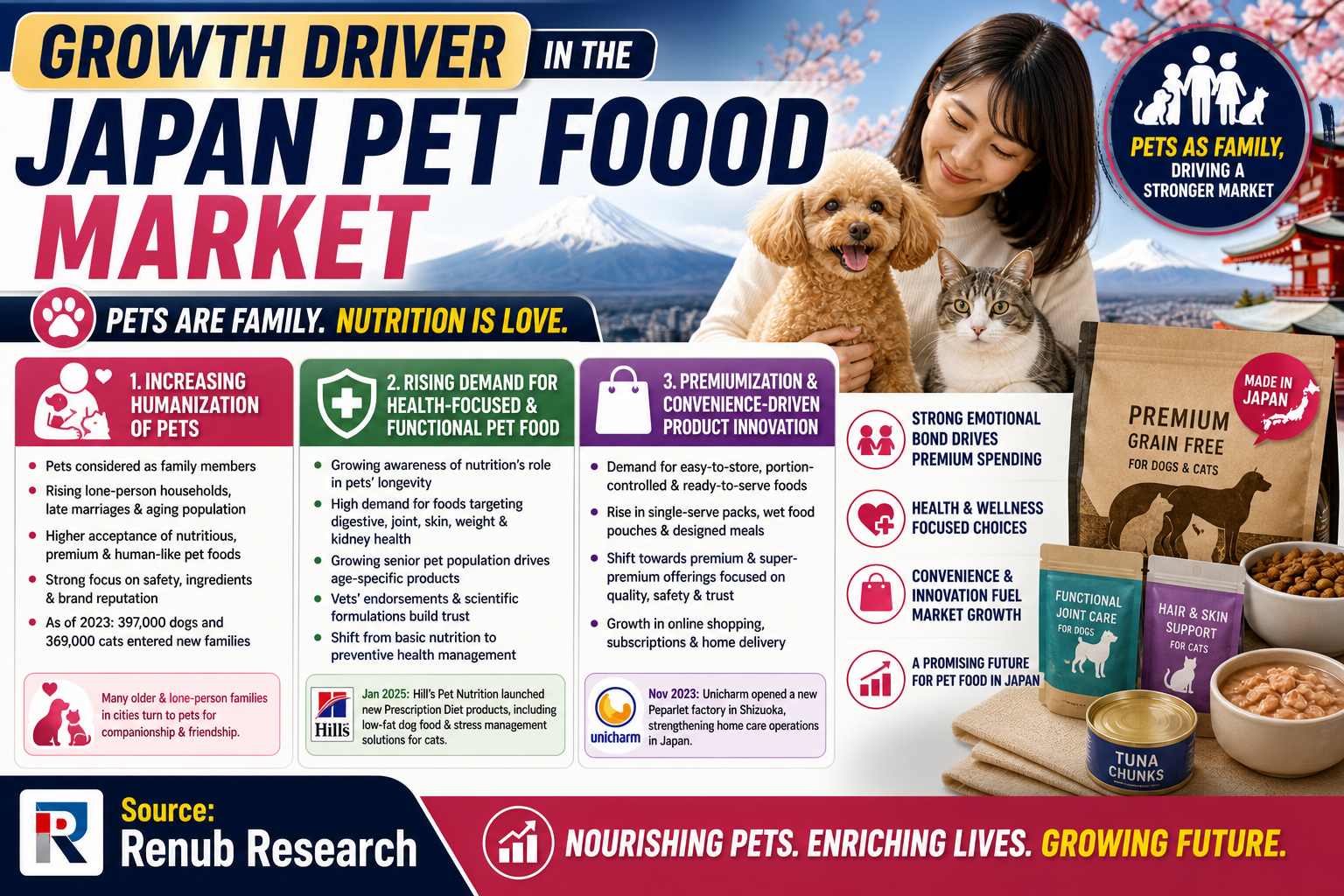
Growth Driver: Increasing Humanization of Pets
One of the most defining trends in Japan’s pet food market is the humanization of pets. Pet owners now treat their animals as family members, often extending the same care and attention to their dietary needs as they would to themselves.
This cultural shift is influenced by several factors:
- Rising number of single-person households
- Delayed marriages and declining birth rates
- Increasing elderly population seeking companionship
As a result, pet owners are more willing to invest in high-quality nutrition, premium ingredients, and products that mirror human food standards. Transparency, brand trust, and ingredient safety have become critical purchase drivers.
Data indicates that in 2023 alone, approximately 397,000 dogs and 369,000 cats were newly adopted into households , highlighting the sustained emotional reliance on pets in Japanese society.
Health and Wellness: A Key Market Catalyst
The growing awareness around pet health has significantly reshaped the industry. Japanese consumers are increasingly adopting a preventive approach to pet care, focusing on nutrition as a cornerstone of long-term health.
This has fueled demand for functional pet foods, including:
- Digestive health formulations
- Joint and mobility support diets
- Skin and coat enhancement products
- Weight management solutions
- Kidney and urinary care foods
Additionally, the aging pet population—particularly among dogs and cats—has created a strong demand for age-specific nutrition. Products tailored for senior pets are gaining traction, offering targeted benefits that improve longevity and quality of life.
Recent product innovations further highlight this trend. For instance, in January 2025, a leading pet nutrition company introduced new prescription diet products designed to address stress in cats and low-fat dietary needs in dogs .
Premiumization and Convenience Reshape Consumer Preferences
Urban lifestyles in Japan are fast-paced and space-constrained, leading to increased demand for convenient pet food solutions. Consumers are gravitating toward products that are easy to store, portion-controlled, and ready to serve.
Popular innovations include:
- Single-serve pouches and trays
- Ready-to-eat meals
- Subscription-based delivery services
- Compact packaging for small living spaces
At the same time, premiumization continues to redefine the market. Consumers are shifting from basic nutrition to value-driven, high-quality offerings, often categorized as premium or super-premium.
Japanese pet owners are willing to pay more for products that guarantee:
- High-quality ingredients
- Ethical sourcing
- Scientific formulation
- Brand credibility
The combination of convenience and premium quality is creating a powerful growth engine for the market.
Market Challenge: Declining Pet Population
Despite strong revenue growth, the Japan pet food market faces a structural challenge: a gradual decline in the overall pet population.
This trend is linked to:
- Low birth rates
- Shrinking population
- Urban housing restrictions
- Limited space for pet ownership
While the number of pets may be decreasing, spending per pet is increasing significantly. This shift has forced manufacturers to pivot toward premiumization and value-added products to sustain growth.
Companies are increasingly focusing on niche segments such as:
- Senior pet nutrition
- Functional and therapeutic diets
- Wellness and preventive care products
- Intense Competition and High Quality Standards
Japan’s pet food industry is highly competitive, featuring both domestic and international players. The market is characterized by:
- Strict regulatory frameworks
- High consumer expectations
- Strong brand loyalty
Japanese consumers are particularly sensitive to product safety, ingredient transparency, and quality assurance. Any compromise in these areas can severely impact brand reputation.
Manufacturers must balance innovation with compliance, ensuring that products meet stringent standards while remaining competitively priced.
Segment Analysis: Dogs Lead, Cats Grow Faster
Dog Food Segment: Dominance Driven by Premium Demand
The dog food segment remains the largest in Japan’s pet food market. This dominance is largely attributed to the popularity of small dog breeds such as toy poodles, chihuahuas, and dachshunds.
Key trends in this segment include:
- High demand for premium and functional foods
- Growing need for senior dog nutrition
- Preference for natural and low-additive products
- Increasing popularity of portion-controlled packaging
Despite a decline in dog population, the segment continues to grow due to higher spending per pet.
Cat Food Segment: Rapid Growth in Urban Japan
The cat food segment is expanding at a faster rate compared to dog food, driven by urbanization and changing lifestyles.
Cats are increasingly preferred because they:
Rr equire less space
- Are easieto maintain
- Adapt well to apartment living
Wet cat food, in particular, is gaining popularity due to its:
- High palatability
- Better hydration benefits
- Suitability for older cats
Japanese consumers also show strong interest in flavor variety and texture, prompting continuous innovation in this segment.
Product Trends: Dry vs. Wet Food Dynamics
Dry Dog Food: A Staple with Functional Evolution
Dry dog food remains a cornerstone of the market due to its:
- Long shelf life
- Cost-effectiveness
- Ease of storage
However, the segment is evolving with the introduction of:
- Grain-free formulations
- Hypoallergenic options
Functional ingredients targeting specific health issues
Smaller kibble sizes tailored for toy breeds are particularly popular in Japan.
Wet Cat Food: Fastest-Growing Category
Wet cat food is one of the most dynamic segments, driven by:
- Superior taste and texture
- Enhanced digestibility
- Higher moisture content
Single-serve packaging formats align perfectly with consumer preferences for freshness and convenience.
Premium wet food products with high meat or fish content and minimal additives are especially in demand.
Niche Segment: Fish Food Market
Japan’s cultural affinity for ornamental fish, such as koi and goldfish, supports a steady demand for fish food.
This segment focuses on specialized nutrition that enhances:
- Color vibrancy
- Growth rates
- Immune health
- Water quality
Although smaller in scale compared to dog and cat food, the fish food market remains stable and consistent.
Distribution Channels: Retail Still Dominates
Store-Based Retailing: The Primary Channel
Physical retail outlets—including supermarkets, pet specialty stores, and home centers—continue to dominate the distribution landscape.
Consumers value the ability to:
- Physically inspect products
- Read ingredient labels
- Seek expert advice
Specialty pet stores play a crucial role in promoting premium and functional products.
Veterinary Clinics: A High-Value Niche
Veterinary clinics represent a smaller but highly influential distribution channel. They primarily offer:
- Prescription diets
- Therapeutic pet food
- Vet-recommended nutrition solutions
As pet health awareness grows, this channel is expected to gain further importance.
Competitive Landscape: Key Players Driving Innovation
The Japan pet food market features a mix of global giants and local leaders, including:
- Mars Incorporated
- Gex Corporation
- Royal Canin
- Hill's Pet Nutrition
- Unicharm
- INABA-PETFOOD Co. Ltd
These companies are investing heavily in research, product innovation, and marketing to capture a larger share of the evolving market.
Future Outlook: A Market Defined by Value Over Volume
Looking ahead, the Japan pet food market is expected to continue its upward trajectory, albeit with a shift in growth dynamics.
Key future trends include:
- Increased focus on premium and functional products
- Expansion of e-commerce and subscription models
- Greater emphasis on sustainability and ethical sourcing
- Rising demand for personalized pet nutrition
While the declining pet population presents a challenge, the industry’s focus on quality, innovation, and emotional connection is expected to sustain long-term growth.
Final Thoughts
Japan’s pet food market is a compelling example of how societal trends can reshape an industry. From pet humanization to premiumization, the market is evolving in ways that prioritize emotional value and health-conscious consumption.
With strong projected growth, innovative product development, and a deeply engaged consumer base, the industry is well-positioned for the future. However, success will depend on how effectively companies navigate demographic challenges while continuing to deliver high-quality, trustworthy products.
About the Creator
Enjoyed the story? Support the Creator.
Subscribe for free to receive all their stories in your feed.
Comments
There are no comments for this story
Be the first to respond and start the conversation.