
Japan Coffee Market Set to Reach US$28.82 Billion by 2034 as Premium Coffee, Café Culture, and Ready-to-Drink Beverages Drive Growth
Growing demand for specialty coffee, expanding café culture, and the popularity of convenient ready-to-drink products are fueling steady growth across Japan’s coffee industry.

Introduction: Coffee Continues to Shape Modern Japanese Lifestyles
Coffee has become an integral part of everyday life in Japan. Whether enjoyed during a morning commute, at the office, in a specialty café, or through the country's famous vending machines, coffee remains one of the most consumed beverages across all age groups.
Over the years, Japan has developed one of the world's most unique coffee cultures. The country successfully blends traditional coffee consumption habits with innovation, creating a market that embraces everything from premium specialty brews and artisanal café experiences to convenient ready-to-drink canned coffee.
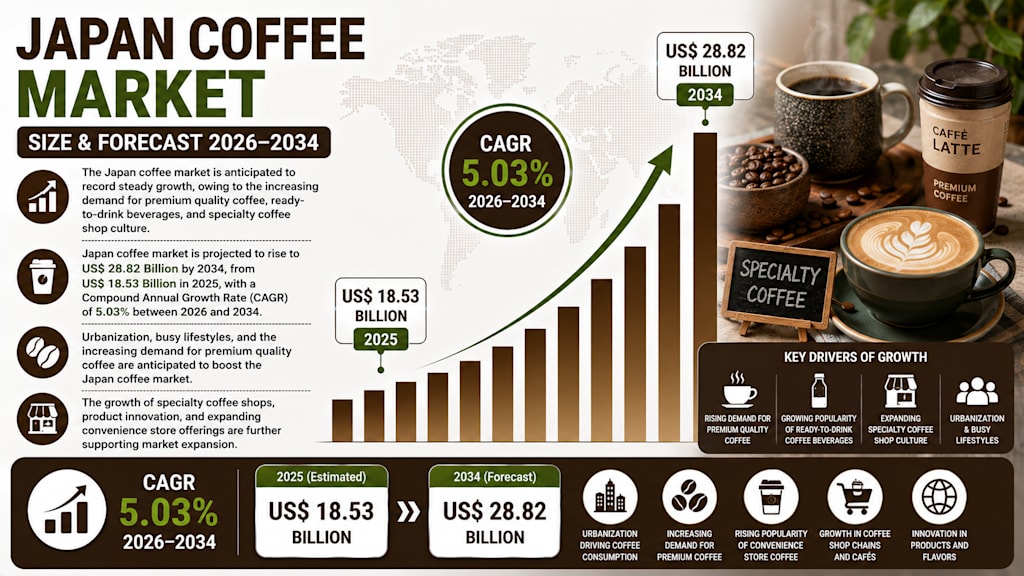
According to Renub Research, the Japan Coffee Market is projected to grow from US$ 18.53 billion in 2025 to US$ 28.82 billion by 2034, registering a compound annual growth rate (CAGR) of 5.03% between 2026 and 2034. Rising urbanization, busy lifestyles, increasing demand for premium coffee experiences, and continuous product innovation are expected to support market growth throughout the forecast period.
As consumer preferences evolve and coffee culture becomes even more deeply embedded in Japanese society, the market is expected to experience sustained expansion in the coming years.
Coffee Holds a Unique Place in Japanese Society
Coffee is a beverage prepared from roasted and ground coffee beans and is consumed in various forms, including black coffee, espresso, cappuccino, latte, cold brew, and ready-to-drink products.
In Japan, coffee has evolved far beyond being a simple beverage. It has become an important part of daily routines, workplace culture, social interactions, and leisure activities. Coffee is consumed at home, in offices, convenience stores, coffee shops, restaurants, and vending machines located throughout the country.
Ready-to-drink canned coffee, a category pioneered in Japan, remains particularly popular among busy consumers seeking convenience without sacrificing quality.
The beverage's versatility and accessibility continue making it a staple of modern Japanese lifestyles.
Ready-to-Drink Coffee Remains a Major Growth Driver
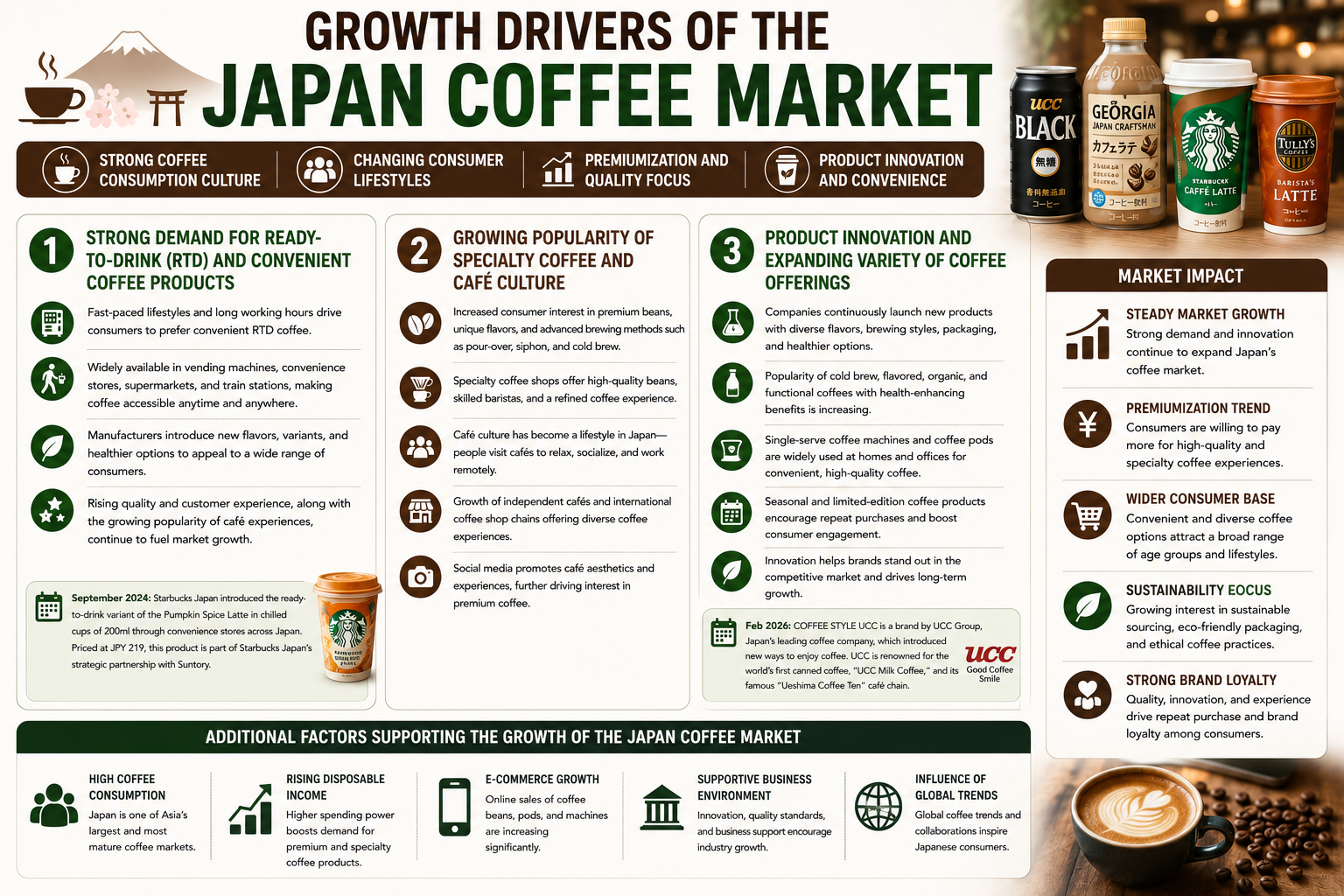
One of the strongest drivers of Japan's coffee market is the continued popularity of ready-to-drink (RTD) coffee products.
Japanese consumers often lead fast-paced lifestyles characterized by long working hours, frequent commuting, and busy schedules. As a result, convenient beverage solutions have become increasingly important. Ready-to-drink coffee is widely available through vending machines, convenience stores, supermarkets, train stations, and retail outlets across the country.
Consumers appreciate the ability to purchase quality coffee quickly and easily at virtually any time of day.
Manufacturers continue introducing new flavors, healthier formulations, seasonal offerings, and premium variants to appeal to diverse consumer preferences.
The report highlights Starbucks Japan's launch of a ready-to-drink Pumpkin Spice Latte through convenience store channels in partnership with Suntory, demonstrating ongoing innovation within the RTD segment.
As convenience remains a key purchasing factor, the RTD category is expected to continue driving market growth.
Specialty Coffee and Café Culture Continue Expanding
Japan's specialty coffee market has experienced significant growth in recent years as consumers increasingly seek premium coffee experiences.
Coffee enthusiasts are becoming more interested in high-quality beans, unique flavor profiles, and advanced brewing techniques such as pour-over, siphon brewing, and cold brew extraction. Specialty cafés have responded by offering carefully curated coffee experiences that emphasize craftsmanship and quality.
Cafés have also evolved into social and lifestyle destinations where consumers gather to relax, work remotely, study, or meet friends.
The growth of social media has further accelerated interest in visually appealing coffee beverages and aesthetically designed café environments.
Independent coffee shops and international coffee chains continue expanding their presence throughout Japan, contributing to the development of a vibrant specialty coffee culture.
As consumers increasingly prioritize quality over quantity, specialty coffee is expected to remain an important growth segment.
Product Innovation Strengthens Market Expansion
Continuous innovation remains a key characteristic of Japan's coffee industry.
Manufacturers are introducing a wide variety of new products to address changing consumer preferences. These include flavored coffee beverages, organic coffee, cold brew coffee, functional coffee products, low-caffeine options, and health-oriented formulations.
Advances in coffee-making technology have also contributed to market growth. Single-serve coffee machines and coffee pod systems have become increasingly popular in Japanese homes and workplaces, allowing consumers to enjoy café-quality beverages conveniently.
The report highlights UCC Group's continued efforts to introduce innovative coffee experiences through its COFFEE STYLE UCC brand, which focuses on creating new ways for consumers to enjoy coffee.
Innovation not only helps companies differentiate themselves in a highly competitive market but also encourages repeat purchases and long-term customer engagement.
Ground Coffee Maintains Strong Consumer Appeal
Ground coffee remains one of the most important product categories within the Japanese coffee market.
Many consumers prefer ground coffee because it offers a fresher taste, richer aroma, and more authentic brewing experience compared to instant alternatives. Ground coffee is widely consumed in homes, offices, and cafés throughout Japan.
The growing popularity of home brewing has further strengthened demand for premium ground coffee products.
Consumers increasingly seek café-quality experiences at home, leading to greater interest in specialty beans, brewing equipment, and premium coffee blends.
As coffee appreciation continues growing among Japanese consumers, demand for high-quality ground coffee is expected to remain strong.
Instant Coffee Continues Serving Convenience-Oriented Consumers
Despite growing interest in specialty coffee, instant coffee remains a highly important segment of the market.
Japanese consumers value instant coffee for its convenience, affordability, and long shelf life. Office workers, elderly consumers, and individuals seeking quick preparation solutions continue relying on instant coffee as part of their daily routines.
Manufacturers have responded to changing preferences by introducing premium instant coffee products that closely replicate the taste and aroma of freshly brewed coffee.
Innovations such as freeze-dried coffee, low-caffeine formulations, and single-serve sachets continue enhancing product appeal.
Although specialty coffee is gaining momentum, instant coffee remains a stable and significant contributor to overall market demand.
Convenience Stores Play a Critical Distribution Role
Convenience stores represent one of the most important distribution channels within Japan's coffee market.
Japan's extensive convenience store network offers consumers easy access to freshly brewed coffee, canned coffee, and packaged coffee products around the clock. Many stores operate 24 hours a day and serve millions of customers daily.
Freshly brewed coffee machines installed in convenience stores have become especially popular among commuters, students, and office workers seeking affordable and high-quality beverages.
Grocery stores and supermarkets also play important roles by offering a wide variety of coffee products, including ground coffee, instant coffee, and RTD beverages.
The accessibility and convenience of these retail channels continue supporting market growth.
Online Retail Gains Momentum
E-commerce has become an increasingly important sales channel for coffee products in Japan.
Online platforms allow consumers to access a broader selection of coffee products, including premium, specialty, imported, and limited-edition offerings that may not be readily available through traditional retail channels.
Subscription services have become particularly popular, enabling consumers to receive their favorite coffee products on a regular basis without needing to visit stores.
The COVID-19 pandemic accelerated online shopping adoption and encouraged many consumers to purchase coffee products through digital channels.
As internet usage and e-commerce penetration continue increasing, online retail is expected to remain an important growth avenue for coffee manufacturers and retailers.
Tokyo Leads Japan's Coffee Market
Tokyo represents the largest and most influential coffee market in Japan.
The city's large population, dynamic business environment, extensive transportation networks, and vibrant café culture create strong demand for coffee across multiple consumption occasions. Office workers, students, tourists, and residents consume coffee daily through cafés, vending machines, convenience stores, and retail outlets.
Tokyo's specialty coffee scene continues attracting consumers interested in premium coffee experiences and innovative brewing methods.
The city also serves as a testing ground for new products, café concepts, and consumer trends that often influence the broader Japanese coffee industry.
Aichi and Kanagawa Continue Supporting Market Growth
Aichi's coffee market benefits from its strong industrial economy and large working population.
The region's manufacturing sector and corporate offices contribute to steady demand for coffee products consumed throughout the workday. Canned coffee, instant coffee, and convenience-oriented beverages remain particularly popular among professionals.
Meanwhile, Kanagawa's proximity to Tokyo and its large urban population continue supporting market expansion.
Cities such as Yokohama and Kawasaki generate significant demand for ready-to-drink coffee, take-out beverages, and specialty coffee products. Home brewing has also gained popularity among residents seeking premium coffee experiences.
Both regions remain important contributors to Japan's overall coffee consumption.
Shizuoka Diversifies Beyond Traditional Tea Culture
Traditionally known for tea production, Shizuoka is gradually developing a stronger coffee culture.
Younger consumers and urban residents are increasingly incorporating coffee into their daily routines, creating new opportunities for coffee retailers, cafés, and beverage manufacturers.
The growth of tourism, specialty coffee shops, and modern retail channels has contributed to rising coffee consumption within the region.
Consumers are increasingly exploring different brewing methods, premium coffee products, and specialty beverages.
As preferences continue evolving, Shizuoka is expected to become an increasingly important regional market.
Challenges Continue to Affect Market Development
Despite positive growth prospects, several challenges remain.
One significant concern is Japan's declining population and aging demographic structure. Younger consumers typically represent the most active coffee-drinking segment, while older consumers may reduce coffee consumption due to health considerations. A shrinking workforce could also impact long-term demand.
Another challenge is intense market competition.
Japan's coffee industry includes numerous domestic manufacturers, international brands, convenience store operators, specialty coffee shops, and beverage companies competing for market share. Consumers enjoy a wide range of choices, making differentiation increasingly difficult.
To remain competitive, companies must continue investing in innovation, branding, and premium product development.
Leading Companies Shaping the Market
Japan's coffee industry features a mix of global beverage giants and established coffee specialists.
Key companies highlighted in the report include **Starbucks, Nescafé, The Kraft Heinz Company, J.M. Smucker Company, The Coca-Cola Company, Dutch Bros, Keurig Dr Pepper, and JDE Peet's N.V.. These companies continue investing in product innovation, premium offerings, distribution expansion, and consumer engagement strategies.
Final Thoughts
Japan's coffee market continues to evolve as consumers embrace premium coffee experiences, convenient ready-to-drink products, and innovative beverage offerings.
With the market expected to grow from US$ 18.53 billion in 2025 to US$ 28.82 billion by 2034, coffee remains deeply embedded in Japanese culture and daily life. Strong demand for specialty coffee, expanding café culture, and continuous product innovation are creating substantial opportunities across the industry.
About the Creator
Enjoyed the story? Support the Creator.
Subscribe for free to receive all their stories in your feed.
Comments
There are no comments for this story
Be the first to respond and start the conversation.