
Intelligenter Hightech-Roboter Ultron: Building the Future of Everyday Intelligence
Understanding the powerful integration of smart technology into the architecture of contemporary life.
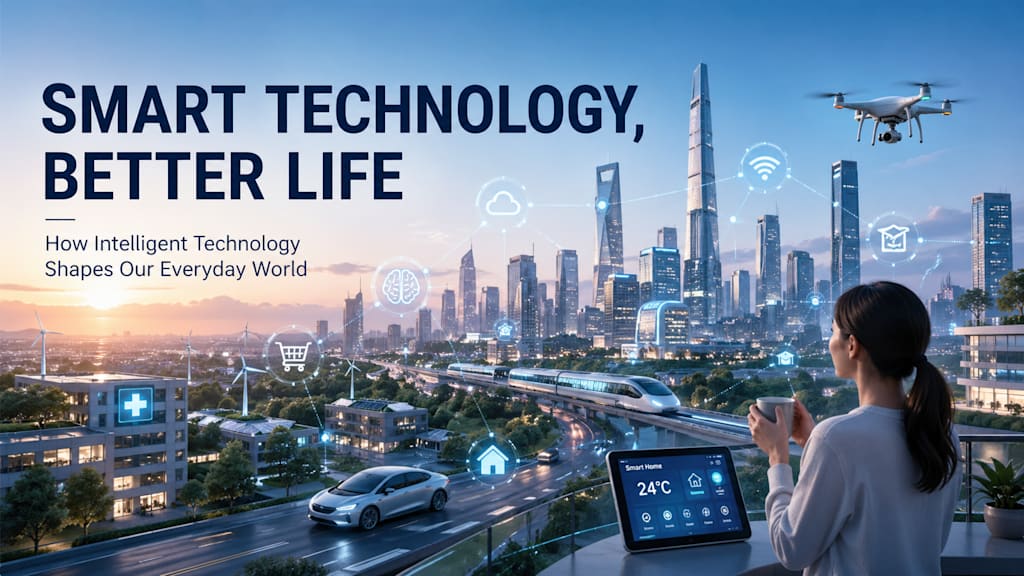
There was a time when technology felt external to daily life—something we turned on, logged into, or actively sought out. Today, intelligent technology has become less visible yet far more influential. It no longer sits on the edge of human experience; it shapes the rhythm of our routines, decisions, relationships, and even our understanding of ourselves. From the moment we wake to the sound of an adaptive alarm to the navigation systems guiding us through traffic, intelligent systems are increasingly woven into the fabric of existence.
This transformation is not defined merely by innovation, but by integration. Artificial intelligence, machine learning, smart devices, and automation are no longer futuristic concepts reserved for laboratories or Silicon Valley boardrooms. They are practical, embedded tools reshaping ordinary life in ways both subtle and profound.
The Morning Begins Before We Wake
For many people, intelligent technology starts working before consciousness does. Smart home ecosystems can analyze sleep cycles, gradually brighten bedroom lights to mimic sunrise, and adjust room temperature based on biometric data or weather forecasts. Virtual assistants can summarize the day’s schedule, provide real-time traffic conditions, and recommend wardrobe choices based on climate.
What once required multiple conscious decisions is now streamlined through predictive systems. This convenience may seem trivial, but on a broader scale, it reflects a deeper shift: technology is increasingly designed not just to respond, but to anticipate.
The significance of this anticipation lies in cognitive relief. By automating repetitive tasks, intelligent systems free mental bandwidth for creativity, strategic thought, or simply peace of mind. In an age defined by information overload, reducing decision fatigue has become one of technology’s most meaningful contributions.
Healthcare Beyond Hospitals
Perhaps one of the most transformative applications of intelligent technology is in personal health. Wearable devices now monitor heart rate variability, blood oxygen levels, sleep quality, and physical activity with remarkable precision. More advanced systems can detect irregular cardiac patterns or alert users to potential health anomalies before symptoms become severe.
Telemedicine platforms, powered by AI-supported diagnostics, are also expanding access to healthcare, especially in underserved areas. Patients can consult specialists remotely, receive medication reminders, and track chronic conditions through mobile apps.
This shift represents more than convenience—it signals a transition from reactive healthcare to preventative wellness. Instead of waiting for illness, intelligent systems encourage early awareness and continuous monitoring.
However, this also raises ethical questions around privacy, data ownership, and algorithmic bias. The promise of intelligent healthcare is immense, but its success depends on balancing innovation with responsibility.
Smarter Cities, Smarter Movement
Urban life has been fundamentally reshaped by intelligent infrastructure. Navigation apps use real-time data to reduce congestion, ride-sharing platforms optimize transportation access, and public transit systems increasingly rely on predictive analytics to improve efficiency.
In some cities, smart traffic lights adapt dynamically to vehicle flow, reducing emissions and saving time. Electric vehicle charging networks can now guide drivers to available stations, while logistics algorithms streamline delivery systems for both businesses and consumers.
These systems do more than save minutes—they redefine urban productivity. Time once lost to inefficiency can be redirected toward work, leisure, or community.
Yet smart mobility also reflects a larger societal trend: convenience is becoming an expectation rather than a luxury. As intelligent transportation expands, questions about accessibility and equitable distribution become increasingly important. Who benefits first from these advancements, and who risks being left behind?
Education Reimagined
Learning has also undergone a quiet revolution. Intelligent tutoring systems can personalize educational experiences according to a student’s pace, strengths, and weaknesses. Language learning apps adapt in real time, while AI writing tools help refine communication skills.
For educators, data analytics can identify struggling students earlier, enabling more targeted interventions. For learners, access to personalized knowledge has become unprecedented.
This democratization of education is particularly powerful because it reduces barriers once defined by geography or economic privilege. A student with internet access can now learn coding, philosophy, or advanced mathematics from world-class platforms.
Still, technology cannot replace the human dimensions of education—curiosity, mentorship, empathy, and critical thinking. The future of learning likely lies not in machine substitution, but in collaboration between human teachers and intelligent systems.
Consumption, Convenience, and the Invisible Marketplace
Shopping, entertainment, and financial services have all been reshaped by recommendation algorithms. Streaming platforms curate content based on psychological preference patterns. E-commerce systems predict consumer needs before purchases are consciously planned. Digital banking apps detect unusual transactions instantly and provide real-time financial insights.
These conveniences save time, but they also shape behavior. Intelligent systems do not merely serve preferences—they can influence them. This creates a paradox: while technology offers freedom through personalization, it may also narrow exposure by reinforcing existing habits.
The challenge for modern consumers is awareness. Intelligent convenience should enhance autonomy, not quietly diminish it.
Human Relationships in a Digital Age
Communication technology, powered by intelligent algorithms, has altered how people connect emotionally and socially. Translation tools bridge language barriers instantly. Social platforms suggest communities based on shared interests. Video conferencing has transformed remote work and long-distance relationships.
At its best, intelligent technology expands connection. At its worst, it can amplify isolation through curated realities or algorithm-driven echo chambers.
The central issue is not whether technology connects us, but how meaningfully it does so. Human relationships still depend on authenticity, presence, and emotional intelligence—qualities no algorithm can fully replicate.
The Future: Partnership, Not Replacement
Much of the public conversation around intelligent technology centers on fear—automation replacing jobs, AI surpassing human creativity, or machines eroding privacy. These concerns are valid, but they represent only one side of the story.
A more balanced perspective views intelligent technology as a partner rather than a competitor. Its greatest value lies in augmentation: enhancing human capability, improving precision, and reducing unnecessary burdens.
The real challenge is not technological advancement itself, but intentional design. As societies adopt increasingly intelligent systems, we must ask deeper questions: Does this technology improve human dignity? Does it create fairness? Does it support long-term well-being?
Conclusion
Intelligent technology is no longer a distant concept—it is the operating environment of contemporary life. It manages homes, supports health, transforms education, optimizes cities, and reshapes relationships. Its presence is often invisible, yet its impact is profound.
The story of intelligent technology is ultimately not about machines becoming more human. It is about humans deciding what kind of life technology should help create.
As we move deeper into this intelligent era, success will not be measured solely by faster systems or smarter algorithms, but by whether innovation genuinely enriches the human experience. In that sense, the future of intelligent technology is not simply technical—it is deeply personal.
About the Creator
Enjoyed the story? Support the Creator.
Subscribe for free to receive all their stories in your feed.
Comments
There are no comments for this story
Be the first to respond and start the conversation.