
Inside the Vertiport Security Systems Market's Rapid Rise
As air taxis edge toward reality, cities are racing to secure the rooftop hubs that will launch them.
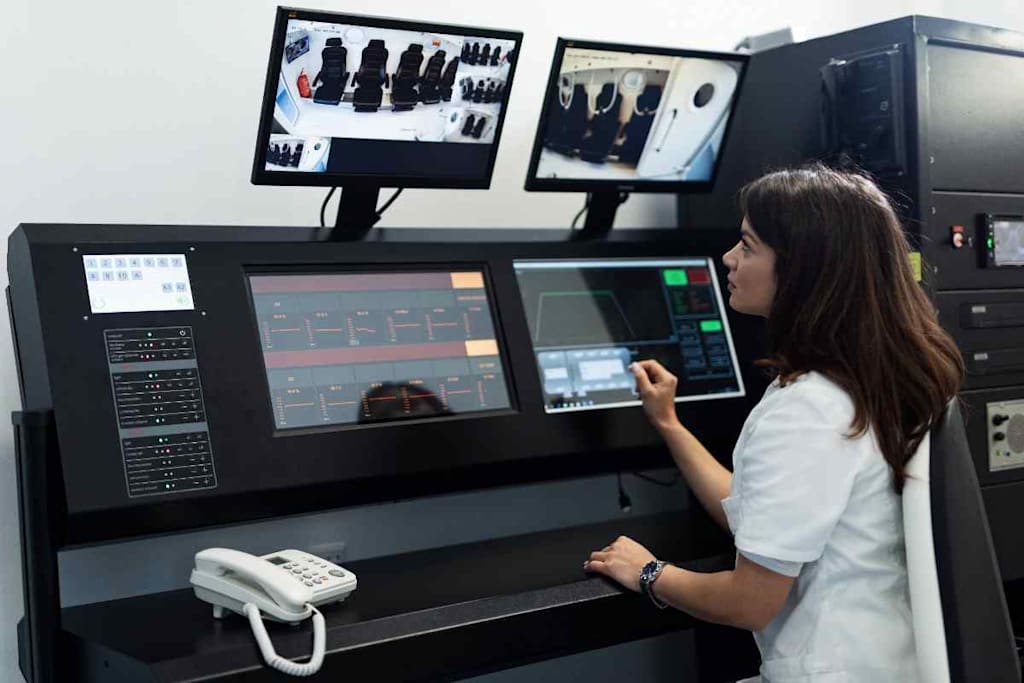
Before electric air taxis can ferry commuters over city traffic, someone has to figure out how to keep the launch pads themselves secure — checking passengers, screening cargo, and watching for digital and physical threats in spaces far smaller than a typical airport. That challenge is driving rapid expansion in the vertiport security systems market, projected to surge from $1.25 billion in 2025 to $7.91 billion by 2035, an exceptional 20.3% annual growth rate fueled by accelerating urban air mobility trials and the need to build security into these hubs from day one rather than retrofit it later.
Anyone tracking how this fast-moving niche breaks down by security type and end-user can get the free sample report covering the full segment data.
Why Threat Detection Leads the Spending
Among the different security categories vertiports require, Threat Detection & Management holds the largest share at 35.6%, reflecting how much pressure operators face to monitor access points, landing pads, and control rooms simultaneously in compact urban footprints. Passenger Vertiports dominate the application side even more decisively, at 76.5% share, since these sites will need to manage identity checks, baggage screening, and controlled boarding while keeping daily commuter traffic moving. Urban Air Mobility Operators themselves account for 48.9% of end-user demand, largely because they're the ones responsible for coordinating security across multiple vertiport sites at once.
Passenger experience matters just as much as the hardware here — research suggests around 65% of potential users say visible, reliable security checks will strongly shape whether they actually choose to fly on an urban air taxi.
A Real Example: Unifying Cameras, Access, and Analytics
One concrete illustration of where vertiport security is headed: Honeywell introduced new AI-enabled features in its Pro Watch Integrated Security Suite, linking access control, video surveillance, and intrusion detection into a single platform designed to flag threats sooner with limited on-site staff. Around the same time, Genetec has been promoting unified physical security platforms that fuse video, access control, license-plate recognition, and analytics across cloud and on-premises deployments — exactly the kind of consolidated command-center approach that small, high-traffic vertiport sites will likely need, since they won't have room for the layered, siloed systems found at major airports.
Cybersecurity Is Becoming Part of the Physical Plan
What sets the broader vertiport security systems market apart from traditional aviation security is how tightly digital and physical risk are expected to overlap. Early concept studies suggest more than 50% of future vertiport security incidents could involve a digital element — things like spoofed communications, data breaches, or interference with booking and navigation systems — rather than a purely physical breach. That's pushing planners to combine cybersecurity, physical security, and airspace monitoring inside one control center rather than treating them as separate disciplines, a shift reflected in moves like IDEMIA's expansion of biometric identity and access-control deployments at major North American transport hubs.
Where Vertiport Security Is Headed
The road ahead looks defined by speed and integration rather than added friction. Operators are aiming to keep total passenger processing time under 10 to 15 minutes door-to-aircraft, which means security has to work quietly in the background instead of creating bottlenecks the way traditional airport screening often does. As more pilot air-taxi routes launch in major cities each month and multimodal hubs connect vertiports with airports, rail stations, and transit centers, expect security platforms to keep consolidating — fewer standalone systems, more shared command centers handling cameras, access control, threat detection, and cyber defense as one continuous layer protecting a new kind of urban aviation.
About the Creator
Enjoyed the story? Support the Creator.
Subscribe for free to receive all their stories in your feed.
Comments
There are no comments for this story
Be the first to respond and start the conversation.