
Inside the Tests That Decide If a Plane Is Airworthy
Behind every flight is a quieter industry making sure the aircraft actually works.

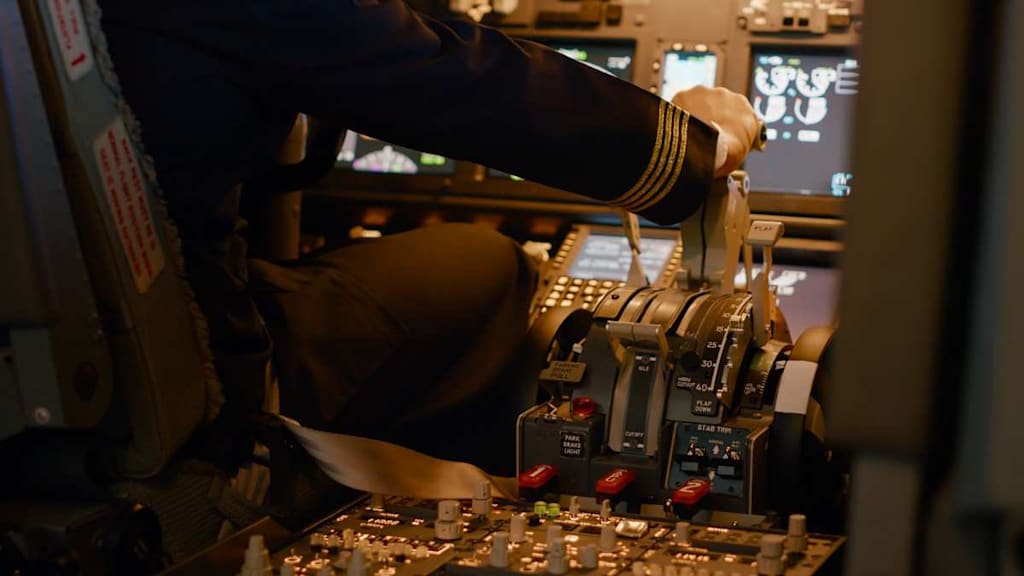
Nobody Boards a Plane That Hasn't Been Interrogated First
Before any aircraft carries a single passenger, it goes through something closer to an interrogation than an inspection — sensors checked against sensors, systems stress-tested against failure conditions that, ideally, will never occur in the real world. That process depends entirely on specialized testing hardware most travelers never think about, which is precisely why the aviation test equipment market has grown into a foundational layer of the broader aerospace industry rather than a peripheral supplier category.
A side-by-side look at how testing demands differ between commercial fleets, military aircraft, and MRO facilities shows up in the underlying research, which breaks the category down by equipment type and end-user segment in more granular detail than most industry overviews attempt.
Why Testing Has Gotten More Complicated, Not Less
It would be reasonable to assume that decades of aviation safety improvements have simplified testing. The opposite has happened. Modern aircraft carry far more avionics, sensors, and software-defined systems than their predecessors, and each new layer of complexity requires its own dedicated diagnostic equipment. A Boeing 787 or Airbus A350 isn't just a mechanically updated version of older aircraft — it's a flying network of interconnected electronic systems, and validating that network requires test equipment capable of simulating conditions across dozens of subsystems simultaneously.
This is part of why test equipment manufacturers have shifted heavily toward automated test systems over the past decade. Manual, single-function testing tools simply can't keep pace with aircraft that integrate fly-by-wire controls, complex radar systems, and extensive onboard diagnostics. Automated test equipment can run thousands of test cycles against a single component, catching failure patterns that would be statistically invisible to manual inspection.
MRO Demand Is Reshaping the Buyer Base
One of the more interesting shifts in this space involves who's actually buying the equipment. Original aircraft manufacturers remain significant purchasers, but maintenance, repair, and overhaul providers have become an increasingly important customer segment as global fleets age and airlines extend aircraft service life to manage costs.
A commercial airline operating a fleet built across multiple aircraft generations needs testing capability that spans older analog systems and newer digital architectures simultaneously, which has pushed several major MRO providers to invest heavily in multi-platform diagnostic equipment rather than narrower, aircraft-specific tools. Lufthansa Technik, for instance, has continued expanding its in-house testing capability specifically to reduce dependency on manufacturer-specific service contracts — a trend playing out across MRO providers globally as airlines look for more flexibility in how and where their fleets get serviced.
Military Procurement Adds a Different Kind of Pressure
Commercial aviation isn't the only force shaping demand here. Defense procurement cycles bring their own requirements, often centered on equipment that can handle classified or highly specialized avionics testing under stricter certification standards than commercial use typically demands. Military aircraft modernization programs across the US, Europe, and parts of Asia have created sustained demand for test systems capable of validating radar, electronic warfare systems, and weapons integration — categories with little overlap with commercial aircraft testing needs.
This dual demand, spanning commercial and defense applications, is one of the reasons growth in the aviation test equipment market hasn't tracked neatly with commercial aviation cycles alone. When commercial orders slow, defense-related testing demand often continues on its own separate trajectory, giving equipment manufacturers a degree of insulation that pure commercial aerospace suppliers don't have.
Where the Next Phase of Testing Is Headed
The next significant shift in this space will likely come from predictive and condition-based testing approaches that reduce reliance on fixed maintenance schedules. Rather than testing components on a calendar-driven basis, airlines and MRO providers are increasingly interested in continuous monitoring systems that flag potential issues based on real operating data, shifting some testing demand from periodic ground-based equipment toward embedded, always-on diagnostic systems.
Electric and hybrid-electric aircraft programs are adding another layer entirely, since battery systems, electric propulsion units, and new power architectures require testing protocols that don't have direct precedents in traditional aviation maintenance. As these aircraft move from prototype to certified production, an entirely new category of test equipment will likely need to mature alongside them — and the companies positioned earliest in that transition stand to define standards the rest of the industry eventually adopts.
About the Creator
Enjoyed the story? Support the Creator.
Subscribe for free to receive all their stories in your feed.
Comments
There are no comments for this story
Be the first to respond and start the conversation.