
Industrial Oil Market Quietly Powers Tomorrow's Heavy Machinery
Lubricants and fluids are evolving fast as factories demand longer-lasting, cleaner-running equipment.

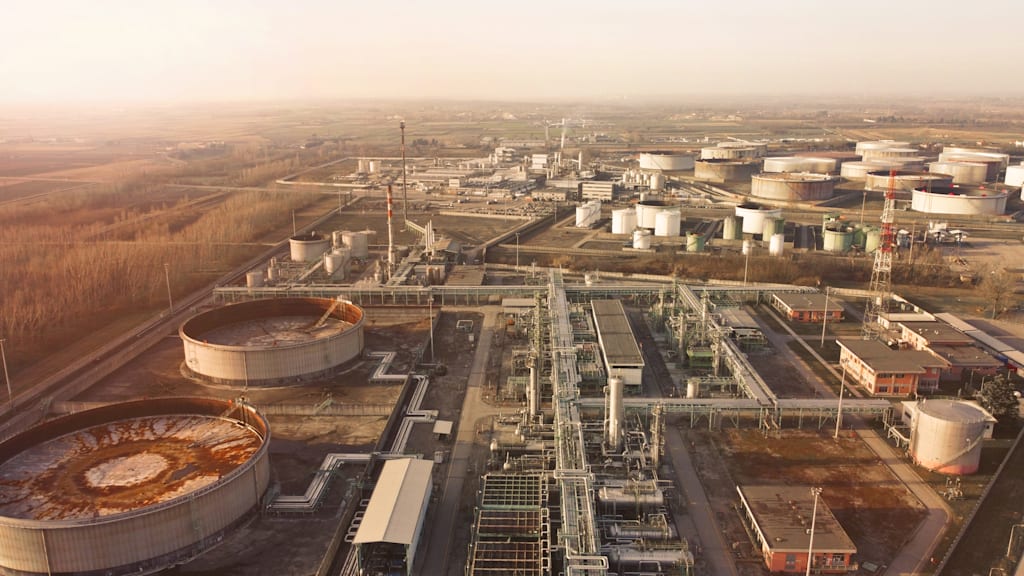
Every machine that turns, grinds, or drills depends on something most people never think about: oil. The industrial oil market sits quietly behind manufacturing, mining, construction, and energy production, keeping equipment running smoothly under extreme pressure and heat. As factories modernize and machinery grows more complex, demand for specialized lubricants, hydraulic fluids, and cutting oils has climbed steadily, turning what was once a commodity business into a field driven by engineering precision and sustainability goals.
Anyone curious about how this sector is shifting can request a free sample report that breaks down regional demand patterns and product segments in detail.
Why Industrial Lubricants Matter More Than Ever
Industrial oils aren't just about reducing friction. They manage heat dissipation, prevent corrosion, and extend the lifespan of equipment that often costs millions of dollars to replace. In sectors like steel manufacturing or heavy mining, a single lubrication failure can halt production lines for days. That's why manufacturers increasingly favor synthetic and bio-based formulations engineered for specific temperature ranges and load conditions, rather than relying on generic mineral oils.
This shift mirrors a broader trend in industrial maintenance: predictive care over reactive repairs. Companies are now pairing oil analysis with sensors that monitor viscosity and contamination levels in real time, catching problems before they cause downtime.
A Real-World Shift Toward Sustainability
One clear example comes from the wind energy sector, where turbine gearboxes operate under punishing conditions for years without maintenance breaks. Several manufacturers have moved toward biodegradable hydraulic fluids that meet environmental certification standards while still withstanding the mechanical stress of constant rotation. This isn't a niche experiment—it reflects a wider push across heavy industry to balance performance with regulatory compliance, especially in Europe, where environmental rules around fluid disposal have tightened considerably.
Construction equipment manufacturers have followed a similar path, reformulating hydraulic and gear oils to reduce environmental impact without sacrificing the durability needed for excavators and cranes operating in remote or sensitive locations.
Regional Demand Tells a Bigger Story
Asia-Pacific has emerged as a significant growth region, largely because of expanding manufacturing bases in countries like India and Vietnam, alongside continued industrial output from China. As factories there scale up automation and precision machining, the need for high-performance lubricants grows alongside it. Meanwhile, North America and Europe are seeing demand shaped less by volume growth and more by replacement cycles tied to stricter emissions and waste-disposal standards.
For readers tracking how this plays out across different industries, the broader trajectory of the industrial oil market reveals how closely lubricant innovation now tracks with manufacturing automation and environmental policy, rather than moving as an isolated commodity trend.
This regional divergence matters for suppliers too. A formulation that works well in a humid Southeast Asian manufacturing plant may not perform the same way in a cold-climate facility in Scandinavia, pushing producers toward more customized, application-specific product lines rather than one-size-fits-all offerings.
What's Changing the Formula
Additive technology has become a quiet battleground. Anti-wear agents, friction modifiers, and oxidation inhibitors are being refined to extend oil change intervals, which reduces both cost and waste for end users. Some equipment makers now design machinery and lubricant specifications together from the start, rather than treating oil selection as an afterthought once the hardware is built.
There's also growing interest in oil condition monitoring software that flags degradation patterns specific to each machine type, helping plant managers schedule maintenance windows more precisely instead of relying on fixed calendar intervals.
Looking Ahead
The path forward for industrial oils looks less like a story about extraction and refining, and more like one about chemistry, data, and environmental responsibility working together. As manufacturing equipment becomes smarter and more sensor-driven, the fluids keeping it running will likely become just as specialized—formulated not just for friction reduction, but for compatibility with monitoring systems and sustainability targets that didn't exist a decade ago. The companies that adapt fastest to this blend of performance and responsibility will probably shape where this entire sector heads next.
About the Creator
Hazel Williams
Building, learning, and growing every day.
Enjoyed the story? Support the Creator.
Subscribe for free to receive all their stories in your feed.
Comments
There are no comments for this story
Be the first to respond and start the conversation.