
Indoor Air Quality Is a $55 Billion Problem Nobody Talks About
The indoor air purification market is doubling in a decade — and most people still don't know why.
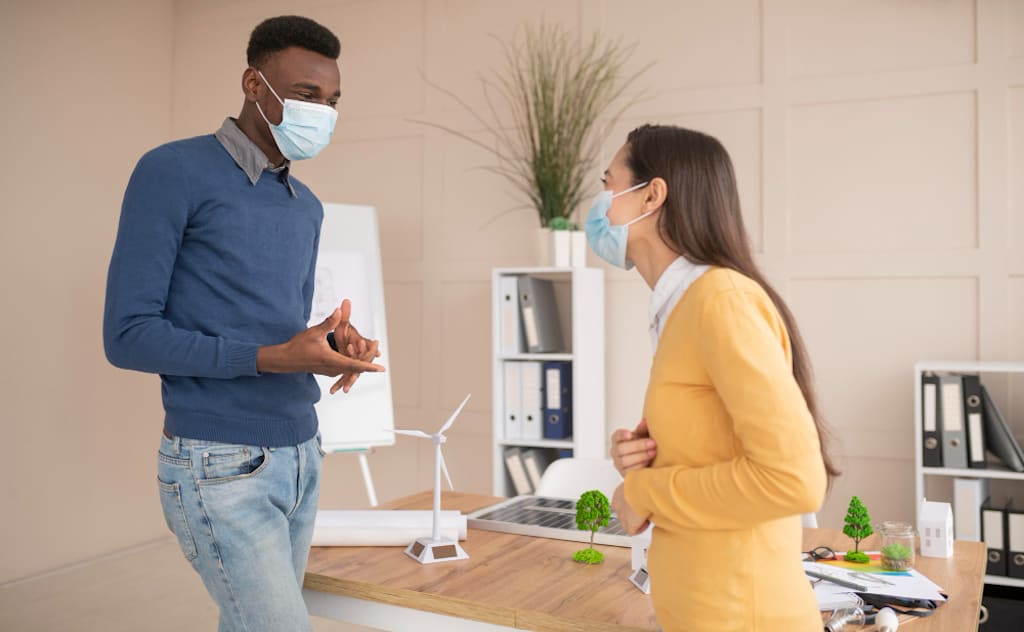
The Air Inside Your Office May Be More Dangerous Than the Street Outside
Most people assume outdoor pollution is the real threat. But the U.S. Environmental Protection Agency has repeatedly found that indoor air can be two to five times more polluted than outdoor air — and in some cases, up to a hundred times worse. Americans spend roughly 90 percent of their lives inside. That fact alone explains why the indoor air purification sector, valued at $26.9 billion in 2025, is now on course to reach $55.4 billion by 2035. A detailed breakdown of market segments, technologies, and regional demand is available in this indoor air purification industry overview.
The numbers are not abstract. According to the World Health Organization, household air pollution caused 2.9 million deaths globally in a single year — including more than 309,000 children under the age of five. These are not statistics from developing countries alone. Volatile organic compounds off-gassing from furniture, mold spores in commercial HVAC ducts, and fine particulates drifting in through poorly sealed windows affect offices, schools, and homes in wealthy cities just as much.
What Changed After the Pandemic
Before 2020, air purifiers sat in a niche corner of the consumer electronics market — bought mainly by allergy sufferers and the health-conscious. The pandemic rewired that entirely. Suddenly, the question of what floats in the air of a shared space became urgent for everyone. Businesses bought HEPA units by the pallet. Hospitals upgraded filtration to handle viral aerosols. Homeowners who had never thought about air quality installed standalone purifiers in bedrooms and kitchens.
That behavioral shift did not reverse when lockdowns ended. It deepened. Commercial real estate developers now market air quality data alongside square footage. Hotels advertise their filtration systems. School districts in the United States and the United Kingdom have allocated public funding specifically for classroom air purification upgrades — a category that barely existed as a budget line item five years ago.
Where the Technology Is Heading
The most widely adopted technology remains HEPA filtration, which captured a 41.3 percent share of the market in 2025. That dominance makes sense — HEPA filters capture 99.97 percent of airborne particles at 0.3 microns or larger, making them effective against dust, pollen, mold spores, and certain pathogens. But HEPA alone is not the full picture anymore.
Manufacturers are increasingly shipping multi-layered systems that combine HEPA with activated carbon and UV-C light treatment in a single unit. Activated carbon targets what HEPA cannot — odors, gases, and volatile organic compounds released by paint, adhesives, and synthetic fabrics. UV-C light disrupts the DNA of biological contaminants. The result is a system that handles particulates, chemical pollutants, and pathogens simultaneously. China alone imported $1.67 billion worth of filtration and purification machinery in 2024, which reflects how seriously Asia Pacific is investing in this multi-technology approach.
Artificial intelligence is beginning to play a meaningful role too. AI-enabled purifiers now monitor air quality in real time, automatically increasing filtration intensity during pollution spikes — cooking fumes, a cleaning session, high-traffic periods — without any user input. For facility managers overseeing large commercial spaces, this reduces both labor costs and the guesswork involved in maintaining healthy air across different zones of a building.
The Industrial and Commercial Case
Consumer applications get most of the press coverage, but the commercial and industrial segments actually drive the bulk of revenue. Commercial applications — offices, hotels, hospitals, retail centers — held a 45.2 percent share of the market in 2025. Industrial use cases are technically different but equally substantial: dust collectors, fume extractors, and mist eliminators that protect workers in manufacturing, chemical processing, and metalworking environments.
Donaldson Company, one of the sector's established players, has invested heavily in connected filtration technology for industrial settings — systems that flag filter saturation and schedule maintenance automatically, reducing the risk of compliance failures. Honeywell, meanwhile, has positioned its air purification hardware as part of its broader building management ecosystem, allowing facility operators to manage air quality alongside lighting, temperature, and security from a single interface. The indoor air purification market size and growth trajectory reflect this convergence of standalone filtration with integrated building intelligence.
The Decade Ahead
Regulatory pressure will continue doing the work that consumer awareness alone cannot. OSHA standards in the United States, EU indoor air quality directives, and national occupational health mandates across Asia are all tightening, turning filtration from a voluntary investment into a compliance requirement for entire categories of employers. That regulatory floor effectively guarantees a baseline of demand regardless of consumer sentiment.
What remains genuinely open is how fast the residential market in the developing world catches up. Urban populations in Southeast Asia, Latin America, and sub-Saharan Africa are growing quickly, as are the industrial emissions and traffic congestion that accompany that growth. If the trajectory of China and India over the last decade is any guide, the next wave of indoor air purification adoption will not be driven by wellness culture — it will be driven by necessity.
About the Creator
Mark K. Belton
I’m Mark K. Belton, 26 years old, currently working as a Digital Marketing Intern. I have a strong interest in digital marketing and have been developing my skills in SEO, social media marketing, content creation, and online campaign
Enjoyed the story? Support the Creator.
Subscribe for free to receive all their stories in your feed.
Comments
There are no comments for this story
Be the first to respond and start the conversation.