
Indonesia Hair Care Industry Hits USD 1,213.3 Million in 2025, Set for Steady Expansion
Indonesia hair care market grows with rising grooming awareness, natural products demand, and expanding retail channels supporting diverse consumer needs.

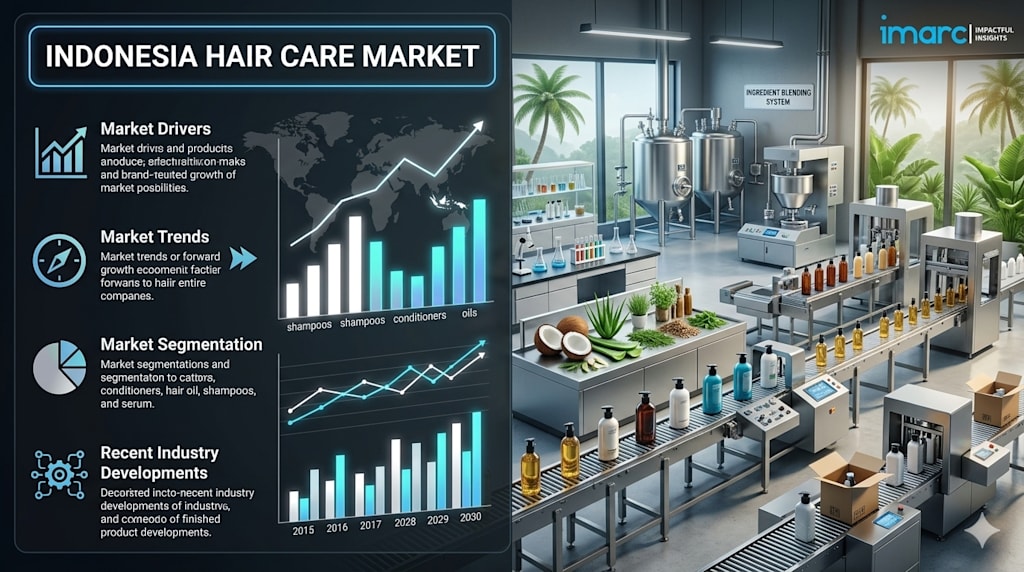
Rising health awareness, a large Muslim-majority population driving halal-certified product demand, and growing digital influence through social media beauty content are fueling strong momentum in Indonesia's hair care sector, supported by traditional ingredient revival, urbanization, and expanding e-commerce distribution. According to IMARC Group's latest data, The Indonesia hair care market size reached USD 1,213.3 Million in 2025. Looking forward, the market is expected to reach USD 1,688.8 Million by 2034, exhibiting a growth rate (CAGR) of 3.74% during 2026-2034. The market is fueled by an increasing youth population, heightened awareness regarding personal hygiene, and growing demand for natural and halal-certified products.
The Indonesia hair care market is experiencing strong growth momentum driven by a cultural renaissance of indigenous ingredients, mandatory halal certification frameworks, and the rapid digitalization of beauty consumption habits. Products incorporating tropical staples such as coconut oil, candlenut, aloe vera, and herbal extracts are resonating deeply with Indonesian consumers, who seek formulations that reflect local heritage while delivering modern performance. Shampoo, hair color, conditioner, and hair styling products serve as the core product segments, distributed across supermarkets, specialty stores, convenience stores, and fast-growing online retail platforms including Tokopedia and Shopee. With Java, Sumatra, Kalimantan, and Sulawesi representing distinct regional demand profiles, brands are increasingly tailoring their portfolios to address geographic and demographic variation across the archipelago.
Indonesia Hair Care Market Growth Drivers:
- Rising Youth Population and Personal Hygiene Awareness
Indonesia's large and active youth population is one of the most powerful demand engines in the hair care sector. Younger consumers are increasingly adopting structured hair care routines influenced by social media tutorials on platforms such as TikTok, YouTube, and Instagram. These digital touchpoints introduce consumers to targeted treatments, including scalp serums, cream baths, and keratin therapies, pushing them beyond basic shampoo usage toward multi-step regimens. PT Kino Indonesia Tbk's Ellips Hair Vitamin Mist achieved a remarkable more than 200% increase in return on advertising spending on online shopping platforms, a 2% increase in market share, and a 24% improvement in customer satisfaction, reflecting how youth-driven digital engagement directly translates into measurable commercial outcomes for brands investing in this segment.
- Halal Certification Mandates and Hijab-Friendly Product Innovation
With the world's largest Muslim population, Indonesia has made halal certification a non-negotiable market entry requirement rather than a differentiating feature. Regulatory frameworks mandating halal labeling have pushed both local and global brands to reformulate their product lines to comply with Islamic ethical and compositional standards. This shift has created an entirely new sub-segment of hijab-friendly hair care, targeting women who wear head coverings and commonly experience scalp dryness, breakage, and moisture imbalance. Brands have responded with dedicated shampoo and scalp-care formulations designed to address these specific conditions, unlocking a previously underserved consumer base and expanding the overall addressable market well beyond general-purpose products.
- Urbanization and Expansion of Digital and Online Retail Channels
Accelerating urbanization across Indonesia's major cities is concentrating consumer spending power and increasing exposure to premium hair care categories. At the same time, the widespread adoption of e-commerce platforms has extended market reach into remote and smaller urban areas, where physical retail infrastructure remains limited. Platforms like Tokopedia and Shopee have democratized access to niche and curated hair care products, enabling consumers in distant regions to access salon-grade treatments and specialized formulations with the same ease as those in metropolitan centers. This dual dynamic of urban spending growth and digital distribution expansion is simultaneously deepening penetration in established markets and opening entirely new consumer bases across the archipelago.
Indonesia Hair Care Market Trends:
- Natural and Traditional Ingredient Revival
Indonesia's hair care industry is undergoing a renaissance of indigenous botanical ingredients that blend centuries of folk remedy knowledge with contemporary beauty science. Brands are incorporating tropical staples such as coconut oil, candlenut, aloe vera, and ginseng into their formulations, positioning these as both culturally resonant and functionally effective. Candlenut and ginseng-based products, in particular, have gained traction for their nourishing and root-strengthening properties, addressing hair integrity challenges common in Indonesia's humid climate. This trend also intersects with sustainability values, as brands adopt eco-friendly packaging and responsible sourcing practices aligned with clean-label consumer expectations. By anchoring product identity in local botanical heritage, Indonesian hair care brands have established a distinctive market position that resonates with eco-conscious and culturally aware consumers.
- Salon-Driven Personalization and Service-Linked Product Demand
The growing influence of professional salon culture is reshaping how Indonesian consumers approach hair care beyond the home. Social media content featuring salon-exclusive treatments such as hair straightening, coloring, and deep moisture therapy has elevated consumer expectations and created demand for professional-grade products accessible through retail channels. This has prompted brands to develop product lines that bridge the gap between salon-quality results and at-home convenience, including targeted cream baths, scalp-specific serums, and conditioning treatments calibrated to hair type. The salon experience has effectively become a content driver, with influencer documentation of treatment results generating authentic product endorsements that fuel repeat purchases and category exploration across Indonesia's digitally engaged consumer base.
- Digital Influence and Social Commerce Transformation
Indonesia's rapid digital adoption has fundamentally transformed how hair care products are discovered, evaluated, and purchased. Influencer-led tutorials addressing specific concerns such as dandruff, dry hair, and hair loss have driven significant spikes in consumer interest around targeted treatment categories. This content ecosystem has created a self-reinforcing cycle: digital education drives salon visits, salon experiences generate shareable content, and that content drives further product purchases across e-commerce platforms. The convergence of online learning, social proof, and seamless digital purchasing has established a deeply integrated consumer journey that rewards brands capable of maintaining a consistent presence across content, community, and commerce channels simultaneously.
Recent News and Developments in Indonesia Hair Care Market
- April 2026: Professional hair care sector expands through salon innovations, scalp care technologies, and rising demand from independent hairstylists.
- March 2026: Olaplex Indonesia launches new N°4 Fine Shampoo and N°5 Fine Conditioner tailored for finer hair types with advanced repair technology.
- January 2026: Beauty industry boom drives double-digit growth in hair care segment amid rising demand for natural and functional products.
- January 2025: Local hair care brands expanded their candlenut and coconut oil-based product lines targeting the hijab-wearing segment, with new shampoo and scalp care launches specifically formulated to address moisture retention and scalp health challenges associated with prolonged hair covering.
- April 2025: Indonesia's halal certification authority BPJPH expanded mandatory certification requirements to cover a broader range of personal care product sub-categories, accelerating brand compliance timelines and triggering new product development cycles across both domestic manufacturers and international brands operating in the market.
Note: If you require specific details, data, or insights that are not currently included in the scope of this report, we are happy to accommodate your request. As part of our customization service, we will gather and provide the additional information you need, tailored to your specific requirements. Please let us know your exact needs, and we will ensure the report is updated accordingly to meet your expectations.
About the Creator
Kishan Kumar
My name is Kishan Roy and I am a market analyst having 5 years of experience and a skilled researcher with a keen eye for consumer trends and data-driven insights.
Enjoyed the story? Support the Creator.
Subscribe for free to receive all their stories in your feed.
Comments
There are no comments for this story
Be the first to respond and start the conversation.