
Indonesia E-Commerce Market to Expand at 8.62% CAGR, Surpassing USD 813.8 Billion by 2034
Indonesia e-commerce market is expanding steadily, driven by rising internet penetration, digital payments, and growing consumer preference for online shopping.

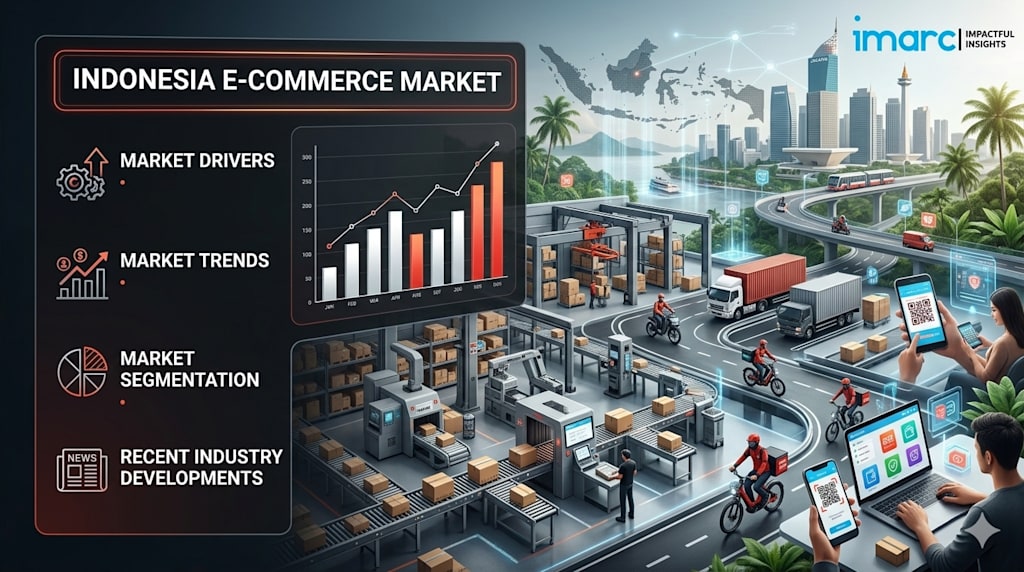
Rising internet penetration, a young tech-savvy population, expanding digital payment infrastructure, and strong government-backed digital initiatives are driving e-commerce demand in Indonesia, supported by mobile-first shopping behavior, social commerce growth, and improving logistics networks. According to IMARC Group's latest data, the Indonesia E-Commerce Market size was valued at USD 386.8 Billion in 2025. Looking forward, IMARC Group estimates the market to reach USD 813.8 Billion by 2034, exhibiting a CAGR of 8.62% from 2026-2034.
The Indonesia E-Commerce Market has emerged as one of Southeast Asia's most compelling digital commerce opportunities, fueled by a population of over 270 million with rapidly increasing smartphone access and disposable income. Demand is driven by a growing middle class, widespread adoption of mobile wallets and buy-now-pay-later services, and the convergence of social media with online shopping. Key segments include B2C categories such as beauty, electronics, fashion, food, and furniture, alongside a rising B2B e-commerce layer. Government-led programs like Making Indonesia 4.0 and national digital transformation mandates are further accelerating the ecosystem, while innovations in live commerce, personalized recommendations, and last-mile delivery continue to redefine the consumer experience.
Indonesia E-Commerce Market Growth Drivers:
- Rapid Internet and Smartphone Penetration
Low-cost smartphones and expanding broadband connectivity are making online shopping accessible to a far wider population across urban and rural geographies. According to the Indonesian Internet Service Providers Association (APJII), internet penetration rose from 78.1% to 79.5% in a single survey period, representing tens of millions of newly connected consumers. This mobile-first shift is fundamentally reshaping retail behavior, with a majority of transactions now initiated via smartphone. Platforms optimized for mobile interfaces, lightweight apps, and low-bandwidth environments are gaining outsized adoption, directly supporting the Indonesia E-Commerce Market's expansion.
- Growing Middle Class and Rising Disposable Income
Indonesia's expanding middle class, estimated at approximately 53.6 million people or around 20.5% of the total population according to the World Bank, is increasingly turning to online platforms for convenience, product variety, and competitive pricing. As household incomes rise, consumers are trading up to branded goods, premium categories, and subscription services. This income-driven behavioral shift is elevating average order values and purchase frequency across major platforms, creating a virtuous cycle of demand, investment, and platform improvement that sustains the Indonesia E-Commerce Market's momentum.
- Digital Payment Innovation and Financial Inclusion
The proliferation of mobile wallets, real-time bank transfers, and buy-now-pay-later solutions has removed key friction points from the online purchase journey. Younger consumers with limited credit histories can now complete transactions seamlessly, while established buyers benefit from faster checkout and greater payment flexibility. The integration of payment tools directly within social commerce environments and live-streaming sessions has further compressed the path from discovery to purchase. These fintech-driven improvements are broadening the active buyer base and deepening transaction frequency across all major segments.
Indonesia E-Commerce Market Trends:
- Social Commerce and Live Streaming Integration
The intersection of entertainment and shopping is redefining how consumers discover and buy products in Indonesia. Live commerce, where sellers demonstrate products in real time via video streams, is gaining rapid traction across major platforms. Social media networks are evolving into fully functional transaction environments, enabling brands to build communities and close sales within a single session. This shift is particularly powerful among younger demographics who treat content consumption and shopping as a unified experience, expanding the Indonesia E-Commerce Market's reach into new consumer segments.
- Government Digital Infrastructure Initiatives
The Indonesian government's Presidential Regulation on the Acceleration of Digital Transformation has designated a national GovTech agency and prioritized nine integrated superapps for public service delivery. The Making Indonesia 4.0 roadmap continues to drive logistics modernization, digital adoption among MSMEs, and e-commerce infrastructure development. These policy frameworks are creating a structured, supportive environment where both domestic startups and international platforms can invest with confidence, accelerating the Indonesia E-Commerce Market's transition from a high-growth phase into a more institutionalized digital economy.
- Expansion Beyond Java into Outer Island Markets
While Java remains the primary revenue hub for most platforms, regions such as Sumatra, Kalimantan, and Sulawesi are emerging as the next wave of growth. Improving mobile connectivity, expanding courier networks, and a rising aspirational middle class in these geographies are unlocking fresh consumer spending pools. Platforms investing in last-mile delivery infrastructure, localized inventory, and regional language interfaces are positioning themselves to capture this next frontier of the Indonesia E-Commerce Market before it becomes as competitive as Java.
Recent News and Developments in Indonesia E-Commerce Market
- February 2026: E-commerce platforms Shopee, Tokopedia, Blibli, and Lazada mandated as PPh collectors, imposing 0.5% withholding tax on MSME sales for streamlined compliance.
- January 2026: Live-stream shopping surges with 60% shopper participation, TikTok Shop's 22 million users driving 20% GMV through video commerce and integrated payments.
- March 2026: Market enters mature phase, shifting from price wars to authenticity-focused malls with authorized sellers, enhancing verified ecosystems and trust.
- April 2026: Mobile commerce dominates as 96% users access via smartphones, powering AI personalization, social features, and real-time logistics innovations.
- April 2026: Explosive mobile adoption fuels omnichannel retail, with 95% transactions smartphone-driven, integrating AR try-ons and instant delivery networks.
Note: If you require specific details, data, or insights that are not currently included in the scope of this report, we are happy to accommodate your request. As part of our customization service, we will gather and provide the additional information you need, tailored to your specific requirements. Please let us know your exact needs, and we will ensure the report is updated accordingly to meet your expectations.
About the Creator
Kishan Kumar
My name is Kishan Roy and I am a market analyst having 5 years of experience and a skilled researcher with a keen eye for consumer trends and data-driven insights.
Enjoyed the story? Support the Creator.
Subscribe for free to receive all their stories in your feed.
Comments
There are no comments for this story
Be the first to respond and start the conversation.