
India Textile Market: Sustainable Fabrics, AI Manufacturing & Market Forecast
Rising consumer spending, sustainable fabric demand, and smart manufacturing are reshaping India's textile industry landscape.
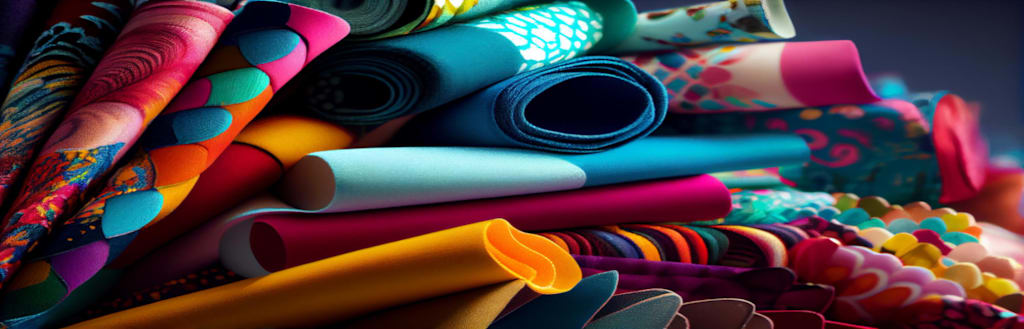
India's textile industry is undergoing a notable shift as sustainability, digital manufacturing, and technical textile applications increasingly shape production and consumption patterns. The sector continues to draw on the country's deep manufacturing heritage while adapting to new consumer expectations and global sourcing dynamics.
This shift spans the value chain: manufacturers are investing in recycled fiber processing and water-efficient dyeing, textile hubs are deploying AI to improve production efficiency, and technical textile applications are expanding into automotive, healthcare, and construction sectors. According to IMARC Group's latest research, the India textile market was valued at USD 152.40 billion in 2025 and is projected to reach USD 213.75 billion by 2034, growing at a CAGR of 3.83% during 2026–2034. In November 2025, India's textile exports to 111 countries recorded 10% year-on-year growth during April–September 2025, reflecting continued export resilience.
Sustainable Manufacturing: From Niche Practice to Industry Standard
One of the most significant shifts in India's textile sector is the move toward sustainable and eco-conscious manufacturing. Producers are increasingly investing in organic cotton cultivation, recycled fiber processing, and water-efficient dyeing technologies to meet rising consumer demand for environmentally responsible products.
In July 2025, Rudra Ecovation showcased its upcycled fabric, Anaura, at Textile Fair India 2025, highlighting large-scale PET recycling capabilities and the industry's growing adoption of circular manufacturing practices. This movement extends across the value chain, from raw material sourcing to finished product development, as manufacturers work to meet international sustainability standards required for export markets.
Parallel to this, digital transformation is reshaping production efficiency. In June 2025, textile hubs including Tiruppur adopted AI across manufacturing value chains, improving production efficiency by 10%, according to the Tiruppur Exporters' Association. Combined with predictive maintenance systems and robotic-assisted assembly, these technologies are improving product consistency and reducing waste across spinning, weaving, and processing operations.
Key Growth Drivers
- Rising Consumer Spending and Middle-Class Expansion: India's growing middle class, supported by rising disposable incomes and evolving lifestyle aspirations, is a fundamental driver of textile demand. Consumers are increasingly shifting from basic functional purchases toward branded and aspirational buying, while e-commerce penetration has extended organized textile consumption into Tier-2 and Tier-3 cities.
- Government Policy Support: Government initiatives promoting integrated textile parks, technology modernization, and export competitiveness are creating favorable conditions for industry expansion. Schemes supporting handloom and power loom sectors, along with foreign direct investment facilitation, are strengthening the industry's manufacturing base.
- Export Market Expansion: India is benefiting from global supply chain diversification as international buyers look beyond traditional manufacturing destinations. India and Oman signed a Free Trade Agreement, opening new export opportunities across textiles and other sectors, while the country's established reputation in handloom and ethnic wear continues to support differentiated export demand.
Challenges Facing the Market
Despite strong growth, the industry faces structural constraints. Infrastructure and logistics limitations, including inconsistent power supply and inadequate transportation networks, continue to increase production costs and affect export competitiveness, particularly for time-sensitive deliveries.
The industry's fragmented structure, with numerous small-scale and unorganized players operating alongside larger integrated manufacturers, limits economies of scale and slows technology adoption across the value chain. Additionally, raw material price volatility, driven by fluctuations in cotton and synthetic fiber prices, creates margin pressures and planning uncertainty, with cotton supply remaining particularly exposed to weather-related risks.
What's Ahead: Market Outlook (2026–2034)
The India textile market is positioned for sustained growth through 2034, supported by favorable demographics, policy incentives, and increasing global sourcing preferences. Growth is expected to be driven by a combination of domestic consumption strength and improving export competitiveness.
Strategic government initiatives promoting manufacturing modernization and cluster development are expected to accelerate capacity expansion, while rising demand for value-added products, technical textiles, and sustainable fabrics is likely to create more diversified revenue streams. These trends point toward India strengthening its position as a significant contributor to global textile commerce.
Top Companies Shaping Textile Market in India
The India textile market remains highly fragmented, with integrated large-scale manufacturers operating alongside millions of small and medium enterprises. The top ten manufacturers collectively hold approximately 18–22% of organized market revenue in 2025, reflecting how dispersed the broader industry remains despite the presence of established market leaders.
- Reliance Industries Limited, operating brands including Vimal, Recron, and R|Elan, holds a market leader position as the largest polyester and synthetic fiber producer in the country, with operations vertically integrated from petrochemicals through to retail.
- Welspun World, through brands such as Christy, Spaces, Welhome, and SPUN, is similarly positioned as a market leader, recognized globally as a top-3 terry towel supplier with a strong export base across the United States and United Kingdom.
- Vardhman Textiles Limited, operating under the Vardhman and VARLAN brands, stands as a strong challenger, holding the position of India's largest cotton yarn producer with more than 10 lakh spindles and exports to over 70 countries.
- Raymond, through its Raymond Fine Fabrics brand, is also a strong challenger, commanding 60% of India's organized worsted fabric market and maintaining a strong position in premium suiting and shirting.
- Arvind Limited rounds out the leading players as a challenger, operating brands including BOOMERANG, Khadi Denim, TRESCA, and Primanté. The company holds the position of India's largest denim manufacturer and supplies major international brands such as H&M and Levi's on a B2B basis.
How Is the India Textile Market Segmented?
By Product
• Polyesters
• Natural Fibers
• Nylon
• Others
By Raw Material
• Cotton
• Chemical
• Wool
• Silk
• Others
By Application
• Fashion and Clothing
• Household
• Technical
• Others
By Region
• North India
• West and Central India
• South India
• East and Northeast India
Note: If you require specific details, data, or insights that are not currently included in the scope of this report, we are happy to accommodate your request. As part of our customization service, we will gather and provide the additional information you need, tailored to your specific requirements.
About the Creator
Jane Knitch
With years of experience as a market researcher & consultant specializing in industry trends, market intelligence, and business insights, I create data-driven content that helps readers understand evolving markets and industry developments.
Enjoyed the story? Support the Creator.
Subscribe for free to receive all their stories in your feed.
Comments
There are no comments for this story
Be the first to respond and start the conversation.