
India Snacks Market Set for Strong Growth as Urban Lifestyles and Innovation Drive Demand
Rising disposable incomes, evolving consumer habits, and expanding retail channels are expected to propel the India snacks market from INR 48,543.1 crores in 2025 to INR 1,04,649.54 crores by 2034, growing at a CAGR of 8.91% from 2026 to 2034.

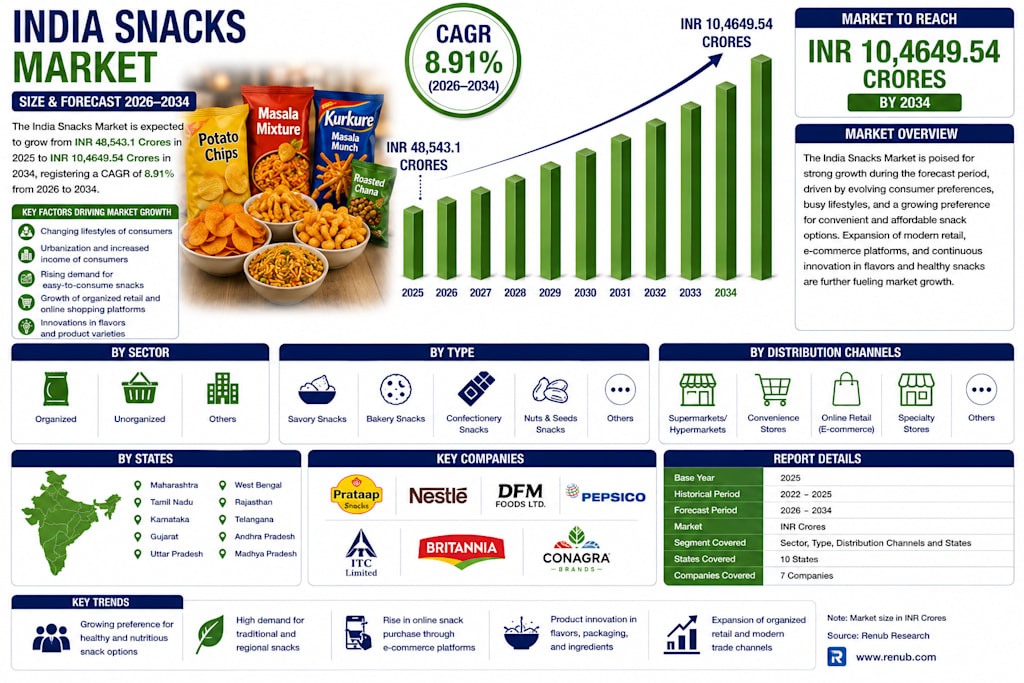
The India snacks market is undergoing a dynamic transformation as consumer lifestyles, preferences, and purchasing power continue to evolve. Snacking is deeply ingrained in Indian culture, but the shift from traditional, homemade options to branded, packaged, and innovative snack products is redefining the industry.
According to Renub Research, the market is projected to grow from INR 48,543.1 crores in 2025 to INR 1,04,649.54 crores by 2034, registering a CAGR of 8.91% during the forecast period. This growth reflects a combination of urbanization, rising incomes, and the increasing demand for convenient and ready-to-eat food options.
Snacks in India encompass a wide variety of products, including savory namkeens, potato chips, cookies, chocolates, baked goods, and emerging health-focused options such as roasted snacks, millet-based products, and protein-rich offerings. These products are valued for their convenience, portability, and diverse flavors, making them suitable for consumption across different occasions and demographics.
Changing Lifestyles and Urbanization Fuel Snacking Demand
One of the primary drivers of the India snacks market is the rapid pace of urbanization and lifestyle changes. With increasing numbers of working professionals, nuclear families, and students, there is a growing demand for quick and convenient food options.
Snacks have evolved from occasional indulgences to everyday essentials, serving as quick meals, office snacks, and on-the-go options. Longer working hours, increased commuting time, and busy schedules are encouraging consumers to rely on ready-to-eat snack products.
The cultural habit of snacking during tea time or social gatherings further reinforces demand across all demographics. Traditional Indian snacks coexist with modern packaged products, creating a diverse and vibrant market landscape.
As urbanization continues to expand, the role of snacks as a convenient and accessible food option is expected to grow significantly.
Rising Disposable Income and Expanding Middle Class
India’s rapidly growing middle class is a key factor driving the snacks market. With increasing disposable incomes, consumers are becoming more willing to spend on branded, premium, and value-added snack products.
The trend toward premiumization is evident in the growing popularity of gourmet flavors, international snack formats, and enhanced packaging. Consumers are seeking not only convenience but also quality and variety.
As income levels rise across Tier I, II, and III cities, per capita consumption of snacks is increasing. This expansion is supported by demographic trends, including a young population and a growing workforce.
The increasing purchasing power of consumers is enabling the transition from unorganized, locally produced snacks to branded and packaged alternatives.
Product Innovation and Expanding Distribution Channels
Innovation is a major driver of growth in the India snacks market. Manufacturers are continuously introducing new flavors, formats, and product categories to cater to diverse consumer preferences.
Regional flavors, fusion snacks, and international cuisines are being incorporated into product offerings, attracting a wide range of consumers. Health-focused innovations, such as baked snacks, low-fat options, millet-based products, and protein-rich snacks, are gaining traction among health-conscious consumers.
The expansion of distribution channels is also playing a critical role. Organized retail formats, supermarkets, hypermarkets, and e-commerce platforms are increasing product accessibility across urban and semi-urban areas.
Quick-commerce platforms and digital marketing are further enhancing product visibility and consumer engagement. These developments are making it easier for consumers to discover and purchase a wide variety of snack products.
Together, innovation and distribution expansion are driving the growth and diversification of the snacks market in India.
Challenges: Health Concerns and Intense Competition
Despite its growth potential, the India snacks market faces several challenges. Increasing awareness of health issues related to excessive consumption of salt, sugar, and fats is influencing consumer behavior.
Government initiatives promoting healthier eating habits and stricter labeling requirements are also impacting the market. Consumers are becoming more conscious of ingredient lists and nutritional value, prompting manufacturers to reformulate products.
Intense competition is another major challenge. The market includes numerous domestic and international brands, as well as a large unorganized sector offering low-cost alternatives.
Price sensitivity among consumers leads to frequent price wars and promotional offers, affecting profit margins. Differentiation through branding, quality, and innovation is essential for companies to maintain competitiveness.
Addressing these challenges will be critical for sustaining long-term growth in the snacks market.
Segment Insights: Key Categories Driving Growth
The India snacks market is highly segmented, with several key categories contributing to its expansion.
Potato Chips
One of the most popular snack categories, driven by strong branding, innovative flavors, and affordability. The introduction of baked and low-calorie options is attracting health-conscious consumers.
Ethnic Namkeen and Traditional Snacks
Traditional snacks such as bhujia, sev, and chivda hold a strong cultural connection and remain widely consumed. Organized players are modernizing these products with better packaging and hygiene.
Cookies and Crackers
A staple snack category with strong demand across all age groups, supported by wide availability and product variety.
Bhujia Segment
A highly popular ethnic snack known for its distinct taste and long shelf life. It continues to grow through both organized and unorganized channels.
Health-Oriented Snacks
Emerging segment including baked, roasted, millet-based, and protein-rich snacks, driven by increasing health awareness.
These segments highlight the diversity of the snacks market and its ability to cater to varied consumer preferences.
Distribution Channels: Convenience Stores Lead
Convenience stores, including kirana shops and neighborhood outlets, remain the most important distribution channel for snacks in India. These outlets cater to impulse purchases and provide easy access to single-serve products.
Supermarkets and hypermarkets are gaining importance, particularly in urban areas, offering a wide range of products and supporting premiumization. Online retail and quick-commerce platforms are also growing rapidly, enhancing accessibility and convenience.
The combination of traditional and modern retail channels ensures widespread availability and supports market expansion across different regions.
Regional Insights: Diverse Market Dynamics
Maharashtra represents one of the largest and most dynamic snack markets, driven by urbanization, high purchasing power, and strong retail infrastructure.
Gujarat has a well-established snack culture, with high demand for traditional items such as farsaan and khakhra, along with growing adoption of packaged snacks.
West Bengal shows a unique blend of traditional and modern snacking habits, with strong demand for local snacks and increasing acceptance of packaged products in urban areas.
Other states such as Tamil Nadu, Karnataka, and Uttar Pradesh are also contributing to market growth, supported by expanding distribution networks and rising consumer awareness.
These regional variations highlight the importance of local preferences and cultural influences in shaping the snacks market.
Competitive Landscape and Key Players
The India snacks market is highly competitive, with major players focusing on innovation, branding, and distribution expansion. Key companies include PepsiCo, ITC Limited, Nestlé, Britannia, Prataap Snacks, and DFM Foods.
These companies are investing in new product launches, marketing campaigns, and partnerships to strengthen their market positions. The presence of both organized and unorganized players creates a dynamic competitive environment.
Strategic initiatives such as product diversification, premiumization, and digital marketing are shaping the future of the industry.
Final Thoughts
The India snacks market is poised for significant growth as consumer preferences continue to evolve and demand for convenient, flavorful, and innovative products increases.
Renub Research’s forecast of INR 1,04,649.54 crores by 2034 highlights the market’s strong potential and long-term relevance.
While challenges such as health concerns and competition remain, ongoing innovation and expanding distribution channels are expected to drive future growth.
About the Creator
Enjoyed the story? Support the Creator.
Subscribe for free to receive all their stories in your feed.
Comments
There are no comments for this story
Be the first to respond and start the conversation.