
India Ice Cream Market Set to Surpass US$ 11 Billion by 2033 as Premium Flavors, Quick Commerce, and Rising Incomes Transform Consumer Preferences
Growing urbanization, changing lifestyles, and innovative product launches are reshaping India's frozen dessert industry for the next decade

India's love affair with ice cream is entering a new era. Once considered a seasonal indulgence, ice cream has evolved into a year-round treat enjoyed by consumers across age groups and income segments. From classic vanilla cones sold at neighborhood stores to premium artisanal creations delivered within minutes through quick-commerce platforms, the Indian ice cream industry is witnessing remarkable growth.
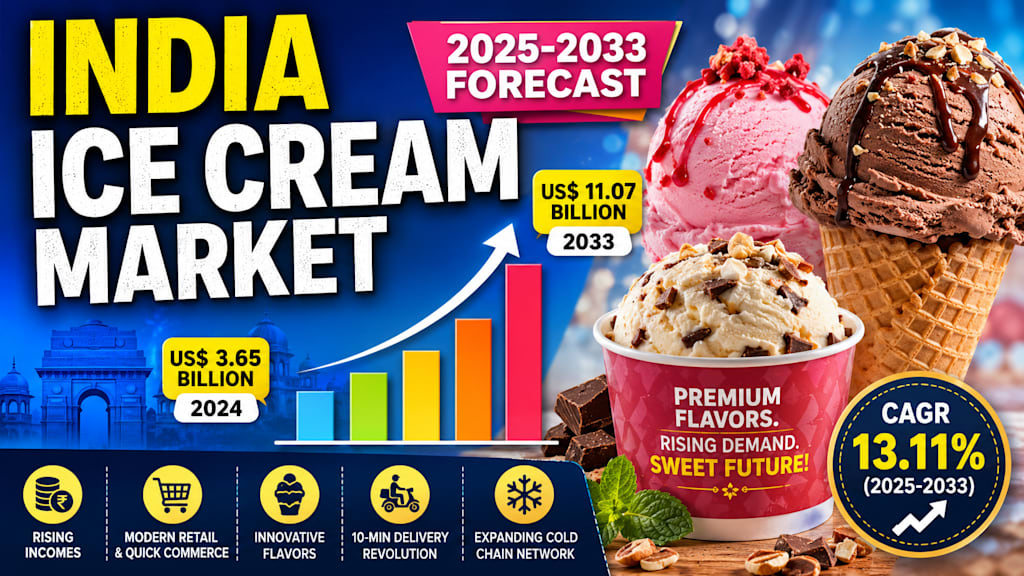
According to Renub Research, the India Ice Cream Market is expected to reach US$ 11.07 billion by 2033 from US$ 3.65 billion in 2024, growing at a robust CAGR of 13.11% during 2025–2033. This impressive expansion is being fueled by increasing disposable incomes, rapid urbanization, evolving consumer preferences, wider retail penetration, and continuous product innovation.
As India's economy grows and consumers seek more premium food experiences, ice cream manufacturers are responding with innovative flavors, healthier alternatives, and enhanced distribution strategies.
India's Growing Appetite for Ice Cream
Ice cream remains one of the country's most popular dessert categories. Made from milk, cream, sugar, and various flavorings, ice cream is available in numerous formats including cones, cups, sticks, family packs, sundaes, and specialty desserts.
Traditionally, Indian consumers favored flavors such as mango, kesar pista, rose, and kulfi-inspired varieties. However, increasing exposure to international food trends has expanded demand for premium flavors including Belgian chocolate, salted caramel, blueberry cheesecake, cookie crumble, and exotic fruit combinations.
The growing popularity of social media has also played a significant role in influencing food choices. Consumers increasingly seek visually appealing desserts, prompting brands to experiment with unique textures, colorful presentations, and limited-edition flavors.
Rising Disposable Income Driving Market Expansion
One of the strongest drivers behind India's ice cream market growth is the country's expanding middle class and rising purchasing power.
As household incomes increase, consumers are spending more on discretionary products, including premium desserts. Families are increasingly willing to purchase larger take-home packs, premium tubs, and specialty ice creams that offer unique flavors and better ingredient quality.
India's economic growth has further strengthened consumer confidence. With GDP growth remaining strong and millions of people joining the middle-income segment, spending on lifestyle-oriented food products continues to rise.
Consumers are no longer purchasing ice cream solely for special occasions. Instead, it has become part of regular consumption patterns, particularly among urban millennials and younger generations.
Urbanization Creating New Consumption Opportunities
India's rapid urbanization is reshaping food consumption habits nationwide.
As more people migrate to cities, access to modern retail infrastructure improves significantly. Supermarkets, hypermarkets, convenience stores, shopping malls, and dedicated ice cream parlors are making frozen desserts more accessible than ever before.
Urban consumers are also more likely to experiment with new flavors and premium products. Exposure to global cuisines and international food trends has increased demand for innovative ice cream offerings.
The expansion of residential communities, commercial complexes, and entertainment destinations further supports impulse purchases and higher consumption frequency.
Major metropolitan areas such as Mumbai, Delhi, Bengaluru, Hyderabad, Pune, Chennai, and Kolkata remain key demand centers, while Tier II and Tier III cities are emerging as important growth markets.
Quick Commerce Revolution Transforming Distribution
The emergence of quick-commerce platforms is creating unprecedented opportunities for ice cream brands.
Companies such as Blinkit, Swiggy Instamart, and Zepto have fundamentally changed how consumers purchase frozen desserts. Customers can now order their favorite ice cream products and receive deliveries within minutes.
This convenience has increased impulse purchases and encouraged more frequent consumption. Brands are partnering closely with quick-commerce providers to improve product visibility and expand reach.
The launch of Blinkit's food delivery initiative Bistro highlights how rapid delivery services are evolving to meet changing consumer expectations. Such innovations are expected to further boost ice cream sales, especially among younger consumers who prioritize convenience.
Innovation Continues to Drive Consumer Interest
Innovation remains one of the industry's most powerful growth engines.
Manufacturers continuously introduce new flavors, textures, packaging formats, and healthier alternatives to attract consumers. Product differentiation has become essential in a highly competitive marketplace.
Health-conscious consumers are increasingly seeking low-fat, low-sugar, high-protein, and plant-based options. This has encouraged companies to expand beyond traditional dairy-based products.
Limited-edition seasonal launches, festive-themed flavors, and region-specific products generate excitement and encourage repeat purchases.
Artisanal brands are also gaining popularity by offering handcrafted products made with premium ingredients and distinctive flavor profiles.
Cold Chain Infrastructure Remains a Key Challenge
Despite significant growth opportunities, the industry faces several operational challenges.
Ice cream requires uninterrupted refrigeration throughout production, transportation, storage, and retail display. Maintaining consistent temperatures remains difficult in many rural and semi-urban regions where infrastructure limitations persist.
Power outages, inadequate cold storage facilities, and transportation constraints can affect product quality and increase wastage.
Manufacturers continue investing heavily in cold chain development to ensure product integrity while expanding into underserved markets.
Improving refrigeration networks will remain critical for sustaining long-term market growth.
Increasing Competition Intensifies Market Dynamics
The Indian ice cream market is becoming increasingly competitive.
Established national brands compete against regional manufacturers, local parlors, frozen dessert producers, and artisanal startups. This competition places pressure on pricing strategies and profit margins.
Price sensitivity remains particularly high in smaller cities and rural markets, where affordability often influences purchasing decisions.
Brands must strike a careful balance between innovation, premiumization, and value pricing to maintain consumer loyalty and market share.
Marketing campaigns, influencer collaborations, and digital engagement strategies are becoming essential tools for differentiation.
Dairy-Based Ice Cream Continues to Dominate
Dairy-based ice cream remains the largest category within India's frozen dessert industry.
Consumers associate dairy products with superior taste, texture, and authenticity. Rich, creamy formulations continue to attract strong demand across all age groups.
Manufacturers are enhancing offerings through premium ingredients, nuts, fruits, chocolate inclusions, and indulgent flavor combinations.
Growing awareness regarding ingredient quality is further supporting demand for genuine dairy-based products over alternatives.
Impulse Consumption Fuels Sales Growth
Impulse ice creams—including cones, sticks, and single-serve cups—represent a major revenue contributor.
These products benefit from convenience, affordability, and widespread availability. Strategic freezer placement in convenience stores, supermarkets, and roadside outlets encourages spontaneous purchases.
Children, teenagers, and young adults remain the primary consumers of impulse products, particularly during warmer months.
Innovative packaging and promotional campaigns continue strengthening demand in this segment.
Chocolate Remains India's Favorite Flavor
Chocolate ice cream consistently ranks among India's most popular flavors.
Its broad appeal across age groups makes it a staple offering for nearly every major brand. Premium variants featuring dark chocolate, brownie chunks, nuts, and chocolate-coated bars are gaining traction among urban consumers.
Manufacturers continue investing in product development within the chocolate segment due to its strong sales performance and consumer loyalty.
Regional Market Highlights
West Bengal
West Bengal remains an important regional market driven by hot summers and strong consumer preference for fruit-based flavors and traditional offerings. Kolkata serves as the primary demand center, supported by expanding retail infrastructure and online delivery services.
Maharashtra
Maharashtra represents one of India's largest ice cream markets. Cities such as Mumbai and Pune demonstrate strong demand for premium products, artisanal offerings, and international flavors. High disposable incomes continue supporting market expansion.
Andhra Pradesh
Warm climatic conditions and rapid urbanization contribute to increasing ice cream consumption in Andhra Pradesh. The state shows strong demand for impulse products including cones, sticks, and cups.
Uttar Pradesh
India's most populous state offers significant growth potential. Expanding urbanization, growing retail penetration, and increasing consumer awareness are driving ice cream sales across both metropolitan and smaller cities.
Future Outlook: A Sweet Decade Ahead
India's ice cream industry is entering a period of exceptional growth driven by demographic advantages, economic expansion, urbanization, and digital transformation.
Manufacturers that successfully combine innovation, affordability, premium experiences, and efficient distribution networks will be best positioned to capture emerging opportunities.
The rise of quick-commerce platforms, growing health consciousness, expanding cold chain infrastructure, and increasing demand from Tier II and Tier III cities are expected to reshape the competitive landscape over the next decade.
With consumers increasingly embracing ice cream as a year-round indulgence rather than a seasonal treat, the market's growth trajectory appears stronger than ever.
10 Recent Developments by Leading Ice Cream Companies
1. Amul
Amul expanded its premium ice cream portfolio with new gourmet flavors and strengthened its quick-commerce partnerships to improve last-mile delivery across urban markets.
2. Kwality Wall's
Kwality Wall's continued introducing premium Magnum variants and expanded distribution across Tier II cities to capture emerging consumer demand.
3. Mother Dairy
Mother Dairy enhanced its dairy product portfolio and invested in stronger cold chain infrastructure to support future ice cream expansion.
4. Naturals Ice Cream
Naturals increased its retail footprint through new store openings while focusing on fruit-based premium flavors that differentiate the brand.
5. Vadilal
Vadilal expanded production capabilities and introduced innovative family-pack offerings targeting value-conscious consumers.
6. Nestlé
Nestlé strengthened its frozen dessert business through product innovation and expanded consumer engagement through digital marketing campaigns.
7. Britannia Industries
Britannia explored opportunities within the frozen dessert category through diversification initiatives and premium food offerings.
8. Patanjali Ayurved
Patanjali continued promoting natural ingredient-based products while expanding distribution channels across semi-urban and rural regions.
9. Cremica
Cremica focused on strengthening food service partnerships and expanding its dessert offerings for institutional customers.
10. Hindustan Unilever
Hindustan Unilever accelerated investments in product innovation, sustainability initiatives, and digital commerce channels supporting Kwality Wall's growth.
Final Thoughts
India's ice cream market is no longer defined solely by summer demand. It is becoming a dynamic, innovation-driven industry shaped by changing consumer lifestyles, premiumization trends, and rapid technological advancements in retail and delivery.
With the market projected to grow from US$ 3.65 billion in 2024 to US$ 11.07 billion by 2033, the sector presents substantial opportunities for manufacturers, retailers, distributors, and investors alike.
As brands continue introducing exciting flavors, healthier alternatives, and seamless purchasing experiences, India's ice cream journey promises to be one of the sweetest growth stories in the country's consumer goods landscape.
About the Creator
Enjoyed the story? Support the Creator.
Subscribe for free to receive all their stories in your feed.
Comments
There are no comments for this story
Be the first to respond and start the conversation.