
India Frozen Food Market Booms as Convenience and Cold Chain Expansion Transform Consumption
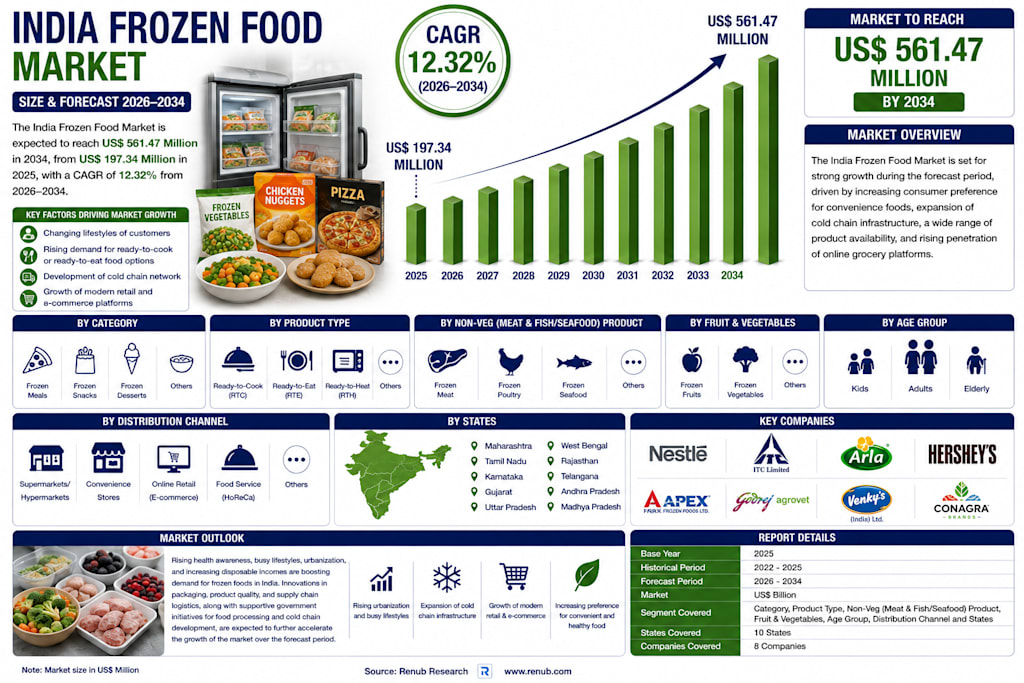
Changing lifestyles, rapid urbanization, and strong retail expansion are set to drive the India frozen food market from US$ 197.34 million in 2025 to US$ 561.47 million by 2034, growing at a robust CAGR of 12.32% from 2026 to 2034.

The India frozen food market is entering a high-growth phase as consumer preferences shift toward convenience, hygiene, and time-saving meal solutions. Once limited to niche urban segments, frozen food is now gaining widespread acceptance across metro cities as well as Tier II and Tier III regions.
According to Renub Research, the market is expected to expand from US$ 197.34 million in 2025 to US$ 561.47 million by 2034, reflecting a strong compound annual growth rate (CAGR) of 12.32% during the forecast period. This rapid growth highlights the transformation of India’s food consumption habits and the increasing importance of convenience-driven products.
Frozen food refers to products preserved through freezing, which slows microbial growth and enzymatic activity, allowing food to retain freshness, taste, and nutritional value over extended periods. These products include vegetables, snacks, ready meals, meat, seafood, and bakery items, offering consumers a wide range of options for quick and easy preparation.
Changing Lifestyles Driving Demand for Convenience
One of the strongest drivers of the India frozen food market is the shift in consumer lifestyles. Urbanization, long working hours, and the rise of nuclear families have significantly altered eating habits, increasing the demand for convenient meal solutions.
Consumers, particularly young professionals and dual-income households, are seeking ready-to-cook and ready-to-eat products that reduce preparation time without compromising taste or quality. Frozen foods such as parathas, snacks, nuggets, and pre-cut vegetables fit seamlessly into these busy lifestyles.
The trend toward smaller household sizes and increased participation of women in the workforce is further accelerating this shift. Portion control, consistency, and ease of use are key factors attracting consumers to frozen food products.
As modern lifestyles continue to evolve, the demand for convenient food options is expected to grow steadily.
Expansion of Cold Chain Infrastructure and Retail Channels
The development of cold chain infrastructure is a critical factor enabling the growth of the frozen food market in India. Improvements in refrigerated storage, transportation, and last-mile delivery have significantly enhanced product quality and availability.
Frozen foods are now widely available in supermarkets, hypermarkets, and quick-commerce platforms, making them more accessible to consumers. Online grocery platforms with cold storage capabilities are further expanding reach beyond major cities.
The rise of organized retail and e-commerce has also increased product visibility, encouraging trial and adoption among consumers. As infrastructure gaps continue to narrow, manufacturers can distribute products more efficiently, reducing spoilage and improving supply chain reliability.
This expanding ecosystem is supporting geographic penetration and building consumer trust, driving market growth across urban and semi-urban regions.
Growth of QSRs, Foodservice, and Product Innovation
The rapid expansion of quick-service restaurants (QSRs), cafes, and food delivery services is significantly boosting demand for frozen food products. Foodservice operators rely on frozen ingredients for consistency, scalability, and cost efficiency.
At the same time, manufacturers are introducing innovative products tailored to Indian tastes, including frozen samosas, kebabs, idlis, biryanis, and regional snacks. These “Indianized” offerings are helping overcome traditional resistance to frozen food.
Health-oriented innovations, such as preservative-free and minimally processed products, are also gaining traction among consumers. Companies are focusing on improving product quality, packaging, and nutritional profiles to attract health-conscious buyers.
Strategic investments and acquisitions in the sector further highlight the market’s growth potential and competitive dynamics.
Challenges: Cold Chain Gaps and Consumer Perception
Despite its strong growth prospects, the India frozen food market faces several challenges. One of the primary barriers is the uneven development of cold chain infrastructure, particularly in rural and semi-urban areas.
Limited refrigeration facilities, inconsistent power supply, and high logistics costs can affect product quality and availability. Retailers may also face constraints in terms of freezer space, limiting product visibility.
Consumer perception is another challenge. Many households still associate frozen food with preservatives and reduced freshness, leading to hesitation in adoption. Educating consumers about the safety, hygiene, and nutritional value of frozen food is essential for market expansion.
Price sensitivity is also a significant factor, as frozen products are often perceived as more expensive than fresh alternatives. Balancing affordability with quality remains a key challenge for manufacturers.
Segment Insights: Diverse Product Categories
The India frozen food market is highly diversified, catering to a wide range of consumer preferences and applications.
Frozen Staples
This segment includes frozen vegetables, parathas, and other daily-use items. It is driven by the demand for time-saving alternatives that retain taste and nutritional value.
Frozen Dairy and Alternatives
Products such as ice cream, frozen desserts, and cheese are popular in urban markets. The rise of plant-based alternatives is also creating new opportunities.
Frozen Chicken and Meat Products
Increasing protein consumption and preference for hygienic, ready-to-cook meat products are driving growth in this segment, particularly in urban areas.
Frozen French Fries
A high-growth segment driven by QSRs and home consumption, supported by the popularity of Western-style foods and air fryers.
Frozen Ready Meals
This segment includes complete meals such as curries, rice dishes, and snacks, catering to consumers seeking convenience and variety.
These segments highlight the versatility of frozen food products and their growing role in modern diets.
Regional Insights: Key States Driving Growth
Maharashtra is one of the largest and fastest-growing markets, supported by urbanization, a large working population, and strong retail infrastructure.
Gujarat shows strong demand for vegetarian frozen products such as snacks and parathas, driven by urban consumption patterns and local manufacturing capabilities.
West Bengal is an emerging market, with growing adoption in urban centers like Kolkata. Changing lifestyles and increasing exposure to modern retail are driving demand, although traditional preferences for fresh food still dominate.
Other states such as Tamil Nadu, Karnataka, and Uttar Pradesh are also witnessing growth, supported by expanding retail networks and increasing consumer awareness.
These regional dynamics highlight the diverse growth patterns across India and the importance of local preferences in shaping market trends.
Competitive Landscape and Key Players
The India frozen food market is highly competitive, with major players focusing on product innovation, distribution expansion, and strategic partnerships. Key companies include Nestlé, ITC Limited, Godrej Agrovet, Venky’s India, and Conagra Brands.
Recent developments include new product launches, collaborations with chefs and food brands, and acquisitions aimed at expanding market presence. Companies are also investing in cold chain infrastructure and digital platforms to enhance distribution and customer engagement.
These strategies reflect the industry’s focus on innovation, accessibility, and meeting evolving consumer needs.
Final Thoughts
The India frozen food market is undergoing a significant transformation, driven by changing lifestyles, infrastructure development, and evolving consumer preferences.
Renub Research’s forecast of US$ 561.47 million by 2034 underscores the market’s strong growth potential and long-term relevance.
While challenges such as cold chain gaps and consumer perception remain, ongoing innovation and increased awareness are expected to drive future expansion.
Ultimately, frozen food is no longer just a convenience—it is becoming an integral part of India’s modern food ecosystem, offering a balance of quality, efficiency, and accessibility for a rapidly evolving consumer base.
About the Creator
Enjoyed the story? Support the Creator.
Subscribe for free to receive all their stories in your feed.
Comments
There are no comments for this story
Be the first to respond and start the conversation.