
India Butter Market Set to Rise as Urban Tastes, Bakery Boom, and Retail Expansion Drive Demand Through 2034
From Traditional Kitchens to Modern Cafés, Butter Is Becoming a Bigger Part of India’s Daily Food Story

India’s food culture has always celebrated dairy, from homemade white butter to clarified butter used in festive dishes and temple traditions. Now, a new chapter is unfolding for one of the country’s most familiar dairy staples: butter.
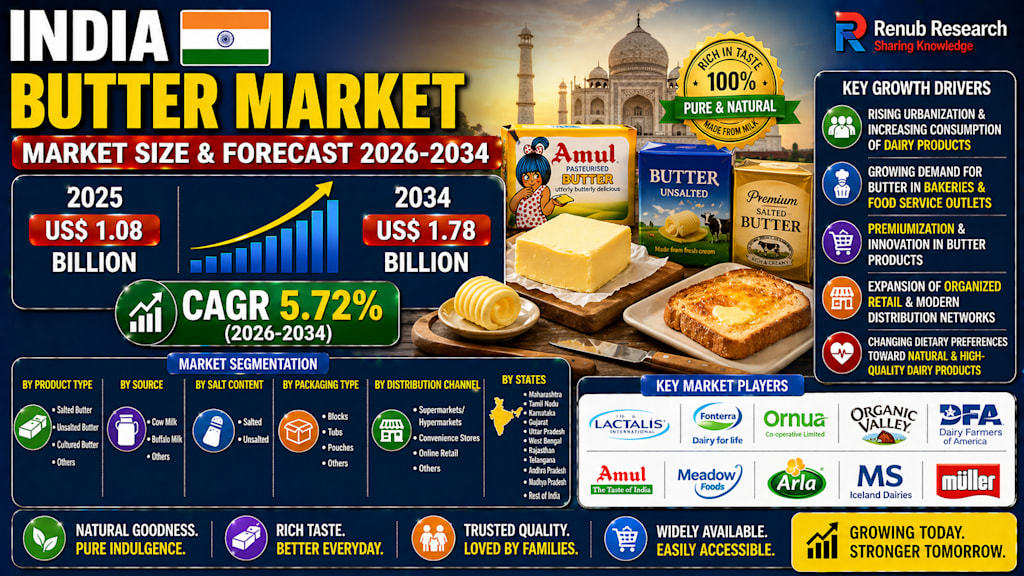
According to Renub Research, the India Butter Market is projected to grow from US$ 1.08 Billion in 2025 to US$ 1.78 Billion by 2034, expanding at a CAGR of 5.72% from 2026 to 2034. The growth reflects rising urbanization, stronger demand for packaged dairy foods, growth in restaurants and bakeries, and evolving consumer lifestyles across Indian cities and towns.
Butter is no longer viewed as just a breakfast spread or festive indulgence. It has become an ingredient tied to convenience, premium dining, café culture, baking trends, and home cooking innovation.
Why Butter Still Matters in India
Few products enjoy the emotional and cultural relevance butter does in India. Whether spread on toast, melted over parathas, used in pav bhaji, or blended into desserts, butter has deep roots in Indian households.
At the same time, younger consumers are adopting global eating habits. Sandwiches, croissants, pasta sauces, garlic breads, cookies, cakes, and breakfast platters all rely heavily on butter. As these foods become mainstream, butter demand naturally rises.
This blend of tradition and modern consumption gives butter a unique advantage. It appeals equally to nostalgic buyers and trend-driven consumers.
Urban India Is Fueling New Demand
One of the strongest drivers behind market growth is urbanization. As more Indians move into cities and earn higher disposable incomes, their food choices change.
Urban consumers increasingly prioritize:
- Convenience foods
- Branded packaged dairy products
- Premium grocery options
- Home baking ingredients
- Café-style breakfast foods
- Ready-to-cook meal solutions
Butter fits naturally into all of these categories.
In metro cities such as Mumbai, Bengaluru, Delhi, Pune, Hyderabad, and Chennai, butter consumption is expanding through both households and foodservice channels. Working professionals, young families, and students are adding butter to faster, easier meal routines.
India’s Dairy Strength Supports the Market
India remains one of the world’s dairy powerhouses, and that gives the butter industry a solid foundation.
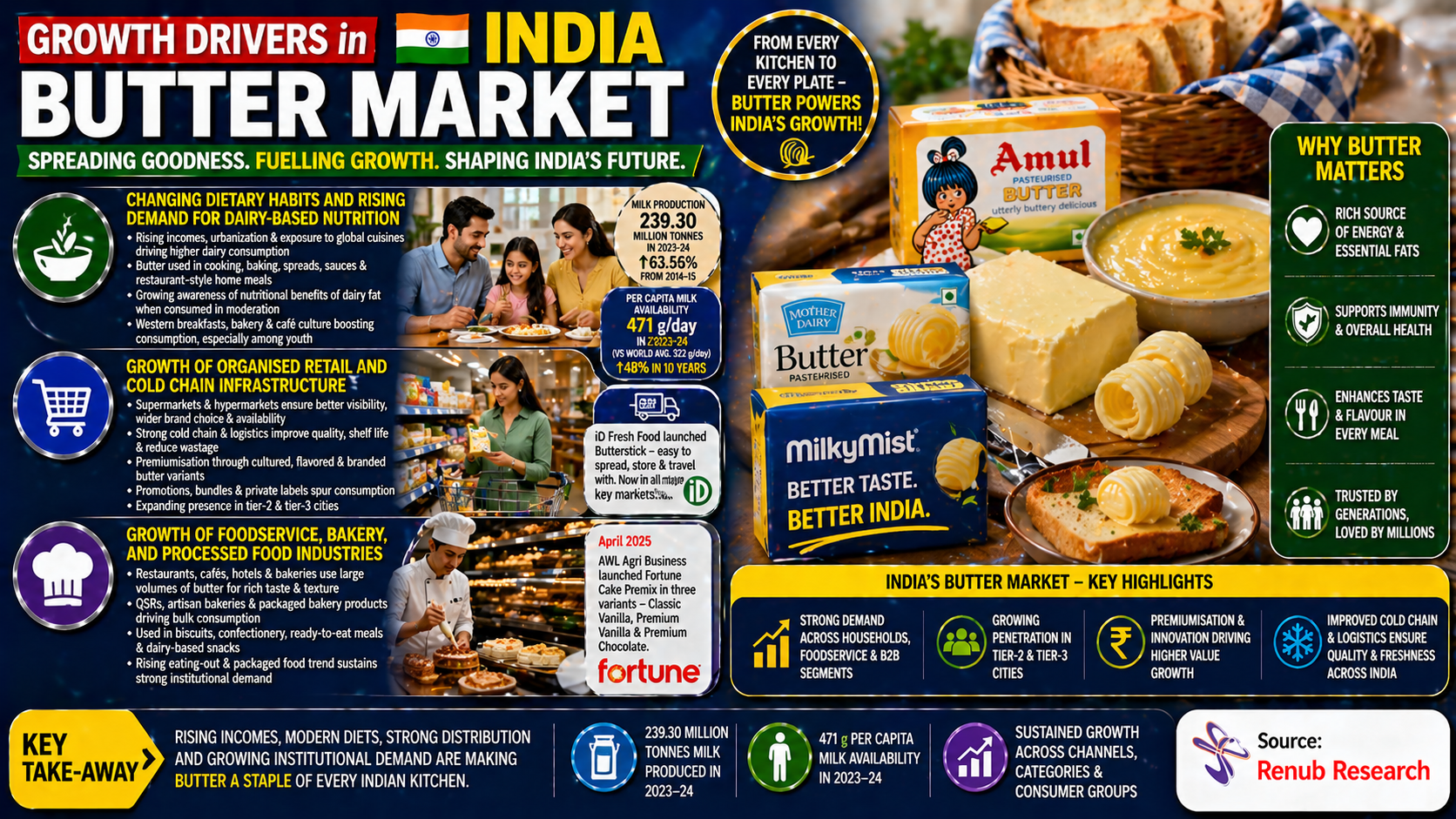
Milk production in India rose from 146.30 million tonnes in 2014–15 to 239.30 million tonnes in 2023–24, while per capita milk availability crossed 471 grams per person per day, well above the world average. This larger dairy ecosystem supports butter production, processing, and distribution nationwide.
With stronger milk supply networks, improved cold storage, and better logistics, branded butter makers can now reach deeper into tier-2 and tier-3 cities.
Retail Revolution Is Changing How Butter Is Bought
Years ago, butter purchases were dominated by local stores and limited brand choices. Today, that picture looks very different.
Consumers can now buy butter through:
- Supermarkets
- Hypermarkets
- Convenience stores
- Quick-commerce apps
- E-commerce grocery platforms
- Premium specialty stores
Modern retail formats give buyers more visibility, better product comparisons, frequent discounts, and access to flavored or imported butter products.
Cold-chain improvements also help preserve freshness and extend shelf life—especially critical in India’s warmer climate.
As organized retail expands beyond major metros, butter consumption is becoming more geographically widespread.
Cafés, Bakeries, and Restaurants Need More Butter
India’s booming foodservice industry is another major growth engine.
Restaurants, cafés, hotels, cloud kitchens, bakeries, and quick-service chains use butter extensively for:
- Grilling and sautéing
- Baking breads and cakes
- Sauces and spreads
- Premium finishing touches
- Desserts and confectionery
The rise of artisanal bakeries, gourmet cafés, and modern dining chains means butter is being purchased in larger commercial volumes than ever before.
Even street food vendors use butter generously in high-demand dishes such as dosa, pav bhaji, sandwiches, and rolls.
Premium Butter Is Emerging
India’s butter market is no longer limited to basic salted blocks. Consumers are beginning to explore premium segments such as:
- Cultured butter
- Unsalted butter for baking
- Garlic butter
- Herb butter
- Imported European-style butter
- Organic butter
This reflects a larger trend: Indian buyers increasingly want quality, taste, and experience—not just low price.
Urban shoppers especially are willing to pay more for butter that offers better texture, cleaner ingredients, or specialty flavors.
Salted Butter Still Dominates
Despite premium growth, traditional salted butter remains the market leader.
Why? Because it offers:
- Longer shelf life
- Familiar taste
- Easy everyday use
- Better value pricing
- Strong household demand
Salted butter continues to be widely used for breakfast, cooking, and snacking across India. It remains the backbone of the category.
Regional Growth Stories Across India
Maharashtra
Maharashtra is among India’s leading butter markets due to urban density, higher incomes, and a powerful foodservice sector. Cities like Mumbai, Pune, and Nagpur generate strong household and commercial demand.
Uttar Pradesh
A large population base, growing middle class, and expanding retail presence make Uttar Pradesh a strong growth region. Butter demand is rising in cities such as Lucknow, Noida, Ghaziabad, and Kanpur.
West Bengal
Kolkata’s bakery culture, confectionery demand, and rising preference for packaged dairy products support consistent butter sales in eastern India.
Andhra Pradesh
Urbanization and changing food preferences in Visakhapatnam, Vijayawada, and Tirupati are helping packaged butter gain traction.
Challenges the Industry Must Solve
While growth prospects are positive, some obstacles remain.
Milk Price Volatility
Butter production depends heavily on raw milk prices, which can fluctuate due to weather, feed costs, and seasonal dairy cycles. This creates pricing pressure for manufacturers.
Competition from Other Fats
Butter competes with ghee, margarine, vegetable spreads, and refined oils. Price-sensitive consumers may switch depending on affordability.
Health Perception Issues
Some buyers remain cautious due to butter’s saturated fat reputation. Brands may need stronger education around balanced consumption and product quality.
What the Future Looks Like
India’s butter market appears positioned for stable long-term expansion rather than short-lived hype.
Future winners will likely focus on:
- Affordable premiumization
- Strong cold-chain networks
- Rural and tier-2 expansion
- Health-conscious variants
- Foodservice partnerships
- Quick-commerce visibility
- Flavor innovation
As Indian consumers seek both comfort food and convenience, butter occupies a rare sweet spot.
It is traditional enough to be trusted, yet versatile enough to fit modern eating habits.
Final Thoughts
Butter has moved far beyond the breakfast table. In today’s India, it sits at the crossroads of tradition, urban growth, packaged foods, premium retail, and culinary experimentation.
With the market expected to climb from US$ 1.08 Billion in 2025 to US$ 1.78 Billion by 2034, the category’s future looks rich in every sense of the word.
About the Creator
Enjoyed the story? Support the Creator.
Subscribe for free to receive all their stories in your feed.
Comments
There are no comments for this story
Be the first to respond and start the conversation.