
India Banana Ketchup Market Set to Reach US$ 96.25 Million by 2034 as Fusion Flavors Transform Consumer Tastes
Fruit-Based Condiments Gain Momentum in India’s Expanding Sauce Industry

India’s evolving food culture is creating surprising winners—and banana ketchup is one of them. Once considered a niche or novelty product, this sweet, tangy, fruit-based condiment is now emerging as a serious player in the Indian sauces and condiments category. Driven by urban experimentation, changing taste preferences, and demand for healthier alternatives, banana ketchup is gaining space on retail shelves, restaurant menus, and e-commerce platforms.
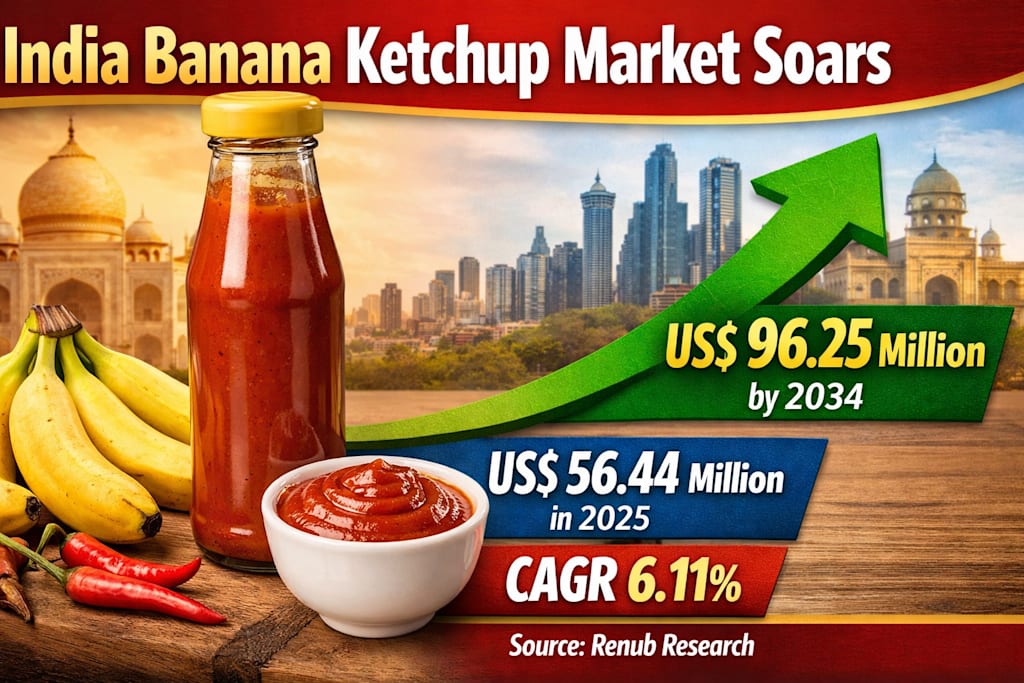
According to Renub Research, the India Banana Ketchup Market is projected to grow from US$ 56.44 Million in 2025 to US$ 96.25 Million by 2034, expanding at a CAGR of 6.11% during 2026 to 2034.
This growth reflects a wider consumer movement toward flavor innovation, fruit-based foods, and products that combine taste with convenience.
What Is Banana Ketchup and Why Is It Trending?
Banana ketchup is a flavorful condiment made using mashed bananas, vinegar, sugar, spices, and sometimes natural coloring. Originally developed as an alternative to tomato ketchup, it offers a thicker consistency with a sweet and mildly spicy taste.
Its appeal lies in versatility. It pairs well with:
French fries
Pakoras
Samosas
Sandwiches
Grilled meats
Rice dishes
Burgers
Rolls and wraps
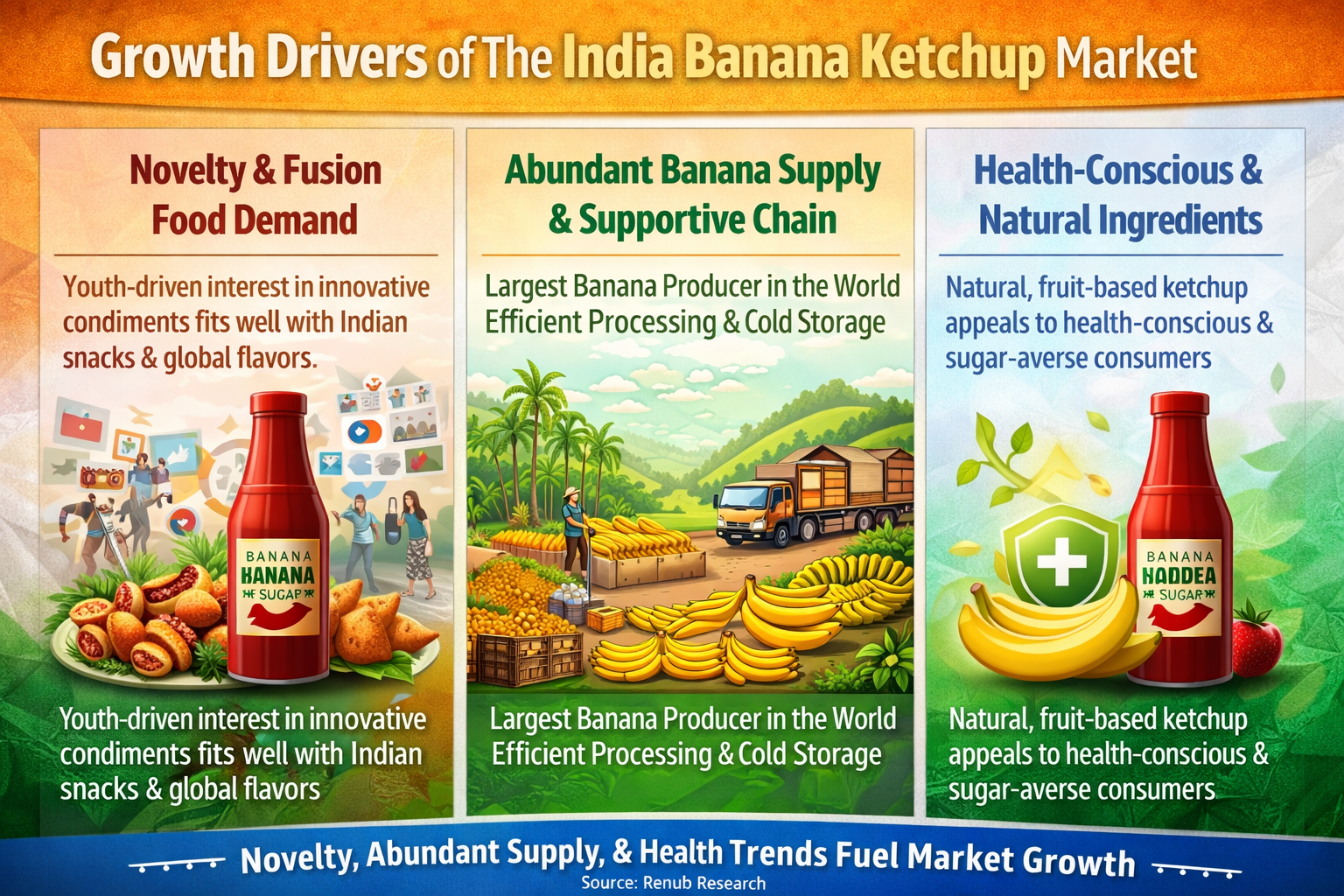
Indian consumers—especially younger urban buyers—are increasingly open to trying new flavors. Banana ketchup fits perfectly into the rising fusion food culture, where global tastes meet Indian snacks and meals.
Market Growth Driven by Urbanization and Food Curiosity
One of the strongest drivers behind this market is the growing appetite for experimentation among Indian consumers.
Millennials and Gen Z shoppers are exploring global flavors through:
Food delivery apps
Travel exposure
Social media food trends
International restaurant chains
YouTube cooking channels
Banana ketchup offers something familiar yet different. It resembles tomato ketchup in usage but delivers a new flavor experience.
Restaurants, food trucks, cafés, and quick-service chains are also introducing banana ketchup as a unique dip or burger sauce. This is helping more consumers discover the product organically.
India’s Banana Production Creates Natural Advantage
India is already one of the world’s largest banana producers, giving the banana ketchup industry a strong supply-side advantage.
The country produces 37.47 million metric tonnes of bananas, accounting for 19.37% of global production, according to the report.
This creates multiple benefits:
Easy raw material availability
Lower production costs
Better pricing competitiveness
Reduced import dependence
Opportunities for food processing industries
Even bananas that are not suitable for direct retail sale due to appearance or size can be processed into ketchup, reducing waste and supporting farmer incomes.
States like Andhra Pradesh, Maharashtra, Gujarat, and Tamil Nadu can become important supply and production hubs.
Health-Conscious Consumers Prefer Fruit-Based Options
Indian consumers are paying closer attention to labels, ingredients, and nutrition than ever before.
Traditional sauces are often criticized for:
High sugar content
Artificial colors
Preservatives
Excessive sodium
Banana ketchup, being fruit-based, benefits from a healthier perception. Families and parents are especially attracted to products that appear more natural and kid-friendly.
Many brands are expected to introduce:
Low sugar banana ketchup
Organic variants
No preservative versions
Indian spice-infused flavors
Premium gourmet editions
As wellness continues influencing grocery purchases, banana ketchup stands to benefit.
Spicy Banana Ketchup Could Become India’s Favorite Variant
India loves bold flavors, and the spicy version of banana ketchup may become the strongest growth segment.
By combining banana sweetness with chili heat, brands are creating sauces suited for:
Street food snacks
Kebabs
Fried starters
Burgers
Grilled paneer
Rolls and wraps
Manufacturers are also localizing recipes using Indian ingredients like:
Red chili flakes
Garlic
Black pepper
Cumin
Mixed masala spices
This creates a flavor profile that feels innovative yet familiar.
Sweet Banana Ketchup Appeals to Families and Kids
The sweet version of banana ketchup is likely to perform strongly in households with children.
Its smoother texture and mild taste make it ideal for:
Lunchboxes
Sandwiches
Nuggets
Toast snacks
French fries
Home-made fast food meals
Parents looking for alternatives to heavily processed sugary sauces may increasingly choose fruit-based condiments.
This segment may see repeat purchases and strong brand loyalty.
Packaging Trends: Plastic Bottles Lead, Glass Targets Premium Buyers
Plastic Bottles Dominate
Plastic bottles remain the most practical packaging choice because they are:
Affordable
Lightweight
Easy to squeeze
Break-resistant
Suitable for rural distribution
They are expected to dominate mass-market sales.
Glass Bottles Gain Premium Appeal
Glass bottles are attracting urban premium consumers who associate them with:
Better quality
Eco-friendliness
Gourmet branding
Better flavor preservation
Restaurants and cafés also prefer glass bottles for presentation.
Online Sales Creating New Growth Opportunities
E-commerce is becoming one of the most important sales channels for niche food products.
Banana ketchup brands benefit online because consumers can easily:
Discover new products
Compare flavors
Read reviews
Buy from anywhere in India
Access discounts and subscriptions
Digital-first brands may use Instagram, influencer marketing, and recipe content to build awareness faster than traditional FMCG routes.
Online retail can help small brands compete with established ketchup giants.
Regional Markets to Watch
Maharashtra
With Mumbai and Pune leading food experimentation, Maharashtra is expected to remain a strong demand center.
Andhra Pradesh
As a major banana-producing state with a love for spicy food, Andhra Pradesh offers both manufacturing and consumption potential.
Uttar Pradesh
Its massive population and growing retail infrastructure make it an important long-term opportunity, especially with affordable pack sizes.
West Bengal, Karnataka, Gujarat, Tamil Nadu
These states also offer strong potential due to urbanization and modern retail expansion.
Challenges Still Remain
Despite strong potential, the industry faces hurdles:
Low Awareness
Many Indian consumers still associate ketchup only with tomatoes.
Shelf Space Competition
Tomato ketchup brands dominate supermarkets and kirana shelves.
Price Sensitivity
Premium fruit-based products may struggle in cost-conscious markets.
Need for Marketing
Brands must educate consumers through sampling, recipes, and influencer campaigns.
Future Outlook: A Niche Product Ready for Mainstream Growth
India’s food industry is changing rapidly. Consumers no longer want only traditional choices—they want exciting, healthier, Instagram-worthy, and globally inspired foods.
Banana ketchup checks many of those boxes:
Unique flavor
Fruit-based appeal
Versatile usage
Strong local raw material supply
Digital-friendly branding potential
As awareness rises, this once-unusual condiment could become a regular kitchen item in millions of Indian homes.
Final Thoughts
The India Banana Ketchup Market may seem small today, but it reflects a much larger shift in consumer behavior. Indians are embracing experimentation, wellness, and convenience all at once. Products that blend these trends can grow quickly.
With Renub Research forecasting the market to nearly double to US$ 96.25 Million by 2034, banana ketchup is no longer just an alternative—it may be the next big condiment category in India.
About the Creator
Enjoyed the story? Support the Creator.
Subscribe for free to receive all their stories in your feed.
Comments
There are no comments for this story
Be the first to respond and start the conversation.