
India Automotive Market Size, Share, Technology Trends and Growth Forecast 2026–2034
This boom is happening because people have more spending power, cities are growing fast, and the government is heavily backing electric vehicles through programs like the 'Make in India' campaign.

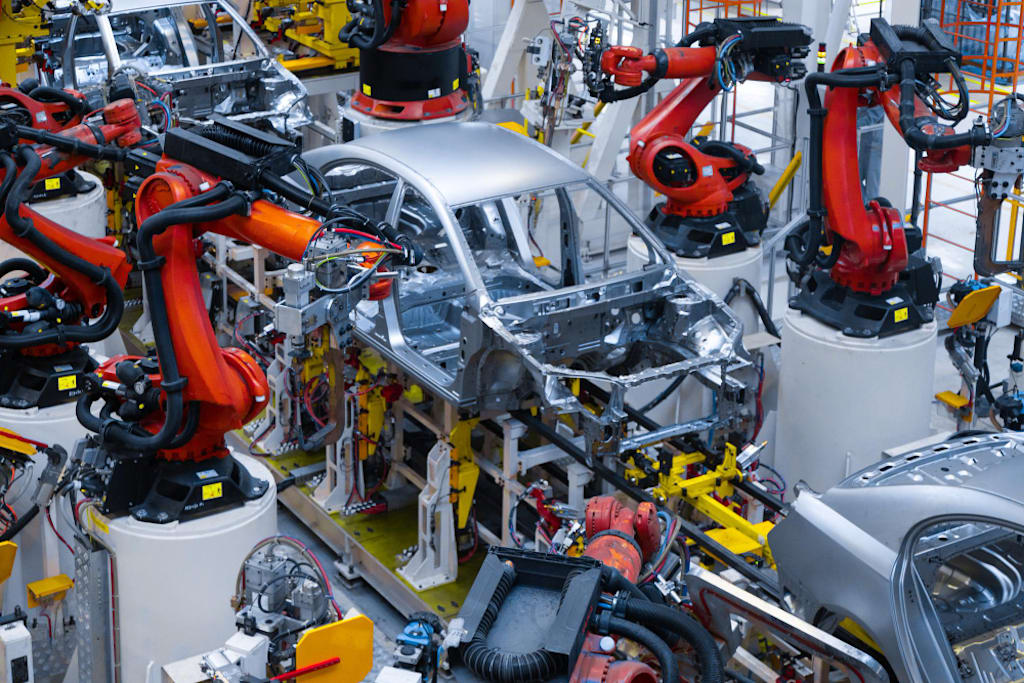
India's Automotive Market Is Gaining Strong Momentum
India's automotive market stands as one of Asia's most strategically significant and rapidly expanding mobility sectors, anchored by the country's growing manufacturing capabilities, rising consumer demand, and accelerating shift toward electric and connected vehicle technologies. The market was valued at USD 274.93 Billion in 2025 and is projected to reach USD 584.23 Billion by 2034, growing at a compound annual growth rate (CAGR) of 8.74% during 2026–2034.
The growth is driven by rising disposable incomes, rapid urbanization, and government incentives for electric vehicles under flagship programs including the Make in India campaign and the Automotive Mission Plan. India's per capita GNDI at current prices rose from INR 29,894 in 2004–05 to INR 2,14,951 by 2023–24, reflecting the expanding middle-class purchasing power fueling vehicle demand. The accelerating adoption of connected, hybrid, and autonomous vehicle technologies is transforming mobility, while significant OEM investments in R&D, digital sales platforms, and dealership network expansion are broadening market reach. The two-wheeler and passenger vehicle segments remain core growth engines, complemented by rising commercial vehicle demand driven by e-commerce and logistics expansion.
In November 2025, Japanese automakers Toyota, Suzuki, and Honda collectively invested USD 11 Billion in India, boosting manufacturing, exports, and EV initiatives, reinforcing India's emergence as a new global automotive production and export hub. In August 2025, Suzuki expanded Gujarat's automotive footprint with a INR 3,200 Crore fourth EV production line at its mega plant, attracting total investment of INR 29,700 Crore and fostering job creation across the state's automotive ecosystem.
Market Snapshot
• Market Size (2025): USD 274.93 Billion
• Forecast Value (2034): USD 584.23 Billion
• CAGR (2026–2034): 8.74%
• Leading Vehicle Type: Two-Wheelers (72.6%)
• Leading Propulsion Type: Internal Combustion Engine (86.1%)
• Leading Application: Personal (68.4%)
• Leading Ownership Mode: Individual Ownership (74.2%)
• Leading Region: West India (35.1%)
• Subsectors Covered: Two-Wheelers, Three-Wheelers, Passenger Vehicles, Commercial Vehicles; across ICE, Hybrid, and Electric propulsion; serving Personal, Commercial, and Fleet applications
Why Is the India Automotive Market Growing?
• Growth of Automotive Financing and Subscription Models:
Flexible financing options and subscription-based ownership models are reshaping the automotive landscape in India. Consumers increasingly prefer EMI schemes, lease-to-own plans, and short-term vehicle subscriptions to reduce upfront costs and enhance flexibility. In December 2025, Tata Motors launched EMI schemes for eight models covering both ICE and EVs, with monthly instalments ranging from INR 4,999 to INR 14,555, supporting flexible long-term financing access. Banks, NBFCs, and fintech companies are partnering with OEMs to provide tailored financial solutions, facilitating vehicle accessibility in tier-2 and tier-3 cities, expanding the customer base, and promoting adoption of newer technologies including electric and connected vehicles.
• Rising Demand for Commercial Vehicles and Logistics Expansion:
The rapid growth of e-commerce, retail, and logistics sectors is augmenting demand for commercial vehicles including light and medium-duty trucks, cargo vans, and delivery fleets. Increasing urbanization, infrastructure development, and last-mile delivery requirements are driving fleet expansion, with OEMs introducing fuel-efficient, durable, and technology-enabled commercial vehicles to meet operational efficiency and compliance standards. According to IBEF, India's automobile exports grew 19% in FY25, surpassing 5.3 million units, driven by robust international demand for passenger vehicles, two-wheelers, and commercial vehicles.
• Government Policies and Incentives for Vehicle Manufacturing:
Supportive government initiatives — including the Make in India campaign, Automotive Mission Plan, and subsidies for electric and hybrid vehicles — are significantly driving market growth. Incentives for domestic production, tax benefits, and reduced import duties encourage OEM investments, local manufacturing, and R&D. In June 2025, the Ministry of Heavy Industries launched the SPMEPCI portal inviting international EV manufacturers to establish operations in India through a minimum investment of INR 4,150 crore, supporting domestic EV manufacturing, the Make in India initiative, and India's Net Zero 2070 objectives.
What Are the Latest Emerging Trends in India's Automotive Market?
• Rising Adoption of Electric Vehicles (EVs):
India's automotive market is witnessing accelerated adoption of electric vehicles driven by government incentives, tax benefits, and growing environmental awareness. EV sales in India increased from 50,000 in 2016 to 2.08 million in 2024, while NITI Aayog targets EVs accounting for 30% of total vehicle sales by 2030. In February 2026, Yamaha launched its first Indian electric scooter, the EC-06, priced at INR 1.67 Lakh, offering a 169 km range, a 6.7 kW motor, and connected features for urban-focused eco-friendly commuting. Increasing investments in charging infrastructure and battery technology are enhancing EV feasibility for both two-wheelers and passenger vehicles, while public and private fleet operators integrate electric vehicles for last-mile logistics.
• Integration of Connected and Smart Vehicle Technologies:
Connected car technologies are increasingly integrated into vehicles, offering real-time navigation, telematics, predictive maintenance, and infotainment solutions. In January 2026, Samsung's HARMAN India announced production-ready connected car solutions including V2V and V2X systems, digital cockpits, telematics control units, and modular platforms enabling faster OEM timelines and seamless 4G/5G/SatCom connectivity — all designed and built in India. Manufacturers are incorporating IoT-enabled sensors, AI-driven safety features, and mobile connectivity to enhance user experience and operational efficiency, transforming vehicle ownership models for both fleet operators and individual consumers.
• Expansion of Shared Mobility and Micro-Mobility Solutions:
Shared mobility and micro-mobility services including ride-hailing, e-scooters, and bicycle-sharing are expanding rapidly in urban India, driven by rising traffic congestion, parking challenges, and environmental concerns. Automotive companies and mobility startups are collaborating to offer integrated app-based platforms, subscription models, and electric micro-mobility fleets, reducing dependence on personal vehicle ownership and fostering sustainable urban transportation. This trend provides new revenue streams for OEMs, logistics providers, and technology platforms across metropolitan regions while broadening the overall addressable mobility market.
What Opportunities Lie Ahead for India's Automotive Market?
India's automotive market is poised for sustained growth through 2034, driven by increasing rural and semi-urban vehicle adoption, rising demand for premium and compact vehicles, and expansion of organized dealership networks. Continuous technological advancements in electric drivetrains, autonomous features, and lightweight materials are enhancing vehicle efficiency and performance, while government infrastructure development including expressways and smart city initiatives provides a structural tailwind.
About 36% of India's population currently resides in cities, with UN DESA forecasting this share to rise to nearly 50% by 2050, creating expanding demand centers across urban and peri-urban geographies. The electric vehicle segment represents a particularly compelling growth opportunity, with India's cost-efficient manufacturing infrastructure, technical expertise, and policy support positioning it to become a leading EV production and export hub in Asia.
In January 2026, India's automotive industry — including Maruti Suzuki, Tata, Mahindra, and VinFast — scheduled the introduction of 31 new vehicles in 2026, the highest number of launches in five years, with a majority comprising electric vehicles driven by rising EV adoption and growing market demand.
Companies and investors that expand EV manufacturing capabilities and charging infrastructure, invest in connected and autonomous vehicle technologies, develop targeted financing solutions for tier-2 and tier-3 city consumers, forge strategic collaborations with international OEMs and technology partners, and align with government programs such as SPMEPCI and the Automotive Mission Plan are well-positioned to outperform in India's rapidly evolving automotive market through 2034.
How Is India's Automotive Market Segmented?
Vehicle Type Insights:
• Two-Wheeler
• Three-Wheeler
• Others
Propulsion Type Insights:
• Internal Combustion Engine
• Hybrid Vehicle
• Others
Application Insights:
• Personal
• Commercial
• Others
Ownership Mode Insights:
• Individual Ownership
• Fleet Ownership
Region Insights:
• North India
• South India
• East India
• West India
The report provides a comprehensive analysis of all major regional markets across North India, South India, East India, and West India, examining manufacturing hubs, dealership networks, government program penetration, and infrastructure development driving regional demand variation.
India Automotive Market Key Players
The India automotive market is highly competitive, dominated by leading domestic and international OEMs operating across passenger, two-wheeler, and commercial vehicle segments. Key players focus on product diversification, technological innovation, and cost optimization to capture a growing and price-sensitive consumer base.
Strategic initiatives include electric vehicle development, connected car solutions, and expansion of dealership and service networks. Collaborations with financial institutions, technology partners, and component suppliers strengthen market presence.
Intense competition, coupled with evolving consumer preferences and government policies, drives continuous investment in R&D, marketing, and after-sales services, ensuring a dynamic and innovation-driven competitive landscape.
India Automotive Market Recent Developments
January 2026: India's automotive industry — including Maruti Suzuki, Tata, Mahindra, and VinFast — scheduled the introduction of 31 new vehicles in 2026, the highest number of annual launches in five years, with a majority comprising electric vehicles driven by increased EV adoption and growing market demand.
December 2025: Tata Motors launched EMI schemes for eight models covering both ICE and EVs, with monthly instalments ranging from INR 4,999 for the Tiago to INR 14,555 for the Curvv.ev, supporting flexible long-term financing options through December 31.
November 2025: Japanese automakers Toyota, Suzuki, and Honda collectively invested USD 11 Billion in India, boosting manufacturing, exports, and EV initiatives, reinforcing India's position as a new global automotive production and export hub.
August 2025: Suzuki expanded Gujarat's automotive dominance with a INR 3,200 Crore fourth EV production line at its mega plant, driving total investment in the state to INR 29,700 Crore and fostering job creation across the broader automotive ecosystem.
June 2025: The Ministry of Heavy Industries launched the SPMEPCI portal, inviting international EV manufacturers to establish operations in India through a minimum investment of INR 4,150 crore, supporting domestic EV manufacturing, the Make in India initiative, job creation, and India's Net Zero 2070 objectives.
Frequently Asked Questions
• How big is the India automotive market?
➤ The India automotive market was valued at USD 274.93 Billion in 2025.
• What is the projected growth rate of the India automotive market?
➤ The market is expected to grow at a CAGR of 8.74% from 2026–2034 to reach USD 584.23 Billion by 2034, driven by rising consumer demand, government EV incentives, expanding manufacturing infrastructure, growing middle-class purchasing power, and the accelerating adoption of connected and electric vehicle technologies.
• Which vehicle type holds the largest share of the India automotive market?
➤ Two-wheelers represent the leading vehicle type segment at 72.6% (2025), preferred by students, young professionals, and first-time vehicle owners seeking cost-effective personal mobility, with manufacturers increasingly introducing electric variants and premium designs to broaden the consumer base.
• What are the key factors driving market growth?
➤ Key drivers include rising disposable incomes and rapid urbanization; government policies such as the Make in India campaign, SPMEPCI portal, and EV subsidies; growth of automotive financing and subscription models expanding accessibility in tier-2 and tier-3 cities; rising commercial vehicle demand from e-commerce and logistics expansion; accelerating EV adoption supported by charging infrastructure investment; and significant foreign OEM investments in domestic manufacturing and export capabilities.
• What are the major challenges facing the India automotive market?
➤ Major challenges include heavy dependence on fossil fuels creating vulnerability to crude oil price volatility and regulatory pressure; inadequate road infrastructure and traffic congestion in major cities impeding efficient vehicle operation; high upfront costs of electric and technologically advanced vehicles limiting mass adoption; insufficient charging infrastructure and consumer concerns over EV resale value constraining the transition from conventional vehicles; and the gradual pace of transitioning price-sensitive consumers toward sustainable mobility solutions.
Source: IMARC Group
About the Creator
chetan kalyan
Market research specialist focused on consumer behavior, industry trends, and strategic insights. Passionate about helping businesses make informed decisions through data analysis and research-driven solutions.
Enjoyed the story? Support the Creator.
Subscribe for free to receive all their stories in your feed.
Comments
There are no comments for this story
Be the first to respond and start the conversation.