
I Caught My MIT Students Using ChatGPT to Write Fiction. What Happened Next Changed My Classroom Forever
AI can produce “dead perfection” on the page, but it’s killing the one thing writing is supposed to teach us: how to think

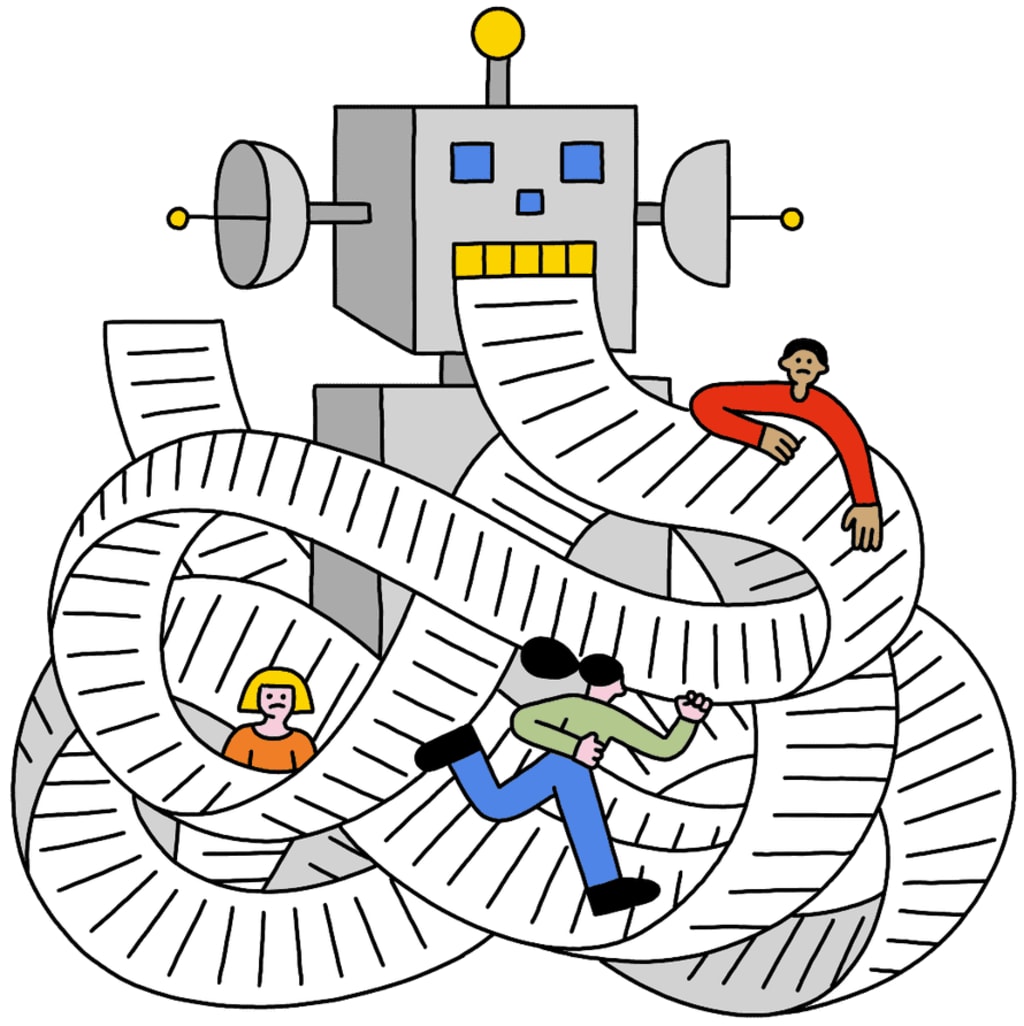
The moment I started reading my students’ stories, I knew. I’ve taught fiction writing at MIT since 2017. Most of my students are engineers, not English majors. They’re brilliant at solving equations where there’s always a right answer. Fiction is terrifying for them because there isn’t one. So when I opened two stories for our first workshop last semester, something felt off. The prose was too polished. The metaphors too tidy. Every character arc resolved itself like a math proof. It was, as Tennyson once wrote, “Faultily faultless, icily regular, splendidly null. Dead perfection; no more.” I turned to the class and said it out loud: “AI wrote these.” You could hear the radiators ticking. Then came the tears. **The Confession That Broke the Silence** One student admitted she fed her draft into ChatGPT for a “grammar check.” Then it offered line edits. Then structural edits. Then it rewrote the whole thing. She didn’t mean to cheat. She was scared of looking stupid. The other student had never written a story before. He had an idea but no clue where to start. “Why didn’t you ask me for help?” I said. He just shrugged. Then the real discussion started. “Why is it bad if AI writes stories based on our ideas?” one asked. “Isn’t MIT the birthplace of AI? Why are we even debating this?” said another. “Isn’t the point of AI to free us from tedious work?” They weren’t wrong to ask. But they were missing the point of writing itself. **Writing Isn’t Supposed to Be Easy** We think of writing as producing sentences. It’s not. Writing is the training of endurance by way of sustained attention. It’s learning what you think by forcing yourself to say it. An LLM can fake the *appearance* of that activity. It can’t replace it. The value isn’t just the story you turn in. It’s the transformation that happens while you wrestle your messy, half-formed thoughts into language. AI gives you dead perfection. Student writing gives you something better: a foal learning to walk. The prose stumbles. The legs tremble. But in that clumsiness, I see hints of future grace. Take away the stumbling and you take away the learning. A 2025 MIT Media Lab study backs this up. Students who used ChatGPT to write essays showed lower neural connectivity than those who wrote without it. Other papers warn of “cognitive offload” and “executive function attenuation.” Translation: outsourcing thinking makes you worse at thinking. **Why “Good Enough” AI Is Dangerous** George Orwell once described book reviewers who pump out responses without actually responding. AI writing creates the same problem upstream. When a workshop fills with AI-generated fiction, every writer becomes that hollow reviewer. We’re performing the shape of thought without doing the thinking. That’s why my policy is now blunt: I don’t want your AI. I want *your* words. I want your voice, your struggle, your failure. Because the workshop only works if there’s a writer in the room. Using AI to write fiction doesn’t just give you a bad story. It guarantees you’ll weaken the muscles you need to wrestle with writing at all. The danger isn’t that AI will replace writers. It’s that we’re getting comfortable bypassing the friction that reveals who we are. **What We Gained by Banning AI** Since that night, my workshops changed. We talk openly about frustration. About drafts that fight back. We still teach structure and revision, but we spend more time on the gap between thought and language — and why that gap matters. Your struggle to translate thoughts into words isn’t failure. It’s proof you’re growing. Especially when the words fail. We’re not building a wall against machines. We’re guarding a sanctuary for authorship. A place where everything on the page, and everything *not yet* on the page, belongs to an actual person. And that’s something no algorithm can fake. Have you used AI for writing? Did it help or hurt your process? Tell me in the comments.
About the Creator
Enjoyed the story? Support the Creator.
Subscribe for free to receive all their stories in your feed.
Comments
There are no comments for this story
Be the first to respond and start the conversation.