
Hummus Market Trends: Healthy Snacking, Vegan Adoption & Forecast to 2034
How plant-based diets, rising health awareness, and demand for clean label products are driving consumption patterns and product innovation in the hummus market

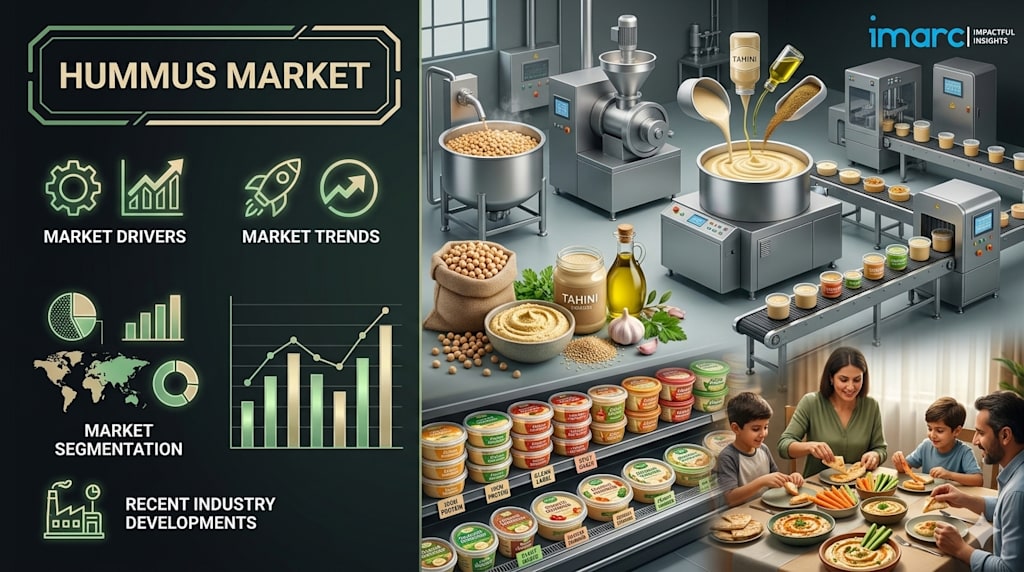
According to IMARC Group's latest research publication, The global hummus market size reached USD 4.7 Billion in 2025. Looking forward, IMARC Group expects the market to reach USD 9.1 Billion by 2034, exhibiting a growth rate (CAGR) of 7.50% during 2026-2034.
How Shifting Dietary Habits Are Reshaping the Future of the Hummus Market
- Rising Health-Consciousness Driving Substitution Away from Conventional Condiments: The growing prevalence of lifestyle diseases including ischemic heart disease, diabetes mellitus, chronic obstructive pulmonary disease, and stroke is prompting consumers worldwide to reassess their dietary choices. According to the International Diabetes Federation, approximately 537 million adults aged 20 to 79 years are currently living with diabetes globally, a figure that underscores the urgency with which individuals are seeking low-glycemic, nutrient-dense food alternatives. Hummus, with its low glycemic index and high protein content, is gaining traction as a direct substitute for calorie-dense condiments such as mayonnaise, sour cream, ranch dressing, and creamy salad dressings. This substitution behavior is not incidental but structural, as health-conscious consumers actively reconfigure their daily diets around ingredients that support weight management, blood sugar control, and cardiovascular health.
- Expanding Vegan Population Accelerating Plant-Based Protein Adoption: The global vegan movement is creating a measurable and sustained lift in hummus consumption, given its profile as an exceptional source of plant-based protein derived from chickpeas. Data from Vegconomist highlights that among Mexico's 130 million residents, approximately 20% have eliminated animal-based food and beverages as part of a vegan lifestyle. In the United States, a Gallup poll found that around 23% of individuals reported eating less meat, reflecting a broad dietary reorientation toward plant-based alternatives. Online food retailer ShelfNow recorded a 156% growth in vegetarian meal sales and a 150% surge in vegan meal sales within a single year, illustrating the velocity of this transition. As restaurants, food retailers, and packaged goods manufacturers expand their vegan product offerings, hummus is emerging as a category anchor within plant-based dips and spreads, benefiting from both consumer familiarity and strong nutritional credentials.
- Surging Demand for Clean-Label and Organic Food Products: Consumer scrutiny of ingredient lists has intensified significantly, with individuals paying closer attention to the presence of pesticides, artificial additives, and chemical preservatives in packaged food products. This shift is directly benefiting hummus producers who emphasize natural, minimally processed formulations. Government initiatives are reinforcing this trend at the supply level; in India, the National Horticulture Mission actively promotes organic farming by providing certification support covering 50 hectares at Rs. 5 Lakh, encouraging farmers to cultivate natural food crops. The inflating disposable income levels of urban consumers are further enabling spending on premium, organic, and non-GMO hummus products, with leading manufacturers responding through innovative formulations and packaging that prominently feature clean-label certifications, Plastic Neutral endorsements, and functional ingredient additions such as flaxseed oil.
- Product Innovation and Flavor Diversification Broadening Consumer Appeal: The traditional positioning of hummus as a Middle Eastern dip is giving way to a far more dynamic product category characterized by bold flavor profiles, premium ingredient combinations, and lifestyle-driven positioning. Manufacturers are launching variants infused with turmeric, blueberry, lime, lavender, hot honey, sriracha, avocado, and pumpkin, transforming hummus from a staple condiment into a versatile snacking and meal accompaniment product. Fine dining restaurants, fast casual chains, and Mediterranean-inspired food concepts are actively incorporating hummus into their menus, expanding the product's visibility and appeal across diverse consumer demographics. This continuous flavor and format innovation is generating repeat purchase behavior and enabling brands to command premium price points in both retail and food service channels.
- E-Commerce Expansion and Modern Retail Infrastructure Widening Market Reach: The proliferation of online grocery platforms and the expansion of organized retail formats including supermarkets and hypermarkets are significantly improving hummus accessibility across geographies previously underserved by specialty food retailers. Supermarkets and hypermarkets currently dominate distribution, benefiting from their ability to stock a wide variety of brands, flavors, and packaging formats that cater to diverse dietary preferences. The growth of online stores as a distribution channel is enabling niche and artisanal hummus brands to reach health-conscious consumers in secondary cities and regional markets, reducing geographic barriers that historically limited premium product availability. Promotional activity, private-label offerings such as Costco's Kirkland Signature single-serve hummus cups, and the introduction of novel flavors at mass retail venues are collectively driving higher basket values and expanding the overall consumer base.
Hummus Industry Overview
North America exhibits clear dominance in the global hummus market, driven by strong consumer awareness of hummus's documented health benefits including improved blood sugar control, anti-inflammatory properties, and support for weight management. The region's well-developed organized retail infrastructure, high disposable incomes, and deeply embedded health and wellness culture create a highly receptive market environment for both established brands and innovative new entrants. The United States in particular has witnessed hummus transition from a niche ethnic food product to a mainstream refrigerated dip category, now widely available across all retail formats from club stores to convenience outlets.
Europe represents another significant market, supported by growing Mediterranean diet adoption, clean-label regulatory standards that favor natural ingredient products, and rising veganism rates across the United Kingdom, Germany, France, and the Nordic markets. Asia Pacific is emerging as a high-potential growth region as urbanization accelerates, middle-class populations expand, and exposure to international cuisines through food delivery platforms and travel increases consumer familiarity with hummus. The Middle East and Africa, as the product's region of origin, maintains strong cultural consumption traditions while also witnessing premiumization trends as local manufacturers invest in innovative packaging and flavor development to capture higher-value consumer segments.
Hummus Market Trends and Drivers
The global hummus market is being propelled by a convergence of health, lifestyle, and sustainability trends that are reshaping consumer food preferences at a structural level. The rising occurrence of chronic lifestyle diseases is fundamentally altering dietary behavior, with consumers increasingly seeking protein-rich, low-glycemic food products that support preventive health management. Hummus, positioned at the intersection of plant-based nutrition and culinary versatility, is uniquely suited to capture this demand shift across both retail and food service channels.
The escalating global interest in veganism and flexitarian diets is amplifying demand for chickpea-based products, with hummus benefiting from its established reputation as a complete and satisfying plant-based protein source. As the vegan food category achieves mainstream retail visibility and restaurant menus increasingly accommodate plant-based preferences, hummus is cementing its role as a foundational ingredient within this rapidly growing dietary segment.
Government programs promoting organic agriculture are simultaneously strengthening the supply side of the market. India's National Horticulture Mission certification incentives, along with similar organic farming support frameworks in Europe and North America, are increasing the availability of certified organic chickpeas and other key hummus ingredients, enabling manufacturers to expand their organic product lines and respond to growing consumer demand for traceable, chemical-free food production.
The challenge of ingredient price volatility, particularly for tahini, olive oil, chickpeas, and lemons, represents a meaningful operational constraint for hummus producers. Leading manufacturers are addressing this risk by diversifying sourcing geographies and establishing relationships with multiple supplier regions, reducing dependency on single-origin procurement and building supply chain resilience that supports consistent product availability and stable retail pricing.
Leading Companies Operating in the Global Hummus Industry
- Athenos
- Bakkavor Group
- Boar's Head Provision Co. Inc.
- Cedar's Mediterranean Foods Inc.
- Haliburton International Foods Inc.
- Hope Foods LLC (Savencia Fromage and Dairy)
- Hummus Goodness
- Lantana Foods
- Sabra Dipping Company LLC
- Sevan AB
- Strauss Group Ltd.
- T. Marzetti Company (Lancaster Colony Corporation)
- Tribe Hummus
Hummus Market Report Segmentation
By Type:
- Classic
- Lentil
- Edamame
- Garlic
- Black
- White
- Others
Classic hummus represents the largest segment, driven by its deep cultural roots across Middle Eastern and Mediterranean cuisines, widespread availability in global grocery retail, and broad consumer familiarity that makes it the entry point for new hummus consumers across international markets.
By Packaging Type:
- Tubs/Cups
- Jars/Bottles
- Others
Tubs and cups dominate the packaging segment, favored for their convenience, portability, and ready-to-eat functionality that aligns with on-the-go consumption occasions including office lunches, picnics, and casual snacking, making them the preferred format for both everyday and premium hummus products.
By Distribution Channel:
- Convenience Stores
- Supermarkets and Hypermarkets
- Online Stores
- Others
Supermarkets and hypermarkets account for the largest distribution share, benefiting from extensive product assortments, high consumer foot traffic, promotional flexibility, and the ability to accommodate both mainstream and niche hummus brands within a single retail environment.
Regional Insights:
- North America (United States, Canada)
- Asia Pacific (China, Japan, India, South Korea, Australia, Indonesia, Others)
- Europe (Germany, France, United Kingdom, Italy, Spain, Russia, Others)
- Latin America (Brazil, Mexico, Others)
- Middle East and Africa
North America exhibits clear dominance in the hummus market, supported by high consumer health awareness, strong organized retail infrastructure, and the product's successful transition from ethnic specialty food to mainstream refrigerated dip category across all retail formats.
Recent News and Developments in the Hummus Market
- April 2024: The Hummus Republic, a restaurant specializing in Mediterranean-inspired dishes and an extensive vegan menu, was launched in Stockton, United States, according to the Stockton Chamber of Commerce. The opening reflects the growing appetite among American consumers for plant-based Mediterranean food concepts and highlights the expanding food service channel as a key driver of hummus category visibility and trial in domestic markets.
- September 2024: Sabra Dipping Company announced the reformulation of its core classic hummus range to remove preservatives and align with growing clean-label consumer preferences in the North American market. The updated formulations feature simplified ingredient lists and are supported by a nationwide retail marketing campaign emphasizing natural ingredients and plant-based protein content, reinforcing Sabra's leadership positioning within the premium hummus category.
- January 2025: Cedar's Mediterranean Foods expanded its organic hummus lineup with the introduction of two new flavor variants featuring non-GMO certified ingredients and recyclable packaging. The expansion targets the rapidly growing segment of health-conscious consumers seeking both nutritional transparency and environmental responsibility in their food purchases, aligning with broader clean-label and sustainability trends shaping the packaged dips category.
- April 2025: Strauss Group announced a strategic investment in expanding its hummus production capacity in Israel to meet growing export demand from European and North American retail partners. The capacity expansion is supported by the installation of advanced automated processing lines designed to improve ingredient traceability and reduce production waste, reflecting the company's commitment to both operational efficiency and supply chain sustainability across its international distribution network.
- February 2026: Hope Foods LLC launched a new range of functional hummus products enriched with added vitamins, adaptogens, and immune-supporting ingredients targeting the premium wellness food segment in the United States. The launch positions hummus within the fast-growing functional food category and is supported by distribution agreements with natural and specialty grocery retailers, signaling the category's continued evolution beyond traditional dip applications toward broader health and wellness food positioning.
Note: If you require specific details, data, or insights that are not currently included in the scope of this report, we are happy to accommodate your request. As part of our customization service, we will gather and provide the additional information you need, tailored to your specific requirements. Please let us know your exact needs, and we will ensure the report is updated accordingly to meet your expectations.
About the Creator
Abhay Rajput
I am working in market research company that provides market and business research intelligence across the globe.
Enjoyed the story? Support the Creator.
Subscribe for free to receive all their stories in your feed.
Comments
There are no comments for this story
Be the first to respond and start the conversation.