
How to Build Studio Ready Game Design Skills in 2026?
Passion isn't enough to survive the game industry. Discover how structured training turns creative ideas into professional, technical design expertise.

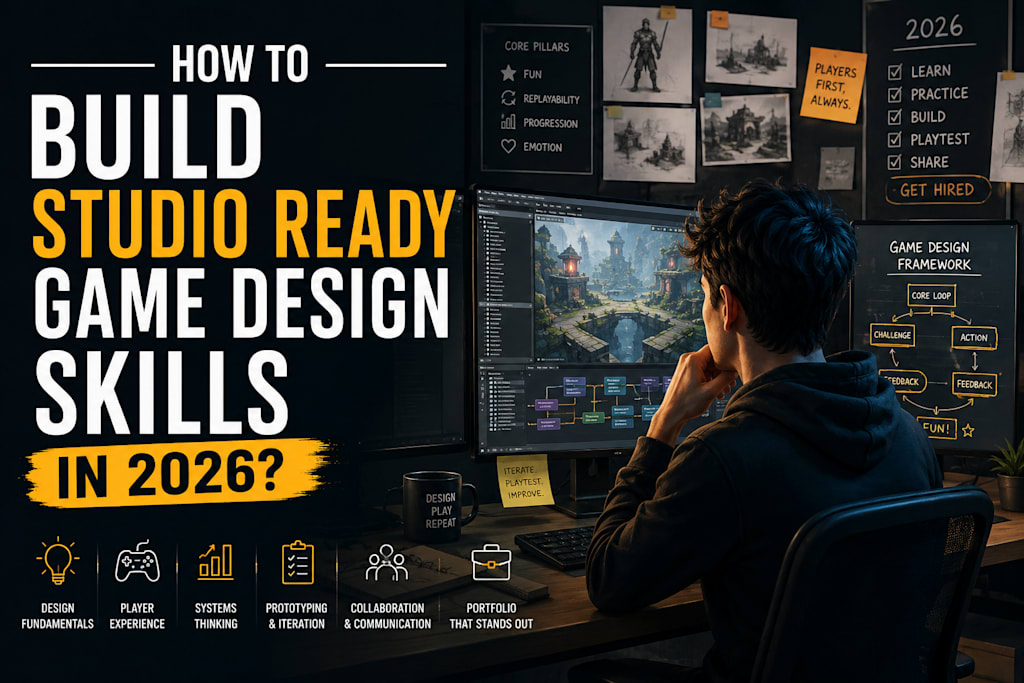
The Reality Check Every Aspiring Designer Needs
Becoming a professional game designer isn’t about having cool ideas—it’s about turning those ideas into systems that actually work. That shift from imagination to execution is where most people struggle. Structured training gives you a clear path, helping you understand workflows, player behaviour, and the technical side of design.
Let’s be honest—just playing hundreds of hours of games doesn’t make you a developer. Passion without direction often leads to unfinished projects and frustration. Recent industry insights show that most studios prefer candidates who’ve trained in structured environments. Why? Because they value consistency, teamwork, and technical understanding just as much as creativity.
The transition from hobbyist to professional is rarely smooth. You quickly realize that games aren’t just stories—they’re built on logic, systems, and constant problem-solving. If you’re serious about this career, exploring more details about a post-secondary training program can give you a clearer picture of how real studios operate. It turns vague ambitions into a practical, step-by-step journey—and that clarity makes all the difference.
Logic Doesn’t Bend for Creativity
The Game Design Document (GDD) is where ideas meet reality. Beginners often see it as tedious, but in truth, it’s what keeps a project from falling apart. It forces you to think through every detail: mechanics, player interactions, and system balance.
Professional training pushes you to answer questions you might otherwise ignore. How does the camera behave in tight spaces? What happens when a player breaks the intended path? Is your in-game economy fair or completely unbalanced?
Technical skills are what separate hobbyists from professionals. To stay competitive in 2026, designers need to focus on fundamentals like scripting, level flow, balancing mechanics, and clear documentation. These aren’t always exciting tasks, but they’re critical.
Consider a small indie team that skipped structured learning. They spent months building a complex combat system, only to realize it wasn’t feasible within their budget. Time and resources were wasted fixing avoidable issues. On the other hand, trained teams often save time and money by following proper workflows from the start. Efficiency isn’t optional—it’s essential.
The Reality of Team-Based Development
No major game is built alone. Modern game development is collaborative, fast-paced, and often stressful. This is where many solo creators struggle—they’re used to full control, not compromise.
In a studio setting, you’re part of a larger system. You’ll need to adapt quickly, accept feedback, and sometimes let go of ideas you love because they don’t fit technical limits. That ability to pivot is a key survival skill.
Structured programs simulate this environment. They introduce workflows like sprints and team reviews, and they teach you how to handle criticism professionally. These “soft skills” are just as important as technical ability.
Real-world examples highlight this clearly. A junior designer might prevent delays by catching a small logic issue early. A narrative designer might have to cut content due to production constraints. Teams that use proper tools and workflows can save dozens of hours every month. These experiences build resilience and prepare you for actual studio life.
Why Structure Wins in the Long Run
A strong portfolio isn’t about ideas—it’s about execution. Studios want to see finished work that proves you understand pipelines, collaboration, and problem-solving. One polished, completed project carries far more weight than a dozen unfinished concepts.
As the industry evolves, tools are becoming more advanced, but they still rely on human logic and structured thinking. Creativity alone isn’t enough—you need discipline and technical clarity to bring ideas to life.
If you want to succeed, focus on mastering the fundamentals. Learn the systems, embrace the process, and finish what you start. That’s what separates dreamers from professionals.
About the Creator
SEO HUB
I’m a professional Content & SEO Specialist with 3+ years of experience. I provide placements on top-tier USA publications, sites like USAToday.com, ensuring real exposure and SEO value.
WhatsApp: +92 311 6772455
Enjoyed the story? Support the Creator.
Subscribe for free to receive all their stories in your feed.
Comments
There are no comments for this story
Be the first to respond and start the conversation.