
How the BBC’s Life After Life Masterfully Captures Quantum Immortality and Amor Fati

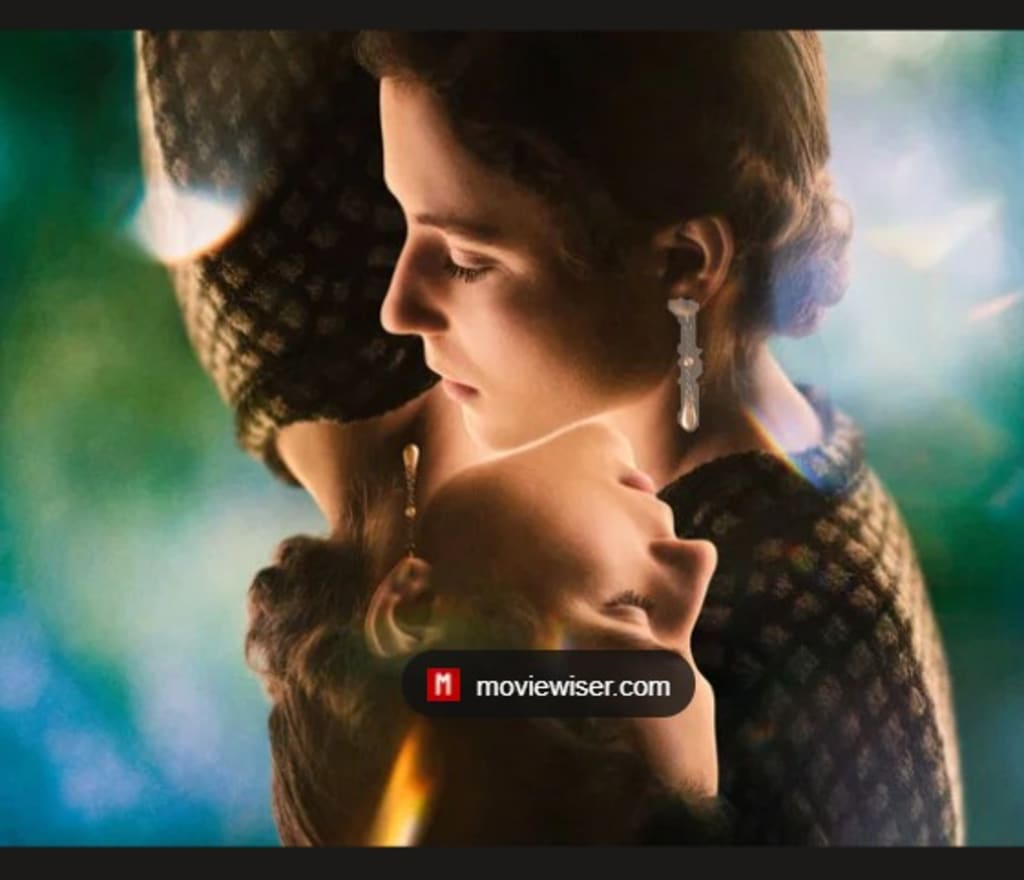
How the BBC’s Life After Life Masterfully Captures Quantum Immortality and Amor Fati
Few works of television manage to bridge the gap between theoretical physics, existential philosophy, and intimate period drama as seamlessly as the BBC’s 2022 adaptation of Kate Atkinson’s novel Life After Life. Written by playwright Bash Doran and directed by John Crowley, the four-part miniseries follows Ursula Todd (played primarily by Thomasin McKenzie), a woman born during a raging snowstorm in rural England in February 1910. In her very first iteration, Ursula is strangled by her umbilical cord and dies before she can draw a single breath. Moments later, the narrative resets to that exact same snowstorm, the doctor arrives in time to snip the cord, and Ursula survives.
What unfolds over the next four hours is not merely a clever narrative gimmick or a wartime Groundhog Day. Rather, Life After Life stands as one of the most profound dramatic depictions of two seemingly disparate ideas: the speculative physics thought experiment of quantum immortality and Friedrich Nietzsche’s philosophical ideal of amor fati (the love of one’s fate). By marrying the cold, branching mechanics of survival with the warm, agonisingly human struggle to accept a flawed existence, the series transforms a metaphysical puzzle into a deeply moving meditation on what it means to be alive.
The Architecture of Quantum Immortality
To understand why Life After Life functions so brilliantly as a dramatisation of quantum immortality, one must first look at the mechanics of the thought experiment itself. Emerging from Hugh Everett’s Many-Worlds Interpretation (MWI) of quantum mechanics—and later formalised by physicists like Hans Moravec and Max Tegmark—quantum immortality proposes a startling consequence of a branching universe. According to MWI, every quantum event with multiple possible outcomes causes reality to split into parallel universes, each realising a different possibility.
Quantum immortality applies this principle to human consciousness. If a person faces a life-or-death event—such as the famous Schrödinger’s cat scenario or the hypothetical "quantum suicide" experiment—the universe splits into branches where the observer dies and branches where the observer survives. Because consciousness cannot experience its own non-existence, the subjective perspective of the observer must inevitably follow the path of survival. From the outside, friends and family mourn a tragedy; from the inside, the subject simply continues living, bypassing death over and over again along increasingly improbable timelines.
While most popular media treats the multiverse as a playground for superhero spectacles or neat moral lessons, the BBC’s Life After Life captures the sheer, disorienting terror and structural reality of quantum immortality.
Death as a Hard Cut, Survival as Continuity
Director John Crowley refuses to romanticise Ursula’s deaths. When Ursula drowns as a child in the rough surf of Cornwall, falls from a third-storey nursery window trying to retrieve a doll, succumbs to the 1918 Spanish flu, or is crushed beneath rubble during the London Blitz, the screen cuts abruptly to darkness. There are no pearly gates, no celestial waiting rooms, and no omniscient guides explaining the rules of the universe. Instead, there is only the jarring snap back into the sensory reality of 1910: the crunch of boots in deep snow, the roar of the fireplace, and the rhythmic ticking of the family clock.
This aesthetic choice mirrors the subjective experience of quantum immortality. Ursula does not "resurrect" in a magical sense; rather, her narrative thread simply abandons the dead branches and slides into the adjacent reality where the variables shifted by a fraction of a millimetre. In one timeline, a snowdrift blocks the doctor’s car; in the next, the doctor arrives just in time. In one life, Ursula leans too far out a window; in the next, a sudden gust of wind or a maid’s timely intervention pulls her back. The show visualises the Many-Worlds Interpretation not as a neat tree of choices, but as a turbulent river of probability where consciousness can only flow where life remains possible.
The Burden of Quantum Memory
Where Life After Life elevates the concept from a dry physics puzzle into high drama is in its treatment of memory. In strict quantum physics, an individual surviving a near-death event has no memory of the branches in which they perished. Ursula, however, retains what the series frames as déjà vu—visceral, subconscious echoes of her previous demises.
As a child, she experiences sudden, inexplicable panics around open windows, deep water, and coughing strangers. In one of the series’ most chilling early sequences, young Ursula violently pushes the family maid, Bridget, down a flight of stairs to prevent her from travelling to London and bringing back the Spanish flu that wiped out the Todd household in a prior timeline. Ursula cannot articulate why she did it; she only feels the suffocating weight of a catastrophe she has already endured.
Through this device, the series exposes the psychological horror hidden inside quantum immortality. To survive infinitely while those around you remain bound to single, fragile timelines is to carry an unbearable ghost-weight. Ursula’s parents, Sylvie (Sian Clifford) and Hugh (James McArdle), view her as a troubled, morbid, or overly sensitive child. They cannot see the graves she has already filled. By anchoring the multiverse in Ursula’s nervous system, the show suggests that even if consciousness is immortal, the human psyche is not built to survive its own survival.
The Temptation of Control and the Failure of Perfection
If quantum immortality provides the engine of Life After Life, the philosophical tension of the series revolves around how Ursula chooses to use her strange condition. Naturally, when a human being realises they can bypass death and replay history, their first instinct is to play God—to edit out pain, prevent tragedy, and engineer a "perfect" life.
Across its four episodes, the BBC adaptation systematically dismantles the illusion that infinite chances guarantee a flawless outcome. Every time Ursula successfully dodges one catastrophe, she inadvertently steers herself—and the people she loves—into another.
The Illusion of Domestic Safety: When Ursula avoids the Spanish flu, she grows up to enter a catastrophic marriage with Derek Oliphant (Joshua Hill), an abusive, controlling man who isolates her and subjects her to domestic violence. Escaping early death merely delivers her into a living death of cruelty and entrapment.
The Brutality of History: When she avoids Derek and finds genuine happiness, she is still trapped within the meat grinder of the 20th century. In one particularly devastating timeline, Ursula travels to Germany before the Second World War, falls in love with a kind, liberal lawyer named Jürgen, and has a daughter, Frieda. As the Third Reich collapses into ruins, Ursula finds herself starving in a bombed-out Berlin basement. Unable to save her child from the advancing horrors of the war’s end, she administers poison to Frieda and herself.
The Fallacy of Heroic Intervention: Driven to despair by the recurring death of her beloved younger brother Teddy (Sean Delaney) in the war, Ursula eventually embraces a utilitarian fantasy: if she can go back, she can kill Adolf Hitler and save millions. In one timeline, she deliberately leaps from a window to trigger a reset, learns to handle a firearm, ingratiates herself into Hitler’s inner circle in Munich, and shoots him dead in a café. Yet even this ultimate act of historical editing yields no triumph. She is immediately gunned down by SS guards, and the timeline collapses back into darkness, leaving the viewer—and Ursula—to wonder whether history simply finds another monster, or whether a single life can ever shoulder the weight of the world.
As The Guardian noted in its review of the series, the adaptation is soaked in grief because every choice carries an inescapable cost. The more Ursula tries to outmanoeuvre fate, the more exhausted and alienated she becomes. She treats life not as something to be inhabited, but as a rough draft to be endlessly corrected.
Enter Nietzsche: Amor Fati as the Antidote to Despair
It is precisely at this point of existential exhaustion that Life After Life introduces its philosophical counterweight: Friedrich Nietzsche’s concept of amor fati.
In The Gay Science (1882) and Ecce Homo (1888), Nietzsche articulated amor fati—literally "love of fate"—as the ultimate formula for human greatness. For Nietzsche, true affirmation of life does not mean wishing away suffering, regretting past mistakes, or hoping for a sanitized existence free of pain. Rather, it means embracing the totality of one’s existence—the joy, the agony, the absurdity, and the inevitable loss—not merely with stoic resignation, but with fierce, wholehearted love. "My formula for greatness in a human being is amor fati," Nietzsche wrote, "that one wants nothing to be different, not forward, not backward, not in all eternity. Not merely bear what is necessary, still less conceal it... but love it."
In Life After Life, this philosophy is explicitly introduced through Dr. Kellet (John Hodgkinson), the progressive psychiatrist to whom Sylvie sends young Ursula after the staircase incident with Bridget. Rather than diagnosing Ursula as mad or dismissing her recurring nightmares of death, Dr. Kellet validates her subjective experience and introduces her to Nietzsche’s idea. He explains amor fati to the young girl in simple, accessible terms: learning to accept whatever comes to us without constantly judging it as purely good or purely bad, and recognising that the darkness and the light are woven from the same thread.
While young Ursula initially struggles to grasp how anyone could "love" a fate that includes war, grief, and repeated death, the entire four-part arc of the series is a slow, arduous journey toward embodying Dr. Kellet’s lesson.
From Resistance to Presence
The transformation of Ursula Todd across the series can be mapped directly onto her shifting relationship with time and fate:
Resistance (The Morbid Child): Early on, Ursula is paralysed by dread. Because she senses the impending doom of her timelines, she cannot enjoy the idyllic English countryside of Fox Corner. She is perpetually bracing for impact.
Manipulation (The Interventionist): In her middle iterations, Ursula attempts to weaponise her condition. She becomes a tactician, manipulating events to save Bridget, rescue her friend Nancy, protect Teddy, or assassinate Hitler. Yet every intervention leaves her hollow, because she is living entirely in the future or the past, treating the present moment merely as a lever to pull.
Acceptance and Love (The Air Raid Warden): Ursula’s spiritual breakthrough occurs during the London Blitz. In one timeline, she is trapped in a crumbling tenement basement after a direct hit. As dust chokes the air and death closes in, an Air Raid Warden comforts her in her final moments with quiet, selfless grace. When the timeline resets, Ursula does not flee London for the safety of the countryside. Instead, she volunteers as an Air Raid Warden herself.
This is a pivotal turning point. For the first time, Ursula stops trying to prevent the war or cheat death. She steps directly into the fire of her historical moment, choosing solidarity over self-preservation. Walking through the burning streets of London, pulling strangers from the rubble, and offering comfort to the dying, Ursula discovers that meaning does not come from surviving forever; it comes from being fully present in the fragile, finite moment you are given.
The Synthesis: Why Quantum Immortality Needs Amor Fati
What makes the BBC’s Life After Life an extraordinary achievement is how it uses quantum immortality and amor fati to illuminate one another. On its own, quantum immortality can easily curdle into nihilism. If every choice splits the universe, and if death is always bypassed in some adjacent branch, then nothing truly matters. Why bother being brave if another version of you cowers? Why grieve a loss if another version of your loved one still lives?
Conversely, on its own, amor fati can sometimes feel abstract or overly demanding—an ivory-tower philosophy easy to preach in peacetime, yet nearly impossible to practise when bombs are falling on your home.
By fusing the two concepts, Doran, Crowley, and Atkinson reveal their deeper truth:
Quantum immortality proves that you cannot escape suffering by changing the external variables. Even with infinite parallel worlds at her disposal, Ursula discovers that pain, loss, and mortality are baked into the fabric of being human. There is no "utopian branch" where everyone lives forever and nobody gets hurt. As her father Hugh gently observes near the end of the series, a life without shadow would have no depth.
Amor fati provides the only way to survive immortality. Because Ursula cannot stop the wheel of rebirth from turning, her only path to peace is to stop fighting the spin. She must learn to love the exact life she has—not because it is painless, but because it is hers.
This synthesis reaches its emotional crescendo in the final episode. In a quiet, luminous conversation with her beloved brother Teddy—whom she knows, with aching certainty, may not survive the war—Ursula does not try to stop him from flying his bomber missions. She does not beg him to hide, nor does she throw herself out a window to reset the clock. Instead, she looks at him with fierce tenderness, tells him she loves him, and drinks in the sheer miracle of their shared afternoon.
Later, gathered with her family at Fox Corner, the Todds discuss a deceptively simple question: If you could live your life all over again, would you? For the rest of the family, it is an idle dinner-table parlour game. For Ursula, it is the literal reality of her existence. And for the first time, looking at the imperfect, scarred, deeply loved people around her table, the answer is an unspoken, radiant yes.
Cinematic Craft as Philosophical Expression
A lesser adaptation might have buried these themes under heavy-handed exposition, turning Ursula into a mouthpiece for physics lectures or Nietzschean aphorisms. Instead, the BBC production embeds both quantum immortality and amor fati into the very grammar of its filmmaking.
Volker Bertelmann’s Score: The recurring musical motifs by composer Volker Bertelmann capture the cyclical nature of the narrative. Delicate piano phrases rise, fracture, and begin anew—never quite repeating in the exact same way, echoing the subtle variations of a branching quantum wave function.
Lesley Manville’s Narration: Voiced with crystalline poise by Lesley Manville, the omniscient narration acts as the steady pulse of the universe itself. When Manville calmly announces, "Darkness fell," followed moments later by the return to the snowstorm of 1910, her tone is neither cruel nor triumphant. It is the voice of amor fati—a serene witness to both the falling of the dark and the stubborn, miraculous return of the light.
Thomasin McKenzie’s Performance: Carrying almost every frame of the series, McKenzie charts Ursula’s evolution with remarkable subtlety. In the earlier timelines, her eyes dart nervously, weighed down by invisible dread. By the final episode, her posture softens; she moves through the world with a quiet, grounded luminosity, embodying a woman who has finally made peace with the snowstorm into which she was born.
Conclusion: Loving the Snowstorm
In the closing moments of Life After Life, Ursula boards a train back to London. She does not know how long this particular timeline will last. A stray bomb, a sudden illness, or simple old age will eventually bring the darkness down once more. Yet the dread that defined her early lives has evaporated.
Through the lens of quantum immortality, the BBC’s Life After Life asks a dizzying scientific question: What happens when consciousness refuses to end? Through the lens of amor fati, it offers a timeless human answer: You learn to love the journey anyway. By showing us a woman who dies a dozen deaths only to discover that the point was never to avoid the end, the series achieves something rare in modern television. It reminds us that whether we get one life or an infinite number of them, salvation is never found in a different timeline. It is found in loving this one, snowstorm and all.
About the Creator
Julie O'Hara - Author, Poet and Spiritual Warrior
Thank you for reading my work. Feel free to contact me with your thoughts or if you want to chat. [email protected]
Enjoyed the story? Support the Creator.
Subscribe for free to receive all their stories in your feed.
Comments
There are no comments for this story
Be the first to respond and start the conversation.