
How Software Developers Build Apps and Websites Step by Step
Behind the Scenes: The Real Process of Building Software Products

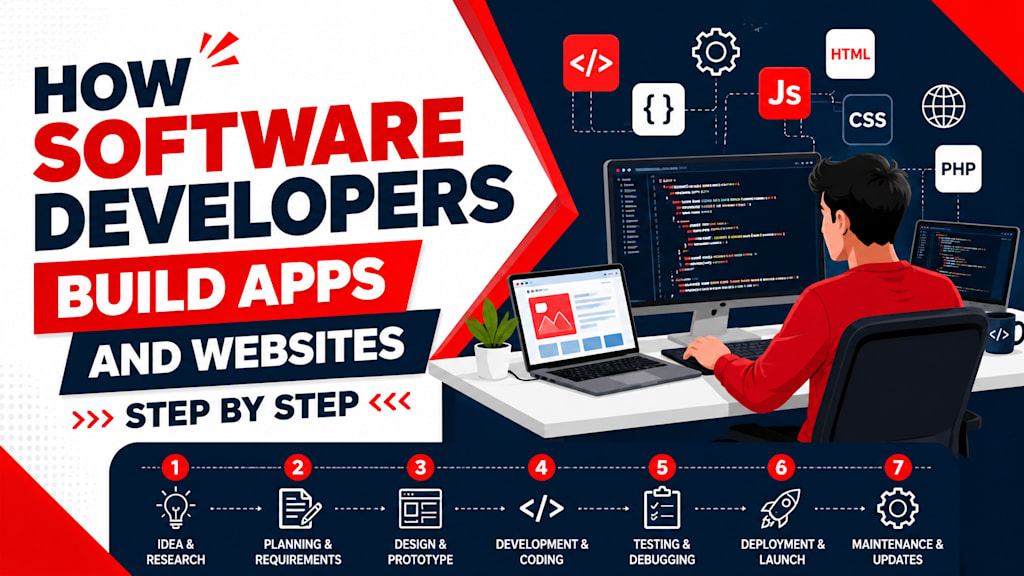
Building an app or website rarely starts with writing code. It usually begins much earlier with an idea that needs structure, validation, and a clear path from concept to product. Behind every smooth digital product, there is a careful process followed by Software Developers, who turn rough ideas into working systems that people actually use every day.
Understanding how this process works step by step helps businesses make better decisions when hiring teams or planning projects. It also removes the mystery around software creation and shows that it is more structured than most people assume.
1. Understanding the Idea and Gathering Requirements
Everything starts with clarity. Before a single line of code is written, developers spend time understanding what the product should do, who it is for, and what problems it solves. This stage is called requirement gathering.
Here, clients and development teams discuss features, target users, expected outcomes, and technical limitations. The goal is to avoid confusion later in the project. A well defined requirement document becomes the foundation for everything that follows.
2. Planning the Architecture
Once the idea is clear, the next step is planning how the system will actually work. This includes choosing the right technology stack (such as React, Node.js, Python, or PHP), deciding database structure, and mapping how different components will interact.
At this stage, developers design the architecture of the application. Think of it like creating a blueprint before building a house. Good architecture ensures scalability, security, and performance in the long run.
3. UI/UX Design
Before development begins, designers create the visual structure of the application. This includes wire frames, mockups, and user journey flows.
The focus is not just on how the product looks but how easily users can navigate it. A clean and intuitive interface improves user satisfaction and reduces friction. Tools like Figma and Adobe XD are commonly used in this phase.
4. Actual Development (Coding Phase)
This is where ideas turn into reality. Frontend developers build what users see buttons, layouts, animations while backend developers handle server logic, databases, and APIs.
Most modern teams follow Agile methodology, which breaks work into small cycles called sprints. This allows continuous improvement and faster delivery instead of waiting months for a final product.
Version control systems like Git help teams collaborate efficiently without overwriting each other’s work.
5. Testing and Quality Assurance
Before launching anything, thorough testing is essential. QA testers check for bugs, performance issues, security vulnerabilities, and user experience problems.
Different types of testing are used, such as functional testing, performance testing, and security testing. The goal is simple: ensure the product works smoothly across devices and conditions.
6. Deployment and Launch
After testing is complete, the application is deployed to live servers. This could involve cloud platforms like AWS, Azure, or Google Cloud.
Deployment is carefully managed to avoid downtime and ensure users can access the product without interruptions. Some teams also use CI/CD pipelines to automate this process.
7. Maintenance and Updates
The work doesn’t stop after launch. Applications require continuous monitoring, updates, and improvements based on user feedback.
New features are added, security patches are applied, and performance is optimized regularly. This ensures the product remains relevant and functional over time.
Final Thoughts
The process of building apps and websites is structured, collaborative, and highly iterative. It combines planning, creativity, and technical execution in a way that ensures stability and scalability when done right.
If someone is planning to build a product but doesn’t have an in house team, working with experienced agencies or outsourcing partners can make a big difference. Companies like Invedus, Wing Assistant, or Hire With Near are often chosen for their ability to provide skilled professionals without the hassle of full time hiring.
At the end of the day, strong digital products are not built overnight they are carefully shaped through each of these steps by experienced Software Developers who understand both technology and user needs.
About the Creator
Charles Bright
I’m Charles Bright, a skilled Virtual Assistant committed to writing excellence, continuous learning, and delivering reliable support that helps businesses stay organized and productive.
Enjoyed the story? Support the Creator.
Subscribe for free to receive all their stories in your feed.
Comments
There are no comments for this story
Be the first to respond and start the conversation.