
How Smart Aircraft Lighting Is Shaping the Future of Air Travel
Discover how LED technology, intelligent cabin lighting, and sustainable aviation are transforming modern aircraft while enhancing passenger comfort and operational safety.

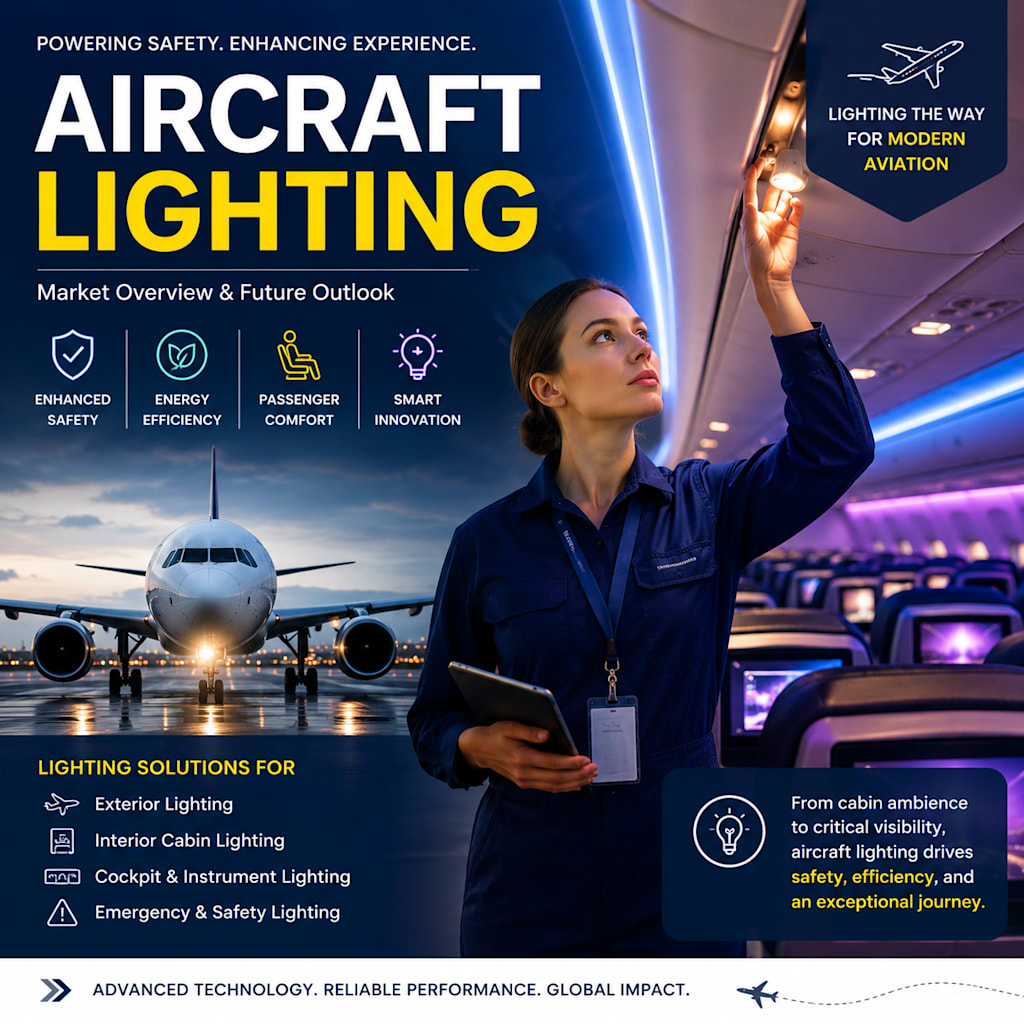
While passengers often imagine ground breaking engines, auto-pilot functions or next-generation avionics at the very core of aircraft innovations – something many passengers interacting in real time has the biggest and, in some cases, most unrecognized and important innovations. It is none other than airplane cabin lightings. Plane lightings play integral parts in ensuring safety of pilot, cabin crew during extreme weather, provide soothing ambience and influence on overall flying experience and in return have gradually turn from being just a utility to technology.
Even during times as the globe air passenger movements are rebounding and all Airlines globally looking at modernising the fleet, the demand for advanced lighting systems is growing by – one of the best ancillary/related markets of aviation sector.
An Expanding Market in line with Aviation. Global aircraft lighting market size was roughly about USD 1.84 million in the year 2025 with forecast growth for it up to USD 2.82 billion till 2034 indicating a solid growing market as aviation industry invests steadily in safer and better technology. Unlike many components – aviation lighting systems are critical before, during, after each and every flight and hundreds exist on every commercial aircraft as it has not only got serious flight safety, reliability aspect but customer-oriented aspect too. To gain more, airlines have a keen eye towards enhancing passenger experience while minimizing their operational cost – that is where aircraft lightings gain importance. Better lighting equals better passenger’s experience.
Why is Aviation Lighting More Than Important “Beyond illuminating the cabin for passengers during long travel – helping flight attendants during service procedures to support emergency evacuations, creating specific moods or setting certain light patterns to help jet lag.
In outer aircraft space lighting provides assistance during take off and landing in very poor weather and visibility condition, runway approach and departure as well as for collision avoidance”. Aircraft lighting isn’t just functionality – and Aviation cannot operate in the dark (duh!). LEDs - Lighting of the future “the biggest and important transformation in the last few years has been adoption of LED in the Aircraft Industry”.
Unlike the energy-hungry traditional and halogen-based lighting system, the LEDs are designed for minimal power consumptions, long-life time, and in the case of airlines offer cost savings by way of less electricity consumed, more efficient use of Aircraft weight/fuel (reduced weight over multiple thousand hours of operations will matter a huge), minimized down time & less maintenance and reduced heat output. LEDs allow more flexible custom cabin illumination solutions and thereby better passenger experience. Smart Cabin Lighting enhances Passenger’s experience Passengers today has high expectations when it comes to flights and even when they look at travelling as an experience than just the end result - Smart Lighting plays very crucial role as part of the journey.
Dynamic and interactive aircraft lighting can adapt automatically across the various phase of the flight.
Bright and crisp lights for service, then soft lights during flight hours and night time for relaxing or cool lighting during pre-flight announcements and after landing enhances overall passengers’ travel experience and well being, while creating mood lighting helps minimize effects of jet lag on passengers through the night. Sustainability of lightings Lighting is helping the airlines to contribute in overall efforts towards reduction of carbon footprints and sustainable future in aviation industry, through reduced energy usage and thus lower fuel burn. Even minor modifications, such as replacing the traditional lights with more advanced LED technology, has contributed towards reducing electricity consumptions on each flight. Furthermore the newer lighting solutions have been made even lighter and efficient thereby contributing towards aircraft weight savings.
Safety First Despite other benefits provided by lights as the central technology in the world for safety of a pilot’s eye in a complex weather or at night conditions for the outer aircraft’s lights. Landing and taxi lights for run away visualisations, navigator lights for position updates to other nearby aircraft’s and collision avoid beaconlights helps a pilots safely execute takeoff and landing procedures especially in difficult circumstances.
Brighter systems with expanded reach with increased durability make safer approach and runway landing easier to perceive as well improve visibility to surrounding traffic. With international regulations being regularly reviewed on the safety part, aviation industry is taking up technologies for betterment on those. Retrofits – the hidden growth drivers For most of the Airlines globally, it is cost effective to replace and upgrade on to modern technologies in their Existing Fleet of Aircraft rather then to replace aircraft all together.
One such key and cost effective area is to opt for Smart Lighting upgrade – which leads to improvement in power consumption & overall efficiency of the Aircraft, reduces maintenance cost & frequency and provides enhanced passenger experience and comfort to travelling passengers. Therefore, Airlines who own ageing aircraft continue to invest heavily on this sector, offering strong opportunities to Lighting manufactures. Asia Pacific leading with massive expansion As the overall aviation activity grows throughout the world, the demand for advanced lighting solution across the Asia Pacific region including Chinese, Indian and other South East Asian Markets has exploded.
Increased per capita income, expanding middle class and huge appetite for travelling are contributing to significant Aircraft fleet expansion in the region; and along with increased governmental expenditure on building new world class Airports, and expansion &up-gradation of runways, has resulted in phenomenal growth of this related aircraft lighting industry and demand.
Although Europe and North America still hold a strong hand in the industry as home to the largest aircrafts manufacturers and technological innovations, the major chunk of expansion & growth will be the growth ofAsia Pacific”. Driven By Competition The aircraft lighting space has witnessed more and more innovative products, technologies and increased R&D expenditure over the years, as the Competition between manufacturers are at the peak with products offering Smart lighting solutions ,more efficient and lesser Weight lighting materials, longer life LED lightings, intelligent lighting for cockpits and more enhanced lighting control systems integrate directly with aircraft’s avionics and Digital systems as passenger experience becomes imperative and fuel efficiency critical.
‘What’s next?
Aviation Lighting’ Aircraft lighting may have not always garnered the limelight of engines or Avionics but is an inseparable part and parcel of flight operations. It contributes towards, improved passengers’ comfort and an elevated inflight experience, while indirectly reducing airlines energy consumption and lowering maintenance costs.
As the global aviation sector looks to become more sustainable and efficient, the aircraft lighting market will play a growing and vital role in reshaping future of global Aviation.
About the Creator
Robert
Senior Market Researcher at IMARC Group, specializing in global market analysis, industry trends, and data-driven insights across diverse sectors.
Enjoyed the story? Support the Creator.
Subscribe for free to receive all their stories in your feed.
Comments
There are no comments for this story
Be the first to respond and start the conversation.