
How Seedance 2.0 mini Quietly Changed the Way I Make Short-Form Video
On lightweight AI video models, the real cost of iteration, and why "good enough, right now" usually beats "perfect, eventually."
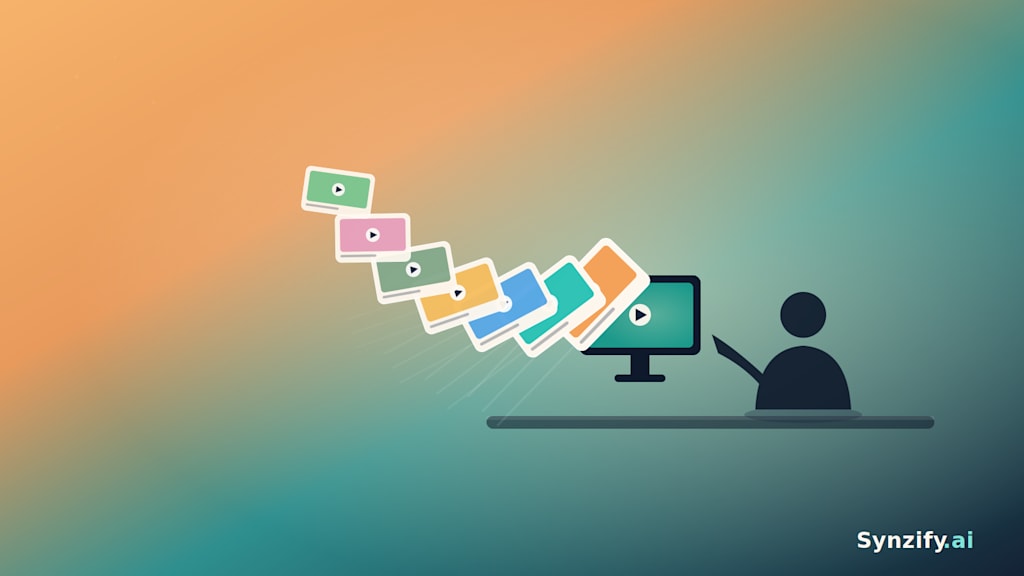
There's a specific kind of waiting that anyone making video with AI tools knows by heart. You write a prompt, hit generate, and then you sit. Thirty seconds. A minute. Two. Something comes back, and it's almost right — the camera drifts the wrong way, the light feels flat, the subject moves half a beat too late. So you change one word and start the wait again. Stack that up across twenty attempts and a whole afternoon is gone. For a long time I filed that under the unavoidable cost of the medium and stopped questioning it.
What finally changed my mind wasn't a flashier, heavier model. It was a smaller one. Seedance 2.0 mini is the lightweight tier of ByteDance's Seedance 2.0 family, and its entire reason for existing is to make that waiting nearly disappear. It's a distilled version of the full model — same prompt language, same input types — trimmed down so it runs faster and costs a fraction of the premium tiers. The pitch sounds modest. In practice it reorders how the work feels.
A render short enough to feel like a conversation
The number that matters most here isn't resolution. It's turnaround. Mini generates roughly twice as fast as Seedance 2.0 Fast while holding visual quality close to the same level, and on typical settings a clip lands in under a minute. That sounds like a small win until you live inside the loop for an hour.
When a result comes back in seconds, prompting stops being a batch process and starts being a dialogue. You stop writing a careful three-line prompt and praying. Instead you toss out a rough idea, watch what the model does with it, and react — nudge the camera, swap the palette, shorten the action — the way you'd talk through an idea with a collaborator who answers immediately. The friction that used to push me toward "settle for the third attempt" mostly evaporated, because the fourth, fifth, and sixth attempts were no longer expensive.
The math that actually changes behavior
Speed alone doesn't change habits if every generation still stings. The other half of the equation is cost. Mini runs at roughly a fifth of the price of a Seedance 2.0 Pro render, which means you can fire off ten variations for what a single hero render would cost on the top tier.
That ratio quietly rewires how you approach a shot. Want to compare the same scene with a slow dolly versus a static frame versus a handheld feel? On a premium model you'd pick one, because each test is real money. On mini you run all three side by side and look instead of guessing. The output is tuned for the shape most short-form actually ships in anyway — five seconds at 720p, in vertical, square, or landscape — so there's no wasted resolution to trim and no extra export step before it's ready for a feed.
Where mini earns its place
I've come to think of mini as the model for the messy, generative front half of any project — the part where you don't yet know which idea is the keeper. The clearest fits, in my experience:
Short-form social. TikTok, Reels, Shorts — five-second clips you need a lot of, fast, where freshness beats polish.
Product and concept previews. Turning a product image into a moving clip to see whether an idea has legs before anyone commits budget to it.
Storyboard and pacing tests. Blocking out a sequence to feel the rhythm of cuts, not to lock the final frames.
Daily posting and campaign churn. When the calendar demands volume, mini keeps you supplying it without burning premium credits on every single asset.
The version I keep coming back to lives on synzify ai, which runs the Seedance family with the familiar text-to-video and image-to-video inputs, so carrying prompts and reference images between tiers doesn't mean rewriting anything.
Where it honestly falls short
I'd be doing you a disservice if I pretended mini does everything. It doesn't, and it isn't trying to. It's a cost-and-speed play, not a fidelity play. For the hero shot — the one frame that carries the campaign, the close-up where every strand of detail is scrutinized — you still want a heavier tier doing the final render.
The workflow that's served me best treats this as a two-step rhythm rather than a choice. Find the prompt in mini, where exploration is cheap, then upgrade only the winning prompt to a higher-fidelity model for the polished output. Because the whole family speaks the same prompt language, your scratch work and your finished work share a vocabulary — nothing you learn in the cheap phase gets thrown away when you scale up. That continuity is the part that turned mini from a novelty into a genuine fixture in how I work.
The shift underneath the model
Step back and the interesting thing isn't any single spec. It's what happens to creativity when iteration stops being precious. For most of the AI-video era, the implicit rule was make every generation count, because every generation cost real time and real money. That rule quietly shapes the work toward caution — you commit early, you explore less, you accept the first thing that's passable.
Lightweight models loosen that rule. When trying ten ideas costs roughly what one used to, the rational move flips: you explore more, commit later, and let the comparisons tell you what's good instead of betting on your first instinct. "Good enough, right now" stops being a compromise and becomes a strategy — a way to surface the strong idea fast and then invest your premium budget only where it pays off.
That's the real reason I reach for the lighter tool first these days. Not because it makes the best single frame, but because it changes the question I'm allowed to ask. Instead of "what's the safest thing I can ship?" it lets me ask "what's the best idea hiding in the next nine attempts?" — and then actually go find out.
About the Creator
best-ai
Create with Gemini Omni — Google's next-generation unified multimodal video model. Generate, remix, and edit production-ready videos with text prompts.
Enjoyed the story? Support the Creator.
Subscribe for free to receive all their stories in your feed.
Comments