
How Railway Traction Motors Are Transforming the Future of Global Transportation
From railway electrification to sustainable mobility initiatives, these powerful motors are becoming a cornerstone of modern rail infrastructure worldwide.

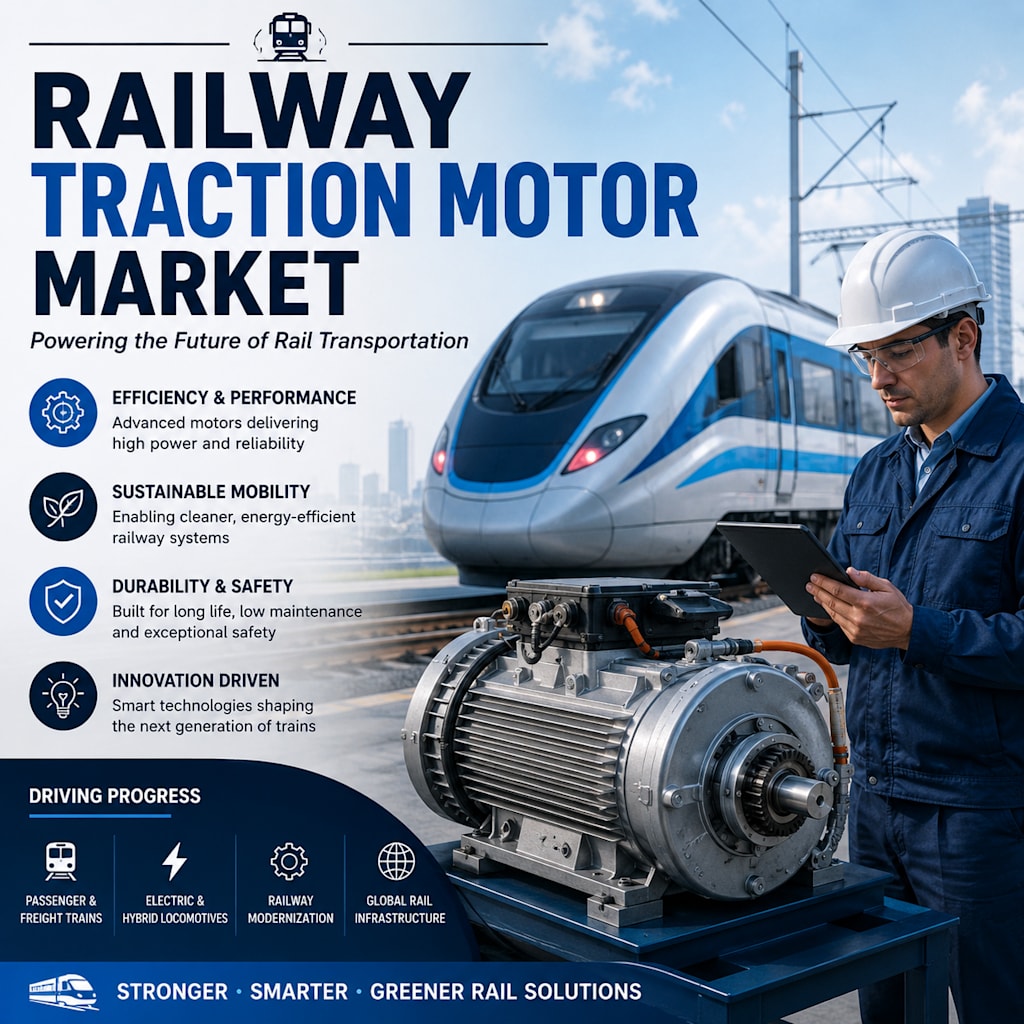
Why Railway Traction Motors Are Becoming the Powerhouse Behind Modern Rail Transport
When we think about trains, our minds often focus on speed, comfort or the ever-expanding networks of railway tracks that crisscross our cities and countries. However, one of the most vital components that drives the whole operation and, quite literally, keeps modern rail transport rolling forward is virtually unseen by passengers – the railway traction motor.
The role of these powerful electric motors is fundamental to the entire operation of a train. They act as the engine of the system, translating electrical energy into the mechanical force that propels trains over vast distances in a smooth and energy-efficient manner. With government investment in sustainable transport options soaring and railway networks around the world eagerly electrifying, the importance of the traction motor is undeniable and it continues to shape the future of global mobility.
The global market for railway traction motors is experiencing consistent growth, propelled by railway modernization projects around the globe, ongoing commitment to meeting environmental targets and an increased focus on sustainable transport solutions.
A Market Moving Forward
According to the latest market analyses, the global railway traction motor market size was worth approximately USD 7.7 billion in 2025 and is expected to grow to nearly USD 10.4 billion by 2034.
While this expected growth of 3.32% per year might seem quite small compared to more nascent technology sectors, this is perfectly in keeping with the nature of railway infrastructure. Railway networks are not typically designed for an operating life of a few years like consumer electronics, but rather decades on end. And as countries continue to build out rail infrastructure or upgrade and modernize existing systems, the demand for reliable and energy-efficient traction motors naturally rises.
What Exactly Is a Railway Traction Motor?
In essence, a railway traction motor is what provides the power and torque needed to rotate a train's wheels.
These motors are specifically built to withstand rigorous operating environments and maintain reliable performance. Modern traction motors usually incorporate sealed systems to help prevent the ingress of dust and other contaminants, typically require minimal maintenance and come with innovative cooling mechanisms that minimize noise levels while also contributing to efficiency.
Their robustness and reliability have made them an integral part of the rail ecosystem and as a result, they are found in a huge variety of rail applications, including:
* Electric locomotives
* Diesel-electric locomotives
* Electric Multiple Units (EMUs)
* High-speed trains
* Metro and urban transit systems
Without traction motors, modern rail transport would simply cease to exist.
Railway Expansion Is Fueling Demand
One of the major growth drivers behind the traction motor market is the continuing expansion of rail networks around the world.
Growing populations and a rise in urbanization is forcing countries and governments to search for innovative transportation solutions to efficiently move ever-increasing numbers of people and quantities of goods. Railways offer a clear advantage over road networks, especially for long-haul freight transport and the mass transit of large passenger volumes.
Numerous countries across Asia, Europe and the Middle East are investing tens of billions of dollars on new railway lines, high-speed projects and metropolitan transport systems. Each new line opened or major project completed automatically adds to the overall demand for highly efficient traction systems and this makes the traction motor a key component in infrastructure development.
The Global Shift Toward Electrification
However, the most impactful trend currently influencing the market is the worldwide push toward railway electrification.
While diesel locomotives were the norm on many railway networks for decades, there has been a widespread move in recent years toward electric rail systems as part of overarching sustainability agendas.
Electric trains offer many advantages, not least among them is:
* Significantly lower carbon emissions
* Reduced operational costs
* Increased energy efficiency
* Much lower noise pollution
* Reduced maintenance requirements
These benefits, among others, mean that a growing number of countries and transportation authorities are increasingly prioritizing electric alternatives over traditional diesel-powered rolling stock.
This global transition toward electric trains presents massive opportunities for manufacturers of traction motors throughout the world.
Sustainability Goals Are Accelerating Investment
The increasing awareness of climate change is driving industries worldwide to find ways to lower energy consumption and emissions.
Transportation is one of the major culprits for greenhouse gas emissions globally and rail transport, and particularly electric rail transport, are seen as some of the most sustainable ways forward.
Many nations have adopted aggressive targets for reducing carbon emissions by placing a greater focus on public transport systems, and particularly the railways, within their infrastructure plans.
The emphasis that many nations place on sustainable transport means that investment into traction motors and the related technologies will likely see continued significant growth.
Battery Technology Is Opening New Possibilities
Furthermore, developments in battery technology are creating new opportunities within the railway traction motor market.
The integration of high-performance lithium-ion batteries into the modern train infrastructure is beginning to transform energy storage and efficiency. These batteries have the capacity to power traction systems directly and are playing an increasing role.
These battery-powered trains are particularly well-suited for routes that would be too expensive or impractical to fully electrify and are being seen as a strong niche market within the larger railway transportation landscape. This sector is expected to continue growing strongly over the next decade, and contribute significantly to future market growth.
AC Motors Are Leading the Technology Shift
The trend within the traction motor market has increasingly shifted from older, less efficient, direct current (DC) motors to modern alternating current (AC) motor technology.
AC traction motors offer a range of benefits, including:
* Superior energy efficiency
* Better performance levels
* Reduced maintenance overhead
* Improved reliability
* Greater control over energy consumption
Syncrhonous AC traction motors, in particular, are gaining traction and significant attention for their ability to achieve excellent output while consuming less power. These advancements in motor design are already enabling railway operators to maximize efficiencies.
Regional Growth Patterns
The various regional markets for railway traction motors show distinct growth patterns.
Asia-Pacific
The Asia-Pacific region continues to demonstrate rapid growth, largely due to its large-scale railway expansion initiatives. China, India, Japan and South Korea are currently leading the push in building extensive new rail networks and expanding existing lines to meet increasing population demand and growing need for public transportation solutions.
Europe
The region’s commitment to sustainable travel, together with strong focus on creating inter-connectivity via cross-border rail routes, also continues to drive demand for these high-tech traction motors. In Europe, reducing carbon emissions is a high priority and this has helped to accelerate widespread railway electrification programs.
North America
There continues to be a stable level of growth and continued investment in the freight rail networks, and in a number of large urban public transportation projects, within North America.
Middle East
Several countries in the Middle East are in the midst of investing billions of dollars in building extensive and advanced railway networks to complement their global ambition and economic development plans. These projects will undoubtedly fuel future demand for traction motors.
Competition and Innovation
There are many highly established global engineering and industrial technology companies present in the railway traction motor market. These companies are investing heavily in developing next-generation traction systems by focusing on areas like:
* Improved energy efficiency within motor design
* The use of lighter-weight yet strong materials
* Implementation of digital monitoring systems
* Advanced predictive maintenance technologies
* Next-generation cooling system development
These innovations will prove essential as operators seek to optimize rail networks while reducing operational costs and improving overall reliability. Strategic partnerships, dedicated R&D and advanced technological innovations will likely remain key battlegrounds for companies operating in this market over the coming years.
Looking Ahead
The future of rail travel promises a more electrified, efficient and sustainable way to get around. As governments continue to invest in the development of sustainable infrastructure and in modernizing existing rail networks, traction motors will undoubtedly remain an indispensable component of the entire process.
While passengers may be completely unaware of their presence and role, traction motors play a vital part in every single railway journey – moving people and goods both safely and efficiently, throughout the world. Given the ongoing expansion of railway networks and the acceleration of electrification projects, the traction motor market looks set for continued and sustained growth right up until 2034 and for the foreseeable future beyond. The railways of tomorrow will need increasingly smart, more efficient traction systems and at the core of that entire development will be the railway traction motor.
About the Creator
Robert
Senior Market Researcher at IMARC Group, specializing in global market analysis, industry trends, and data-driven insights across diverse sectors.
Enjoyed the story? Support the Creator.
Subscribe for free to receive all their stories in your feed.
Comments
There are no comments for this story
Be the first to respond and start the conversation.