
How Personalization Is Changing the Way We Experience Content
How tailored recommendations, AI, and user data are shaping the future of digital content experiences.

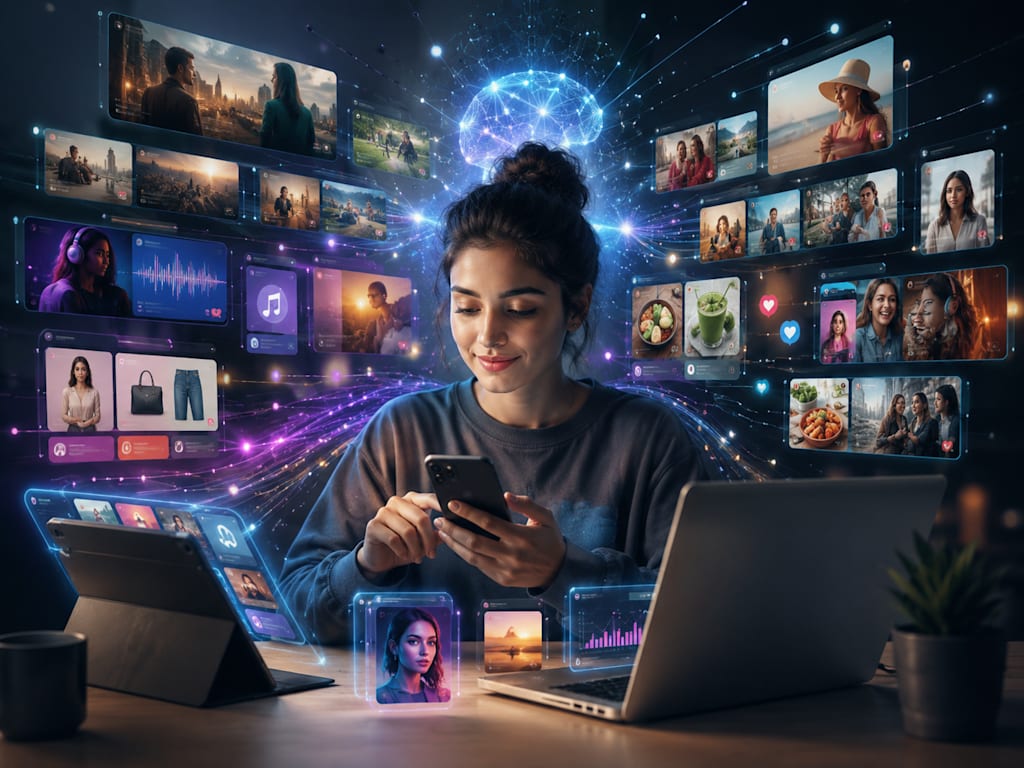
Nobody Wants to Be Treated Like Everyone Else. Especially Online.
Do you remember how the internet used to be?
Everybody who accessed the same site would see the same thing. The same homepage. The same suggestions. The same articles arranged in the same way. Whether you were young or old, whether you lived in Europe or Africa, it did not matter; the internet did not distinguish between any users.
Not anymore.
In today's digital world, each user gets a unique experience on the internet, regardless of which platform they are using. Your Netflix homepage is different from your brother's. You have your own playlist on Spotify. Your TikTok newsfeed is designed based on your habits and preferences.
This is personalization. It is more than just improving our online browsing experience. It is transforming the way we perceive the platforms we access and the brands we trust.
What Personalization Actually Means
Personalization refers to the experience of content tailored for an individual based on their interests, actions, location, past experiences, and environment.
It is not an educated guess; it is about data. With each time you stream a video, skip a song, browse a product, or dwell on a piece of information, you generate data. That data is collected, analyzed, and used to infer what you want to consume in the future. The more you interact, the better predictions they make.
What you get is a curated stream or recommendation just for you because it is personalized for you.
Why Personalization Changed Everything
Without personalization, content discovery was a challenge.
The amount of content was overwhelming, and there was no efficient way to determine which piece of content would be best for each particular individual. People depended upon editors, graphics, friends, and pure chance. A wonderful song could easily slip under their radar, or a book they would absolutely love could remain hidden from them. Products were going unnoticed that they should have been using.
Personalization was the solution that allowed the immense pool of content to connect with the person standing on the edge trying to navigate it.
In addition, the case was very clear for why platforms should personalize for their users. Personalized content encourages user engagement, which allows the platform to gather information to make the experience more personalized, thus fostering greater loyalty.
Where You See Personalization Working Right Now
Video Streaming
It’s not only Netflix’s suggestions that are personalized. They customize even the thumbnails they show for each video in accordance with your tastes. Two people watching the same video will be shown totally different images because they match their preferences.
Music
Spotify makes sure to include in your Discover Weekly playlist which appears once a week on Mondays – all the songs you do not know yet but are sure to like. Millions of users claim that this playlist feels like a close friend who really knows what music suits their taste.
Social Media
All the big players of social media industry utilize personalization techniques in their work. You will no longer find there content in chronological order or random posts from other people. Instead, the algorithm shows you exactly what can keep you hooked.
E-commerce
Amazon’s recommendation engine is among the most researched personalization engines in the world. Personalized recommendations account for a good percentage of sales made by Amazon.
The recommended products are those selected specifically for certain users based on their browsing and buying habits, alongside those displayed to people who share similar browsing tendencies.
News and Publishing
News applications such as Apple News, Flipboard, and Google News provide headline stories customized to your reading habits and preferences. This means you do not read a newspaper but rather a personalized newspaper tailored to your unique curiosity.
This is exactly what good personalized entertainment experience content should give you the content that doesn’t feel like broadcasting but rather a dialogue between the app and its user.
The Technology Making It All Possible
Such level of personalization was unthinkable twenty years ago. However, there have been three major advancements that enabled its creation.
Big data: Current platforms capture vast amounts of behavioral data millions and billions of actions per day. Data collection is the foundation for personalization.
Machine learning:. Algorithms are able to discover patterns within data much faster and more efficiently than any team of analysts. Machine learning learns your preferences not by querying you, but by observing your behavior.
Real-time computing: Current platforms update personalized content in seconds depending on your recent activity. Personalization is no longer a batch process updated daily; instead, it is done instantly.
The Line Between Helpful and Uncomfortable
Personalization is incredibly effective. However, it presents genuine problems that must be addressed.
The filter bubble problem: Algorithms tend to display content that aligns with your current preferences. While doing so, it may hinder your ability to access novel content, diverse perspectives, and even dissenting views. It creates a form of entertainment that is safe and comfortable but lacks diversity.
Privacy Issues: The type of information used in personalization is highly sensitive. Many individuals do not trust sharing their information with businesses. Moreover, many individuals doubt the use of their personal information for collection, storage, and exchange purposes.
Manipulation Risk: Personalization technology is used to deliver personalized content. In contrast, it can also be employed to capitalize on emotional weaknesses anger, frustration, and dissatisfaction will yield more engagement than content that evokes positive emotions.
Ultimately, the most successful applications employ personalization to offer value to the consumer rather than maximizing engagement regardless of its ethical nature.
What This Means for Creators and Brands
In today’s online world, if you make any sort of content, or if you market any sort of product, then personalization will be an entirely different game altogether.
Audience segmentation is extremely vital: Delivering a generic message to everyone is much less impactful compared to delivering a tailored message to a certain group of individuals according to their behavior.
First-party data is crucial to you: With privacy rules becoming stricter, and the use of third-party cookies being discontinued, the use of the data collected by yourself is going to be the key to making personalized marketing work.
Volume doesn’t matter anymore: What matters is relevance. Creating content is not about the number of posts made, but whether you create the correct content for each particular person at that particular point of time.
Personalization is a way of building trust, but not always. Personalization works when there is something useful that pops up; however, if it feels forced or intrusive, then it will only serve to destroy trust.
Where Personalization Is Heading Next
We have come quite a long way, but what is yet to come is truly fascinating.
In terms of personalization, AI is transitioning away from just matching patterns to actual understanding. The future systems won't just know what you have been watching; they will also understand why you have been watching something, how you feel during that and what experience you require at the moment based on your situation and mood.
Personalization will be taken out of virtual platforms into physical spaces as wearables, smart homes, and other devices will allow platforms to understand users and interact with them.
The final vision for the ideal platform is one that feels less like a product and more like a reliable companion that knows its user well enough to offer him/her something he/she needed even before becoming aware of those needs.
The Bottom Line
Personalization has set a new standard for content experiences.
What used to be generic and one size fits all won’t cut it anymore. People who have had personalized platforms will accept nothing less anywhere else.
Whether you are a creator, brand, or a platform, it is all about understanding your audience well, applying this knowledge ethically and building content experiences that are tailored to meet the needs of every individual.
Because in many ways it was.
In the future of content, relevance will trump everything.
About the Creator
David Lawid
David - a random writer sharing simple thoughts and interesting ideas.
Enjoyed the story? Support the Creator.
Subscribe for free to receive all their stories in your feed.
Comments
There are no comments for this story
Be the first to respond and start the conversation.