
How PCB Quality is Revolutionizing Automobile Quality?
The Hidden Role Of Circuits in Your Driving Experience!
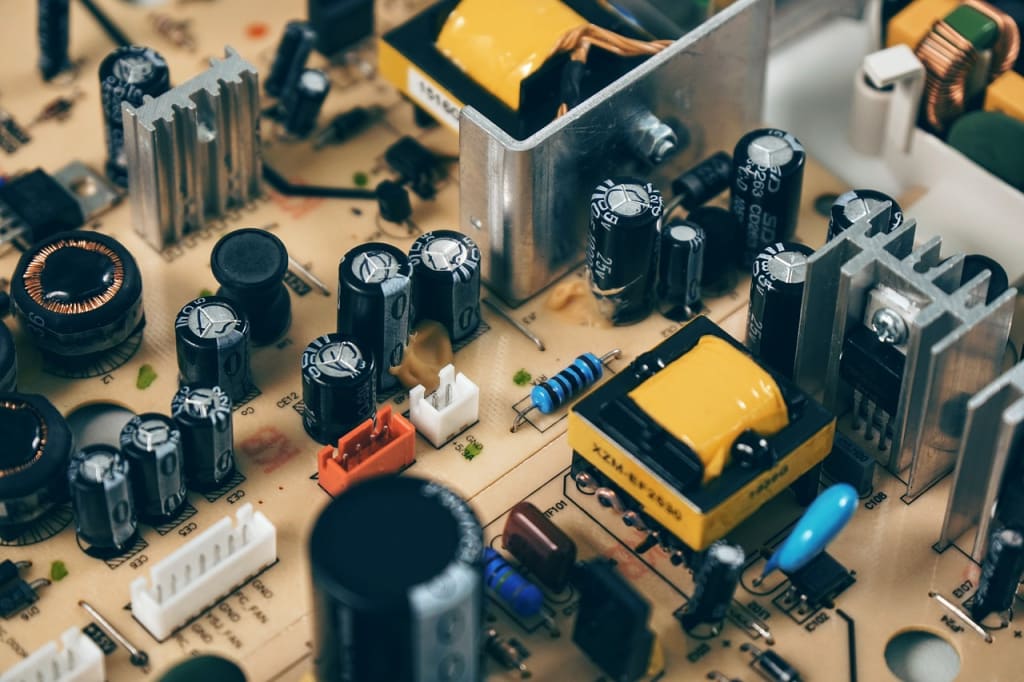
The automotive industry relies on advanced electronics to meet the demands for safety, efficiency, and user experience. High-quality Printed Circuit Boards (PCBs) play a pivotal role in achieving these goals. Here’s how improved PCB quality is transforming automobile quality.
1. Enhancing Vehicle Safety
Modern vehicles are equipped with systems like Advanced Driver Assistance Systems (ADAS), airbags, and anti-lock braking systems (ABS). These systems depend on reliable PCBs to process data and ensure real-time performance.
High-quality PCBs are designed using Advanced PCB Design Techniques to meet rigorous automotive standards, offering enhanced signal integrity, durability, and thermal stability. This reliability directly translates into safer vehicles that protect passengers and pedestrians.
2. Enabling Electrification
Electric vehicles (EVs) are at the forefront of automotive innovation. EVs rely heavily on high-performance PCBs for battery management systems (BMS), power inverters, and electric drive control.
Advanced PCB Assembly Solutions ensure that these boards can handle high currents and voltages while maintaining compact sizes. The result is more efficient energy management and extended battery life, revolutionizing the EV landscape.
3. Improving Connectivity and Automation
The rise of connected cars and autonomous vehicles has increased the demand for PCBs with superior performance. These vehicles depend on seamless communication between sensors, cameras, and central processors.
High-quality PCBs with multi-layer designs and advanced materials support faster data transmission and lower signal interference. This advancement enables features like real-time navigation, vehicle-to-everything (V2X) communication, and automated driving technologies.
4. Increasing Durability in Harsh Environments
Automotive electronics face extreme conditions, including temperature fluctuations, vibrations, and exposure to moisture. High-quality PCBs are designed to withstand these challenges.
Using conformal coatings, robust materials, and precise manufacturing techniques ensures that these boards remain functional under adverse conditions. This durability enhances the overall reliability and lifespan of automotive systems.
5. Supporting Lightweight and Compact Designs
Automakers strive to reduce vehicle weight for better fuel efficiency and performance. Compact PCBs contribute by integrating multiple functionalities into smaller footprints.
Flexible PCBs and rigid-flex designs, created through Advanced PCB Design Techniques, allow for compact, lightweight, and space-saving electronic systems. These designs support the development of sleeker, more efficient vehicles.
6. Driving Cost-Effectiveness
High-quality PCBs reduce the likelihood of system failures and costly recalls. Improved manufacturing processes, such as Advanced PCB Assembly Solutions, enable mass production with consistent quality.
As a result, automakers can deliver better products at competitive prices, enhancing customer satisfaction and brand reputation.
Tips and Techniques for the Best PCB Designs for Automobiles
Understand Automotive Standards
- Design PCBs to comply with automotive standards like ISO 26262 and AEC-Q100.
- Ensure your design meets safety and reliability requirements for automotive electronics.
Use Multilayer PCBs for Complex Systems
- Employ multilayer PCB designs to handle the increasing complexity of modern automotive electronics.
- Separate power, signal, and ground planes for reduced interference and better signal integrity.
Prioritize Thermal Management
- Include thermal vias, heat sinks, and copper pours to manage heat dissipation.
- Choose materials with high thermal conductivity, like specialized laminates.
Design for Durability
- Use robust materials that can withstand harsh automotive environments, including extreme temperatures, vibrations, and moisture.
- Apply conformal coatings for added protection against contaminants.
Optimize Component Placement
- Place critical components like processors and sensors in low-vibration areas.
- Minimize trace lengths to reduce signal delay and electromagnetic interference (EMI).
Implement Advanced PCB Design Techniques
- Use techniques like differential pair routing for high-speed signals.
- Avoid sharp corners in traces to minimize signal reflection and ensure smoother current flow.
Ensure Adequate Power Distribution
- Design wide power and ground traces to handle high current loads.
- Include decoupling capacitors near critical components to stabilize power.
Incorporate EMI and EMC Shielding
- Use ground planes and shielding to reduce electromagnetic interference (EMI) and ensure compliance with electromagnetic compatibility (EMC) standards.
- Keep noisy components like motors and power converters isolated from sensitive circuits.
Conclusion
The integration of high-quality PCBs into automobiles is redefining performance, safety, and innovation. From enabling EV advancements to supporting autonomous driving, PCBs are at the heart of modern automotive transformation. Multilayer PCBs, in particular, are revolutionizing the industry by allowing compact designs with enhanced performance and reliability. As technology evolves, continued investment in PCB quality will further drive innovation, ensuring vehicles are safer, more efficient, and better connected than ever before.
About the Creator
Enjoyed the story? Support the Creator.
Subscribe for free to receive all their stories in your feed.
Comments
There are no comments for this story
Be the first to respond and start the conversation.