
Home Healthcare Market to Reach US$ 777.46 Billion by 2033 as Aging Populations and Digital Health Reshape Patient Care
How Technology, Chronic Disease Management, and Government Support Are Transforming Healthcare Delivery Beyond Hospital Walls

The healthcare industry is undergoing one of its most significant transformations in decades. While hospitals and clinics have traditionally been the center of patient care, a growing shift toward home-based healthcare is changing how medical services are delivered worldwide. Patients increasingly prefer receiving treatment, monitoring, and support in the comfort of their homes rather than spending extended periods in healthcare facilities.
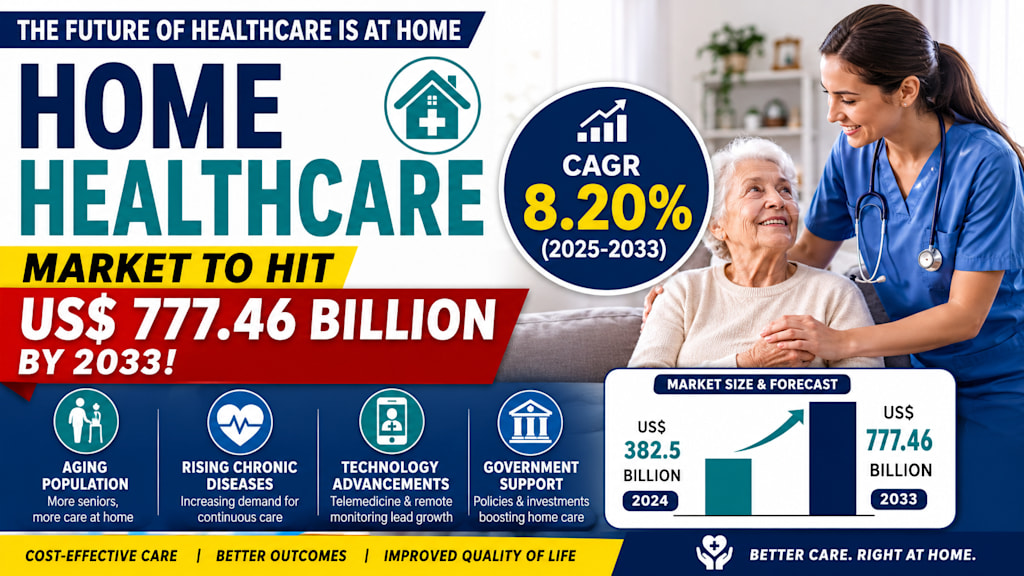
According to Renub Research, the global Home Healthcare Market is projected to grow from US$ 382.5 billion in 2024 to US$ 777.46 billion by 2033, expanding at a CAGR of 8.20% between 2025 and 2033. This impressive growth reflects the rising demand for personalized healthcare services, technological innovation, aging populations, and the increasing prevalence of chronic diseases.
As healthcare systems seek cost-effective solutions while maintaining high-quality patient outcomes, home healthcare is becoming a critical pillar of modern medicine.
Understanding the Growing Importance of Home Healthcare
Home healthcare refers to a wide range of medical and non-medical services provided directly in a patient's residence. These services can include skilled nursing care, physical therapy, occupational therapy, speech therapy, chronic disease management, medication administration, rehabilitation, and assistance with daily living activities.
Unlike institutional care, home healthcare enables patients to recover and manage health conditions in familiar surroundings. This often leads to improved patient satisfaction, enhanced emotional well-being, and reduced healthcare costs.
For elderly individuals, people with disabilities, and patients recovering from surgery or illness, home healthcare offers an effective alternative to long hospital stays and nursing facilities. The approach emphasizes patient-centered care while encouraging family involvement and independence.
Aging Populations Are Driving Market Expansion
One of the strongest forces fueling home healthcare demand is the rapid growth of elderly populations worldwide.
People aged 65 and older represent one of the fastest-growing demographic groups globally. As life expectancy increases, so does the need for long-term healthcare support. Older adults are more likely to experience chronic illnesses such as cardiovascular disease, diabetes, arthritis, respiratory disorders, and neurological conditions that require ongoing monitoring and treatment.
Many seniors prefer aging in place rather than relocating to assisted living facilities or nursing homes. Home healthcare enables them to maintain independence while receiving necessary medical support.
As governments and healthcare providers adapt to demographic changes, home-based care solutions are becoming increasingly important in reducing pressure on healthcare infrastructure.
Chronic Diseases Continue to Increase Healthcare Needs
The rising burden of chronic diseases is another major contributor to market growth.
Conditions such as diabetes, hypertension, cardiovascular disease, chronic obstructive pulmonary disease (COPD), kidney disorders, and cancer require continuous monitoring and long-term treatment. Traditional healthcare settings often struggle to accommodate the growing number of patients needing regular follow-ups and management.
Home healthcare addresses this challenge by bringing medical services directly to patients. Through regular home visits, remote monitoring technologies, and virtual consultations, healthcare providers can track patient progress and intervene when necessary.
This proactive approach helps reduce emergency room visits, hospital admissions, and costly complications, creating benefits for both patients and healthcare systems.
Technology Is Revolutionizing Home-Based Care
The evolution of healthcare technology has transformed what is possible within the home healthcare environment.
Telemedicine platforms, wearable health devices, remote patient monitoring systems, and electronic health records are enabling healthcare professionals to track patient health in real time. Patients can consult physicians virtually, share health data instantly, and receive timely medical guidance without traveling to healthcare facilities.
Smart devices now monitor blood pressure, glucose levels, heart rate, oxygen saturation, and other critical health indicators. These technologies improve treatment adherence while helping providers identify health issues before they become severe.
Artificial intelligence, predictive analytics, and connected healthcare ecosystems are expected to further enhance patient outcomes and operational efficiency in the coming years.
Government Support Accelerates Industry Growth
Government initiatives across multiple countries are playing a crucial role in expanding home healthcare services.
Healthcare policymakers increasingly recognize that home-based care can reduce healthcare expenditures while improving patient experiences. Investments in telehealth infrastructure, reimbursement programs, and community healthcare services are encouraging wider adoption.
Many governments are implementing policies designed to support elderly populations, improve chronic disease management, and expand healthcare access in underserved regions.
The integration of digital healthcare platforms into national healthcare systems is creating new opportunities for providers while increasing patient access to quality care.
Telemedicine and Remote Monitoring Become Mainstream
The global healthcare landscape changed dramatically during the COVID-19 pandemic, accelerating the adoption of virtual care solutions.
Telemedicine has evolved from a convenience into a mainstream healthcare delivery model. Patients can now consult physicians, receive prescriptions, discuss treatment plans, and obtain specialist advice without leaving home.
Remote patient monitoring technologies complement telemedicine by continuously tracking health metrics. Healthcare professionals can identify changes in patient conditions early and provide interventions before complications arise.
This combination of virtual consultations and real-time monitoring has become one of the most powerful drivers of home healthcare expansion worldwide.
Services Segment Leads Market Revenue
Among market components, healthcare services continue to dominate revenue generation.
Services such as skilled nursing, rehabilitation therapy, chronic disease management, hospice care, and personal assistance remain essential for patients requiring ongoing support.
Professional caregivers and healthcare specialists provide individualized care plans tailored to patient needs. This personalized approach improves treatment effectiveness and patient satisfaction.
As healthcare systems emphasize value-based care, demand for specialized home healthcare services is expected to increase significantly throughout the forecast period.
Equipment Market Gains Momentum
Home healthcare equipment is experiencing rapid growth alongside service expansion.
Medical devices such as blood pressure monitors, glucose meters, mobility aids, oxygen therapy systems, infusion pumps, and respiratory equipment enable patients to receive advanced care from home.
Modern equipment is becoming more user-friendly, connected, and data-driven. Integration with mobile applications and cloud-based platforms allows healthcare providers to monitor patient progress remotely.
The growing popularity of wearable health technologies further supports market expansion by empowering patients to actively participate in their healthcare management.
Regional Markets Show Strong Growth Potential
United States
The United States remains one of the largest and most advanced home healthcare markets globally. Rising healthcare costs, aging demographics, and strong adoption of digital health technologies continue driving demand.
Innovations in telehealth reimbursement policies and remote monitoring services are creating favorable conditions for long-term market growth.
India
India is emerging as a significant growth market due to increasing healthcare awareness, rising chronic disease prevalence, expanding telemedicine services, and supportive government initiatives.
The growing middle-class population and demand for affordable healthcare solutions are accelerating adoption across urban and semi-urban regions.
United Kingdom
The United Kingdom's focus on personalized care and community-based healthcare services supports continued market expansion. Patients increasingly prefer receiving care at home, particularly for long-term and elderly care services.
United Arab Emirates
The UAE is witnessing substantial growth driven by healthcare modernization, digital transformation initiatives, and rising demand for premium healthcare services delivered at home.
Strategic partnerships between healthcare providers and technology companies are strengthening the region's healthcare ecosystem.
Challenges That Could Impact Future Growth
Despite strong growth prospects, the industry faces several challenges.
Regulatory Compliance
Healthcare providers must comply with complex regulations, licensing requirements, privacy standards, and accreditation frameworks. Maintaining compliance requires significant investments in training, administration, and operational oversight.
Workforce Shortages
Many regions face shortages of qualified nurses, therapists, and caregivers. Recruiting and retaining skilled healthcare professionals remains a major concern for providers.
Reimbursement Issues
Insurance coverage limitations and reimbursement complexities can create financial pressures for both providers and patients. Improving payment structures will be essential to supporting sustainable industry growth.
Top 10 Recent Developments Among Leading Home Healthcare Companies
1. Apple Inc.
Apple continues expanding health-focused features across its wearable ecosystem, enhancing remote patient monitoring capabilities through advanced health tracking technologies.
2. Royal Philips
Philips strengthened its remote patient monitoring portfolio through strategic collaborations focused on continuous patient monitoring solutions.
3. Roche
Roche continues investing in digital diagnostics and remote disease management platforms that support home-based healthcare delivery.
4. Becton, Dickinson and Company
BD expanded connected medical device solutions designed to improve patient monitoring and medication management at home.
5. Fresenius SE & Co. KGaA
Fresenius continues enhancing home dialysis and chronic disease management programs to improve patient accessibility and outcomes.
6. B. Braun Melsungen AG
The company has increased focus on infusion therapy technologies and home-based treatment solutions for chronic disease patients.
7. 3M Healthcare
3M continues advancing wound care technologies that support treatment and recovery outside traditional healthcare facilities.
8. Arkray Inc.
Arkray has expanded diagnostic and diabetes monitoring solutions that enable better self-management for patients at home.
9. Hollister Incorporated
The company continues innovating ostomy and continence care products that improve patient independence and quality of life.
10. Emerging Digital Health Partnerships
Healthcare technology companies worldwide are forming strategic partnerships to combine telemedicine, remote monitoring, and AI-driven healthcare solutions.
The Future of Healthcare Is Moving Home
The home healthcare market represents far more than a growing industry—it reflects a fundamental shift in how healthcare is delivered. Patients increasingly expect convenient, personalized, and technology-enabled care that fits into their daily lives.
Advancements in telemedicine, wearable devices, artificial intelligence, and remote monitoring are creating new opportunities for providers to deliver effective healthcare beyond traditional facilities. At the same time, aging populations and rising chronic disease burdens are making home-based care an essential component of healthcare systems worldwide.
As innovation continues and healthcare models evolve, home healthcare is positioned to become one of the most influential sectors in global healthcare delivery over the next decade.
Final Thoughts
The global Home Healthcare Market is entering a transformative growth phase. Projected to reach US$ 777.46 billion by 2033, the sector is benefiting from powerful trends including population aging, chronic disease prevalence, digital health innovation, and supportive government policies.
Healthcare providers, technology companies, investors, and policymakers all recognize the value of delivering care where patients feel most comfortable—their homes. As technology continues to bridge the gap between healthcare professionals and patients, home healthcare is set to redefine the future of medical care around the world.
About the Creator
Enjoyed the story? Support the Creator.
Subscribe for free to receive all their stories in your feed.
Comments
There are no comments for this story
Be the first to respond and start the conversation.