
Healthcare Furniture Market Trends: Pediatric & Geriatric Care Solutions & Industry Forecast to 2034
How pediatric and geriatric care requirements are shaping the development of specialized healthcare furniture focused on safety, comfort, and ease of use

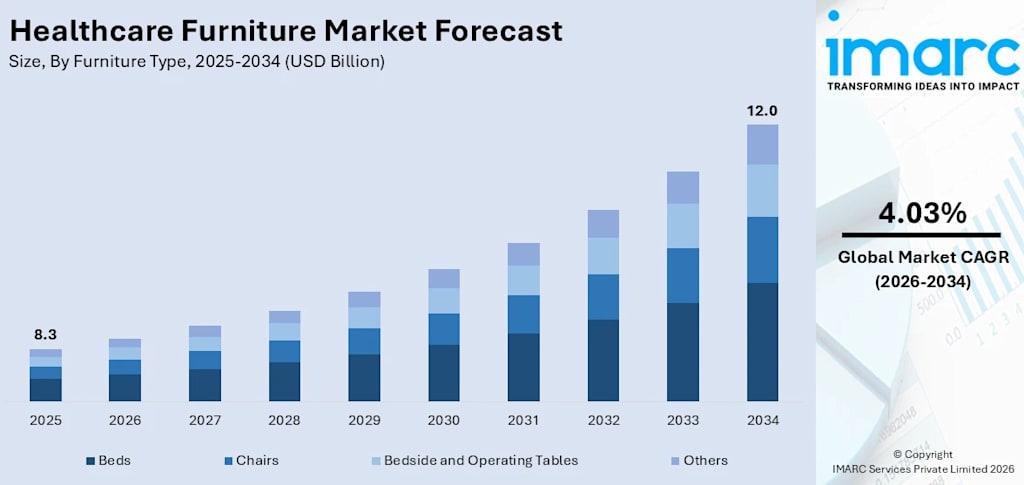
Rising health awareness, busy lifestyles, and preference for convenient, nutritious foods are driving healthy snack demand, supported by clean-label trends, product innovation, and expanding retail and online distribution channels. According to IMARC Group’s latest data, The global healthcare furniture market size was valued at USD 8.3 Billion in 2025. Looking forward, IMARC Group estimates the market to reach USD 12.0 Billion by 2034, exhibiting a CAGR of 4.03% from 2026-2034.
Healthcare furniture now represents a multi-billion-dollar global market exceeding USD 8 billion and exhibiting steady year-on-year expansion. Demand is driven by rising health consciousness, busy lifestyles that favor on-the-go nutrition, and increased interest in plant-based, low-sugar and clean-label products. Retail innovation and e-commerce, private-label launches, and product reformulation for protein, fiber and functional ingredients are further accelerating uptake. Major segments include fruit, nut and seed snacks, protein bars, baked/roasted savory options and ready-to-eat refrigerated items, with consumers prioritizing portability, transparent labeling and specific dietary claims.
Download Your Free Copy of the "Healthcare Furniture Market" Report
Healthcare Furniture Market Growth Drivers:
- Expansion of Healthcare Infrastructure and Facilities
The rapid construction of specialized medical centers and the modernization of existing hospitals are primary catalysts for market growth. As governments and private entities ramp up investments to address aging populations, the demand for high-quality medical beds, bedside tables, and nursing stations has surged. For instance, the Rural Health Transformation (RHT) Program in the U.S. has allocated USD 50 billion through 2030 to upgrade rural medical ecosystems. This massive capital injection ensures that even smaller clinics are being outfitted with ergonomic and durable furniture to improve patient outcomes and operational efficiency.
- Growing Emphasis on Patient-Centric and Ergonomic Design
Modern healthcare is shifting away from clinical, sterile environments toward spaces that prioritize patient comfort and safety. This "healing environment" philosophy drives the adoption of ergonomic chairs and multi-acuity beds that reduce the risk of pressure ulcers and falls. Recent studies show that 69% of hospitals now prioritize ergonomic designs in their procurement contracts. By integrating height-adjustable features and pressure-relief technology, facilities can significantly enhance the recovery experience. This trend is particularly evident in North America, where patient satisfaction scores often influence federal reimbursement rates for healthcare providers.
- Rising Burden of Chronic Diseases and Geriatric Care
The global increase in chronic conditions such as cardiovascular disease and diabetes has led to higher hospitalization rates, necessitating a greater volume of specialized furniture. With over 129 million Americans living with at least one chronic disease, the need for long-term care furniture is at an all-time high. Furthermore, since roughly 16.9% of the U.S. population is over 65, there is a massive push for bariatric and mobility-assisted furniture. These demographic shifts require facilities to invest in heavy-duty frames and assistive seating to accommodate patients with limited mobility during extended stays.
Healthcare Furniture Market Trends:
- Integration of Smart and IoT-Enabled Furniture
Technological innovation is transforming traditional furniture into data-driven diagnostic tools. Smart hospital beds are now being equipped with sensors that track patient weight, movement, and vital signs in real-time, feeding this data directly into Electronic Health Records (EHR). In early 2025, the FDA cleared over 37 new electric bed models, a 22% increase from previous years, highlighting the industry's pivot toward digital connectivity. These "intelligent" units help reduce patient wait times by roughly 18% through better fleet management and automated alerts, allowing nurses to respond faster to potential fall risks or emergencies.
- Strict Infection Control and Antimicrobial Surface Mandates
In a post-pandemic landscape, hygiene is a non-negotiable priority for hospital procurement managers. There is a surging trend toward furniture constructed with antimicrobial coatings and seamless designs that prevent the growth of bacteria and viruses. Approximately 76% of healthcare facilities have already transitioned to antimicrobial-coated cabinets and tables to mitigate hospital-acquired infections (HAIs). Regulatory bodies are increasingly mandating easy-to-sanitize materials, such as high-grade polymers and specialized metals, which can withstand rigorous chemical cleaning protocols without degrading, ensuring both longevity and safety in high-traffic clinical zones.
- Sustainability and the Rise of Eco-Friendly Medical Furnishings
Environmental responsibility is becoming a core component of healthcare branding and operations. Hospitals are increasingly seeking furniture made from recyclable, non-toxic, and sustainably sourced materials to meet "Green Building" certifications. Manufacturers are responding by using rPET plastics and lightweight aluminum to reduce the carbon footprint of their products. In Europe, new directives are encouraging the use of renewable materials in medical settings, driving a shift toward circular economy practices. This trend is not just about ethics; sustainable designs often offer better durability and lower total cost of ownership over the product's lifecycle.
Recent News and Developments in Healthcare Furniture Market
- August 2025: Paramount Bed launched the Arius Series ICU Bed, featuring the industry’s first ParaDrive transport assist function, specifically designed to reduce physical strain on healthcare workers during patient movement.
- September 2025: Agiliti introduced the Essentia multi-acuity bed frame, which includes the innovative SlideRail system to provide nearly 40 inches of open space for safer patient entry and exit.
- September 2025: Saikang unveiled the C8c Smart Electric Hospital Bed at the 2025 CMEF, showcasing advanced adaptive sensing that automatically adjusts bed positioning based on real-time patient data.
Note: If you require specific details, data, or insights that are not currently included in the scope of this report, we are happy to accommodate your request. As part of our customization service, we will gather and provide the additional information you need, tailored to your specific requirements. Please let us know your exact needs, and we will ensure the report is updated accordingly to meet your expectations.
About the Creator
Andrew Sullivan
Hello, I’m Andrew Sullivan. I have over 9+ years of experience as a market research specialist.
Enjoyed the story? Support the Creator.
Subscribe for free to receive all their stories in your feed.
Comments
There are no comments for this story
Be the first to respond and start the conversation.