
Have Earbuds Given Us the 25-Hour Day We Always Wanted?
By Making our Day Feel Longer

When I was growing up, I often wished there were more than 24 hours in a day. It always felt like there was never enough time to do everything I wanted. I wanted to run my errands, take my daily walk, keep up with what was happening in the world, get my work done, and still have enough time left over to talk with family and friends. Twenty-four hours always seemed like an artificial limit on an otherwise busy life. I remember thinking that if someone could give me a few extra hours each day, I could finally catch up. I never imagined that technology would eventually give me something remarkably close to that, not by changing the clock, but by changing what I could do with the time between everything else.
Enter the Earbud
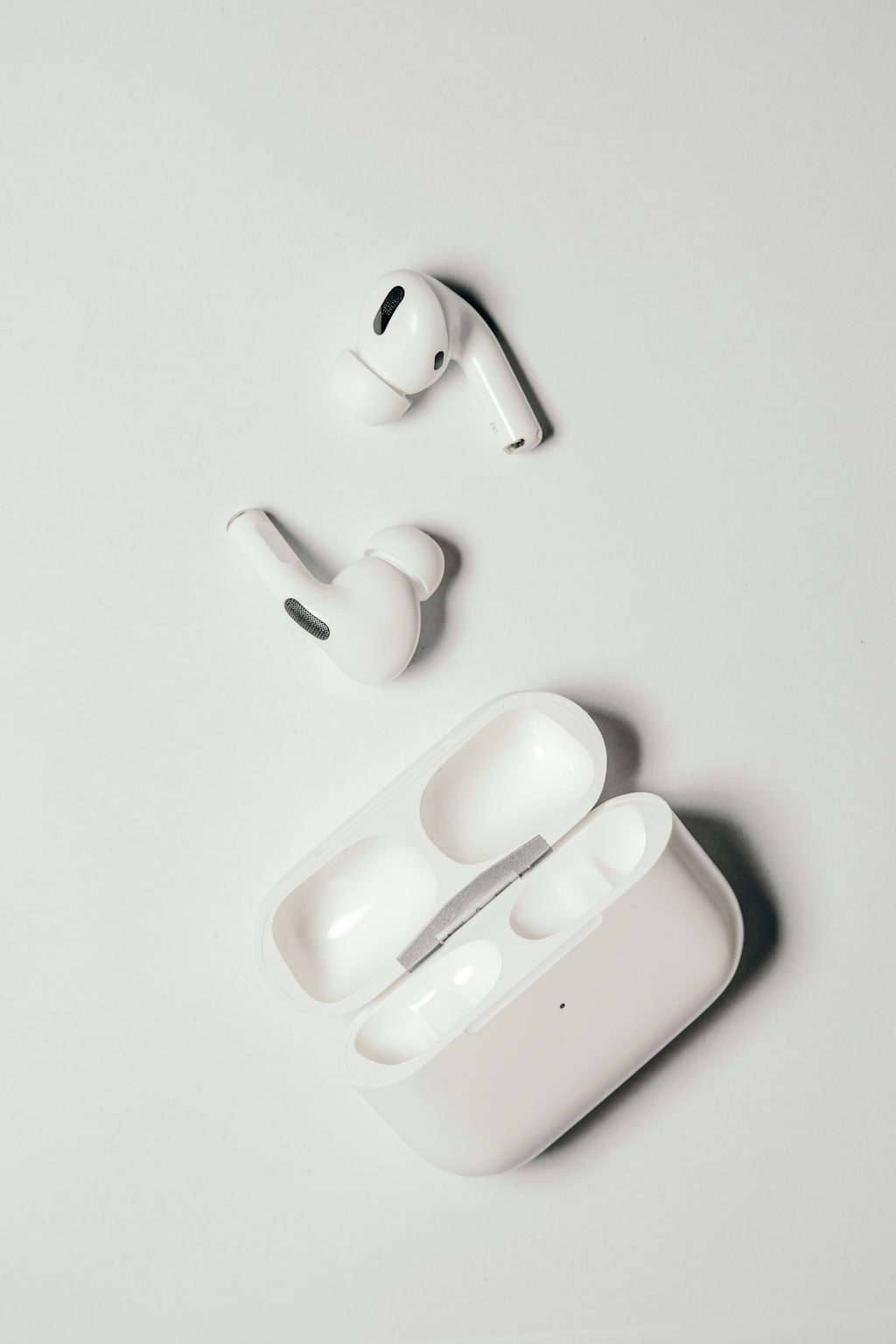
Earbuds may look like tiny pieces of plastic and electronics, but they represent something that would have sounded like science fiction when I was growing up. A small device sits almost invisibly in your ear, connecting you wirelessly to people, information, entertainment, podcasts, artificial intelligence, and the rest of the world. There are no wires to untangle, and increasingly, no need to hold your phone. What once required sitting at a desk, holding a telephone, or stopping what you were doing can now happen while you walk down the street, shop for groceries, exercise, or drive.
For me, the biggest transformation is not the technology itself. It is the way earbuds have turned what used to be “dead time” into productive or meaningful time—running errands used to mean simply running errands. A walk meant walking. Driving meant driving. Waiting in line meant waiting. Those moments were small individually, but collectively they added up to a surprisingly large amount of time each week. Today, earbuds let many of those moments serve another purpose.
I can catch up with friends while running errands. I can have a hands-free conversation while taking my daily walk. I can reconnect with someone I have not spoken to recently while doing something else that already needs to get done. And perhaps just as importantly, earbuds have given me a new way to keep up with the world around me. I can listen to the news in real time while walking or running errands, rather than sitting down to read a newspaper or magazine! And if I want to go deeper, podcasts let me explore topics in economics, history, politics, business, technology, or almost any other subject while I do something completely unrelated.
That changes the economics of time. I no longer have to choose between taking a walk and learning something new. I don't always have to choose between driving somewhere and catching up on the news. A twenty-minute walk can become a twenty-minute conversation, a news briefing, a lecture, or an exploration of an unfamiliar subject. What used to be one activity can now be two. The clock hasn't changed, but the amount of life I can fit into those hours has.
That is the futuristic aspect that fascinates me. Science fiction once imagined people communicating with one another while moving freely, accessing information instantly, and carrying incredibly powerful technology. Today, we barely notice we are doing it. The futuristic device isn't sitting in a laboratory anymore. It is sitting in our ears.
And earbuds are becoming more than miniature telephones. They are evolving into personal interfaces between humans and technology. They can deliver navigation instructions, translate languages, provide reminders, play personalized entertainment, and connect us to artificial intelligence. Increasingly, the boundary between simply hearing something and interacting with a digital assistant is disappearing. The technology is becoming less visible as it becomes more integrated into everyday life.
There is an important irony here. Technology was supposed to make our lives easier, and sometimes it certainly does. But smartphones and the internet also created an expectation that we should always be available, always informed, and always connected. Earbuds can contribute to that problem if we let them fill every quiet moment with another notification, conversation, or piece of information. The same technology that gives us more usable time can also make it harder to experience genuine downtime.
That may ultimately be the most important lesson of the earbud revolution. Technology doesn't give us more hours. It gives us more choices about how we use the hours we already have. The 24-hour day remains exactly as it was when I was growing up. What has changed is our ability to combine activities, communicate while moving, stay informed, and turn previously empty minutes into opportunities to learn, connect, and explore.
Perhaps that is why earbuds feel so futuristic. The future rarely arrives with a dramatic announcement. It sneaks into our lives gradually, until something once deemed impossible becomes so ordinary that we hardly notice how profoundly it has changed us. We no longer marvel that a tiny wireless device can connect us instantly with someone thousands of miles away or give us access to breaking news and hours of specialized knowledge as we walk around the block. We put it in our ear and start listening.
Concluding Thoughts
Did technology finally give me the 25-hour day I always wanted? Not exactly. But it may have given me something almost as valuable: the ability to use the 24 hours I already have more efficiently! I can talk to a friend, catch up on the news, listen to a fascinating podcast, learn something new, and still get my errands done and take my daily walk. The day hasn't grown longer. Yet somehow, within those 24 hours, my life has surely expanded.
And in a world where time may be our most limited resource, perhaps this is one of the greatest inventions I have ever encountered in my lifetime!
About the Creator
Anthony Chan
Chan Economics LLC, Public Speaker
Chief Global Economist & Public Speaker JPM Chase ('94-'19).
Senior Economist Barclays ('91-'94)
Economist, NY Federal Reserve ('89-'91)
Econ. Prof. (Univ. of Dayton, '86-'89)
Ph.D. Economics
Enjoyed the story? Support the Creator.
Subscribe for free to receive all their stories in your feed. You could also become a paid subscriber, letting them know you appreciate their work.
Comments
There are no comments for this story
Be the first to respond and start the conversation.