
Goat Milk Market Set for Steady Growth as Health-Conscious Buyers and Specialty Dairy Demand Expand
From easy digestion to premium dairy innovation, goat milk is moving from a niche alternative to a mainstream category in global dairy consumption.

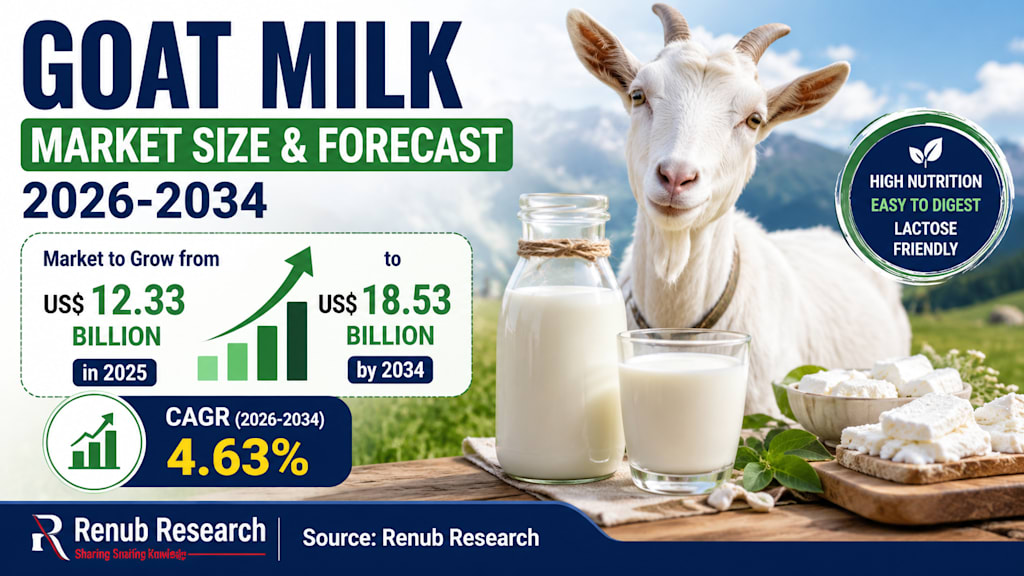
The goat milk market is entering a stronger growth phase as more consumers search for dairy products that are lighter on digestion, rich in nutrients, and aligned with healthier eating habits. According to Renub Research, the market is expected to rise from US$ 12.33 billion in 2025 to US$ 18.53 billion by 2034, growing at a CAGR of 4.63% during 2026–2034.
That outlook reflects more than just a trend in alternative milk. It points to a broader shift in how shoppers think about dairy. Goat milk is no longer seen only as a regional or specialty product. It is increasingly being positioned as a premium, functional, and natural option that fits modern lifestyles, especially among health-conscious families, consumers with digestive sensitivities, and buyers interested in artisanal food experiences.
Goat milk has several qualities that give it a clear advantage in this evolving market. It is naturally nutrient-dense and contains protein, calcium, vitamins, and minerals that support daily nutrition. It is also often considered easier to digest than cow milk because of its smaller fat globules and different protein structure. For consumers who are lactose intolerant or who experience discomfort with cow milk, goat milk can feel like a practical and wholesome alternative. These features are helping the category earn more shelf space in packaged dairy, infant nutrition, cheese, yogurt, and powdered milk.
A market shaped by health and digestion
One of the strongest forces behind the market is the growing demand for dairy that supports digestive comfort. This is especially important in markets where consumers are becoming more selective about what they drink and eat. Goat milk’s reputation as a gentler option has become a major selling point, particularly for families, older adults, and people looking for natural dairy substitutes.
At the same time, consumers are paying closer attention to what goes into their food. Products that are minimally processed, nutritionally rich, and perceived as clean-label are gaining preference. Goat milk fits this demand well because it combines traditional dairy value with a premium health image. In many markets, this has helped goat milk move beyond basic consumption and into lifestyle-oriented dairy choices.
This shift is also being reinforced by innovation. Dairy companies are investing in products that emphasize better digestion, richer nutrition, and improved taste. The result is a more diverse goat milk category that now includes fresh milk, cheese, yogurt, butter, powder, and infant nutrition products.
Specialty and organic dairy continue to support growth
Another important growth engine is the expanding appetite for specialty and organic dairy products. Goat milk sits comfortably in this space because it is often associated with artisanal production, premium quality, and natural farming practices. Consumers who are willing to pay more for food that feels authentic and wholesome are helping support this segment.
Goat milk cheese, in particular, has become a standout product. It is valued for its creamy texture, distinctive flavor, and culinary versatility. It works well in salads, sandwiches, gourmet dishes, and premium restaurant menus. As food culture continues to favor unique ingredients and elevated dining experiences, goat cheese is benefiting from stronger demand across both retail and foodservice channels.
This premium positioning is also attracting dairy manufacturers looking to diversify. As consumers seek out more natural and specialty products, companies are launching new goat milk offerings that aim to combine nutrition with indulgence. That balance between health and quality is one of the most important themes shaping the market today.
Infant nutrition gives the category a new growth lane
Perhaps one of the most interesting developments in the market is the rise of goat milk-based infant nutrition. Parents today are highly aware of product ingredients and often look for formulas that are easy to digest, gentle on the stomach, and nutritionally complete. Goat milk-based products are gaining attention as an alternative to conventional cow milk formulas.
This segment matters because infant nutrition is not a casual purchase. It is a trust-driven category where parents often spend time comparing ingredients, digestibility, and nutrition claims. Goat milk’s natural image and digestibility profile give it a strong story in this space. Manufacturers are responding by introducing specialized products for toddlers and infants, creating a stronger bridge between traditional dairy and functional nutrition.
The broader result is that goat milk is no longer competing only on taste or novelty. It is now also competing on nutrition, trust, and product purpose. That widens the market considerably.
Challenges remain around supply and pricing
Despite the positive outlook, the market still faces real limitations. The first is supply. Goat farming is generally smaller in scale than cow dairy farming, and goats naturally produce less milk than cows. This creates a structural production challenge that can limit expansion in some regions.
Unlike large-scale cow dairy systems, goat milk production often depends on smaller farms and more dispersed supply chains. That can make processing and distribution more expensive. It can also create consistency issues in markets where infrastructure is less developed. If the category wants to scale faster, more investment will be needed in breeding, feeding, farming systems, and collection networks.
The second challenge is cost. Goat milk products often carry a higher price tag than conventional dairy. This reflects lower output, smaller herd sizes, and more specialized production methods. For many consumers, price can be the deciding factor, especially when cow milk remains cheaper and more widely available. So even though demand is rising, affordability will continue to shape adoption rates.
That said, premium pricing is not always a weakness. In fact, for many goat milk products, the higher price supports the product’s premium identity. The challenge is not only to reduce costs, but to ensure that consumers clearly understand the value they are paying for.
Organized production is improving market access
The move from unorganized to organized goat milk supply is another major development. Traditionally, goat milk production in many countries was local, small-scale, and highly fragmented. Farmers sold milk in nearby markets, and products often remained limited in reach.
Now, organized dairy companies are bringing better collection, processing, packaging, and branding into the picture. That shift is important because it improves food safety, product consistency, and retail availability. Packaged milk, cheese, yogurt, and infant products are becoming more common in modern retail and online channels.
This is also where policy and institutional support matter. In some markets, governments and agricultural groups are encouraging better goat farming practices and dairy processing infrastructure. That can strengthen rural incomes while also helping the category become more commercially reliable. Over time, this could help reduce one of the biggest bottlenecks in the sector: uneven supply.
Distribution is becoming more diversified
The market is also expanding through a wider mix of sales channels. Supermarkets and hypermarkets remain important, especially for packaged dairy products. But convenience stores are increasingly stocking goat milk-based items to meet demand from busy shoppers who want quick access to healthier food choices.
Specialty stores also play a meaningful role, particularly for premium dairy products and artisanal cheeses. These outlets help position goat milk as a quality-driven purchase rather than just a substitute product.
Online retail is another fast-growing channel. Digital commerce has made it easier for brands to reach more consumers, especially in urban markets. It allows shoppers to compare products, read descriptions, and purchase items that may not be widely available in local stores. For goat milk brands, this channel is especially valuable because it supports education and premium branding at the same time.
As online grocery shopping expands, the goat milk category is likely to benefit from improved visibility and broader consumer access.
Regional markets show different patterns of growth
The United States is one of the more mature and promising markets for goat milk. Demand is rising among consumers who want alternative dairy with nutritional value and better digestibility. Goat cheese, yogurt, and powder are also gaining traction. Health food stores, supermarkets, and online retailers are giving the category more room to grow.
The United Kingdom is seeing strong interest in gourmet and specialty dairy. Goat milk is especially attractive in premium food circles, where consumers value unique flavor and artisanal quality. Goat cheese and yogurt are particularly well positioned in this market.
In India, goat milk has long had a presence in rural diets, but it is now receiving more attention in urban areas too. Rising awareness about nutrition, lactose intolerance, and organized dairy supply is helping the market develop. This makes India a market with both traditional familiarity and modern growth potential.
Saudi Arabia and other Middle Eastern markets are also showing steady interest, especially because goat milk aligns well with local dairy traditions and demand for nutritious, natural food products. Packaged goat milk and goat-based dairy products are becoming more visible as consumers look for healthier everyday options.
Together, these markets show that goat milk is not growing for one single reason. In some places, it is about digestion. In others, it is about tradition, premiumization, or infant nutrition. That diversity makes the category more resilient.
Competitive landscape is becoming more active
The market includes a mix of global and regional players that are shaping product development and brand positioning. Companies such as Ausnutria Dairy Corporation Ltd., AVH Dairy Trade B.V., Goat Partners International, Granarolo S.p.A., Meyenberg, Redwood Hill Farm & Creamery, and St Helen's Farm are part of the competitive environment.
What makes the category interesting is that competition is not just about volume. It is also about product innovation, premium positioning, and trust. Brands are increasingly focused on digestive benefits, A2 protein messaging, infant nutrition, and specialty dairy formats. In other words, success in this market depends on more than just milk supply. It depends on how well a brand can tell the story of goat milk’s nutritional and functional value.
Final thoughts
The goat milk market is moving steadily from a niche dairy category into a broader growth opportunity. Its appeal is being driven by a rare mix of factors: consumer demand for easy-to-digest dairy, rising interest in organic and specialty food, expanding infant nutrition use, and a stronger organized retail presence.
The path ahead is not without obstacles. Supply limitations and higher prices will continue to matter. But the category has a clear advantage in a marketplace where consumers are actively searching for foods that feel healthier, more natural, and more premium.
With Renub Research projecting the market to grow from US$ 12.33 billion in 2025 to US$ 18.53 billion by 2034, the message is clear: goat milk is no longer just an alternative. It is becoming a serious player in the global dairy economy.
If you would like, I can also turn this into a more journalistic Vocal-ready version with stronger hooks and smoother transitions, while keeping the same word count and structure.
About the Creator
Enjoyed the story? Support the Creator.
Subscribe for free to receive all their stories in your feed.
Comments
There are no comments for this story
Be the first to respond and start the conversation.