
Gluten-Free Food Market Is Moving From Niche to Mainstream
Why health awareness, product innovation, and broader retail access are pushing the market toward US$ 43.87 Billion by 2034

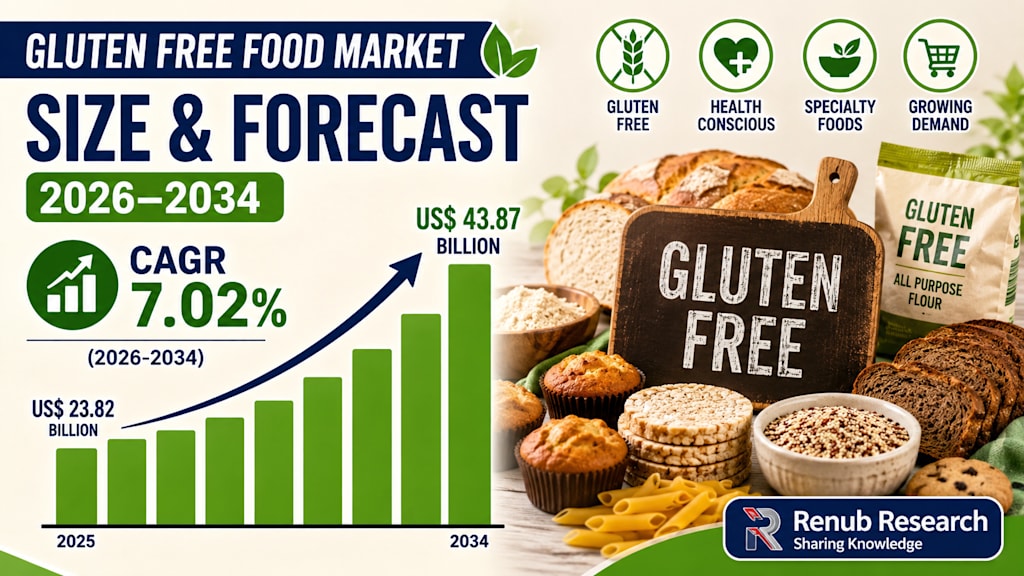
The gluten-free food market is no longer a small corner of the grocery aisle reserved only for people with medical dietary needs. It has grown into a broad consumer category shaped by health awareness, better product development, and stronger retail availability. According to the provided Renub Research brief, the global gluten-free food market is projected to rise from US$ 23.82 Billion in 2025 to US$ 43.87 Billion in 2034, growing at a CAGR of 7.02% from 2026 to 2034.
That growth says a lot about where consumer food habits are heading. Today’s shoppers are reading labels more carefully, looking for cleaner ingredients, and choosing products that align with personal wellness goals. At the same time, people who live with celiac disease, gluten intolerance, or wheat allergies continue to depend on safe, certified gluten-free products for everyday meals. What was once a highly specialized category is now becoming part of mainstream food culture.
A market driven by more than medical necessity
For years, gluten-free foods were mainly purchased by people with diagnosed dietary restrictions. That remains the core demand base, but the market has expanded well beyond that group. Many consumers now associate gluten-free products with easier digestion, lighter eating, and cleaner labels. Whether that belief is always scientifically justified in every case is less important than the fact that it strongly influences buying behavior.
This shift has created a larger and more diverse customer base. Some consumers buy gluten-free products because they must. Others buy them because they want to feel healthier, reduce certain ingredients, or try a more controlled diet. In practice, that means the market is no longer dependent on one small segment. It is being supported by both medical need and lifestyle demand.
The Renub Research brief also highlights how rising awareness around gluten intolerance and celiac disease is strengthening demand. The more people are diagnosed, the more they seek reliable food options that fit their condition. Better testing and broader awareness are also helping bring more hidden cases into the light, which gives the category a durable foundation for long-term growth.
Health awareness is changing food choices
One of the strongest forces behind gluten-free growth is the wider movement toward healthy and mindful eating. Consumers today are more interested in what their food contains, where it comes from, and how it is made. This has pushed clean-label, natural, and allergen-conscious products into the spotlight.
Gluten-free food fits neatly into that trend. Even consumers without a diagnosed gluten issue often view these products as lighter or more suitable for wellness-oriented lifestyles. That perception has encouraged manufacturers to expand their gluten-free lines and present them as everyday choices rather than specialty alternatives.
This is especially important because food habits are becoming more personal. Instead of one-size-fits-all diets, consumers now look for products that match their own routines, preferences, and health goals. Gluten-free foods benefit from that shift because they can serve both strict dietary needs and broader wellness appeal.
Innovation is improving taste, texture, and trust
In the early years of gluten-free food, the biggest complaint was simple: many products did not taste as good as the originals. Bread could be dry, pasta could be fragile, and baked goods often lacked the texture people expected. That used to limit repeat purchases.
The market has changed dramatically. Manufacturers have invested in better ingredient combinations, improved processing methods, and alternative flours that work more effectively in baking and prepared foods. Ingredients such as rice, corn, quinoa, millet, buckwheat, legumes, and almond flour have helped close the quality gap. As a result, gluten-free products now come in a much wider range of forms, including bakery items, snacks, cereals, pasta, ready meals, beverages, and dairy-based foods.
This innovation matters because consumer loyalty in food is built on repeat satisfaction. People may try a gluten-free product once because of dietary necessity or curiosity, but they only keep buying it if the taste, texture, and convenience are good enough. The best-performing brands understand this well, and that is why product development remains such a central growth driver.
Recent launches mentioned in the brief show how active the category has become. In September 2025, Genius Foods introduced its “Naturally Genius” range with Megan McKenna, offering artisan and sliced loaves without artificial preservatives, flavorings, or emulsifiers. In August 2025, Mission Foods launched gluten-free chickpea tortillas as part of its better-for-you range. These examples show a market that is not standing still. It is actively competing on nutrition, convenience, and clean-label appeal.
Retail availability is making gluten-free products easier to buy
Another major reason the market is expanding is simple access. Gluten-free food is now available in supermarkets, specialty stores, restaurants, hospitals, educational institutions, and online channels. That matters because availability strongly affects trial rates. When products are easy to find, more consumers are willing to purchase them.
E-retail has played a major role in that growth. Online platforms allow shoppers to compare ingredients, check certifications, and discover niche products that may not always be stocked in local stores. For people with food sensitivities, that convenience is especially important because confidence in labeling and availability reduces stress at the point of purchase.
Foodservice channels also matter. When restaurants, hotels, and institutional kitchens expand gluten-free offerings, they help normalize the category. It becomes less of a special request and more of a standard menu option. Over time, that helps gluten-free foods move from a restricted niche into ordinary daily consumption.
Price and cross-contamination remain real challenges
Even with strong growth, the market still faces important obstacles. The first is cost. Gluten-free products often cost more than conventional foods because they rely on specialized ingredients, stricter handling, and separate processing systems. That higher production cost is usually passed on to consumers.
This can slow adoption in price-sensitive markets. In many developing regions, premium food pricing makes it harder for gluten-free products to become everyday staples. The category may grow quickly in urban, affluent, or health-conscious groups, but wider penetration still depends on affordability.
The second challenge is trust. Gluten-free food is not just about excluding wheat, barley, and rye. It also requires careful prevention of cross-contamination during sourcing, manufacturing, packaging, and distribution. For people with celiac disease, even small traces of gluten can cause serious problems. That means brands must invest in testing, certification, and careful quality control. Consumer trust is fragile here, and once it is lost, it is difficult to regain.
Different product segments are growing in different ways
The gluten-free market is broad, but some segments are moving faster than others.
Bakery remains one of the most important categories because bread, cakes, cookies, muffins, and pastries are everyday products. These are also the items consumers miss most when avoiding gluten, so innovation in bakery tends to attract strong attention. Better flour blends and improved baking techniques have made gluten-free bakery products far more acceptable than they were in the past.
Ready meals are another fast-growing segment. Busy consumers want convenience, and they want it without sacrificing dietary safety. Frozen meals, chilled meals, and instant meals that are gluten-free appeal to people with active lifestyles, smaller households, and limited time for cooking.
Solid gluten-free foods, including snacks, cereals, bars, and pasta, also hold a strong position because they are portable, easy to store, and widely consumed. In a world where snacking and on-the-go eating are increasingly common, these products fit naturally into daily routines.
Dairy and meat products are important too, especially where labeling and cross-contamination are closely monitored. Many dairy items are naturally gluten-free, but consumers still prefer clear labeling. Meat products, especially processed ones, often require certification because additives and seasonings can introduce gluten risks. As more shoppers inspect labels carefully, these categories are gaining momentum.
Regional demand is becoming more visible
The United States stands out as one of the most developed gluten-free markets. Strong awareness of celiac disease, widespread label literacy, and a mature retail system all support growth. Supermarkets, specialty outlets, restaurants, and online channels give consumers many options, while product innovation keeps the category fresh. The brief also notes Bay State Milling’s 2024 acquisition of Montana Gluten Free, showing how companies continue to strengthen their position in the U.S. market.
The United Kingdom is also seeing steady growth, supported by clean-eating habits and strong labeling standards. In April 2025, Kallø launched Organic Gluten-Free Golden Cornflakes, adding another example of how mainstream brands are leaning into the category. That kind of product launch helps normalize gluten-free food in the breakfast aisle, where repeat purchases are especially important.
India is emerging as a fast-growing market because of urbanization, rising awareness, and growing demand for millet-based and rice-based alternatives. As more consumers seek healthier packaged foods and online shopping widens access, gluten-free products are finding a stronger place in Indian diets. The market may still be at an earlier stage than the U.S. or UK, but the growth potential is clearly significant.
Saudi Arabia is another market worth watching. Rising health awareness, modern retail channels, and demand for allergen-free foods are helping the category expand, especially in urban centers. As with other regions, the combination of lifestyle change and specialty dietary needs is opening room for growth.
The next phase will belong to brands that solve three problems
The future of gluten-free food will likely be shaped by three priorities: better taste, better affordability, and better trust.
Taste matters because consumers will not keep buying products that feel like compromises. Affordability matters because premium pricing limits scale. Trust matters because the category serves people with real health conditions, not just dietary preferences. Brands that can solve all three challenges will have the strongest chance of long-term success.
There is also a broader strategic opportunity here. Gluten-free products increasingly overlap with other consumer trends such as plant-based eating, allergen-free diets, and clean-label reformulation. That means companies do not have to treat gluten-free food as an isolated category. It can be part of a wider better-for-you portfolio that appeals to multiple shopper groups at once.
Final Thoughts
The gluten-free food market is growing because it sits at the intersection of health, convenience, and innovation. It serves a real medical need, but it also benefits from the modern consumer’s desire for cleaner, simpler, and more transparent food choices. With the market projected to reach US$ 43.87 Billion by 2034 from US$ 23.82 Billion in 2025, the category clearly has room to expand further.
What makes this market especially interesting is that its growth is not driven by one trend alone. It is being fueled by diagnosis rates, lifestyle changes, improved product quality, and stronger distribution. That combination makes the gluten-free food market one of the most resilient and commercially promising segments in the global food industry.
About the Creator
Enjoyed the story? Support the Creator.
Subscribe for free to receive all their stories in your feed.
Comments
There are no comments for this story
Be the first to respond and start the conversation.