
Global Tea Market Growth: How Health Trends, Premium Products, and Convenience Are Reshaping the World’s Favorite Beverage
Rising wellness awareness, specialty tea innovation, and ready-to-drink products are driving the next phase of growth in the global tea industry

Tea has long been one of the most beloved beverages in the world. From traditional afternoon tea rituals in the United Kingdom to masala chai in India and green tea culture across Asia, tea remains deeply embedded in everyday life and global culture. Today, however, the tea industry is undergoing a significant transformation as consumers increasingly prioritize health, convenience, sustainability, and premium experiences.
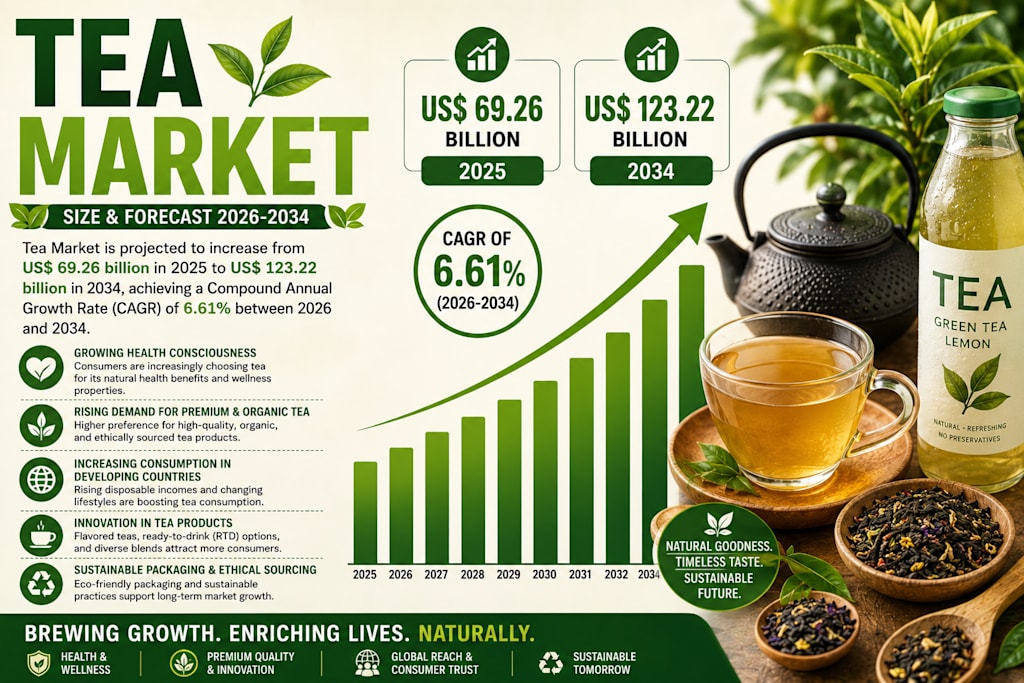
According to Renub Research, the global tea market is projected to grow from US$ 69.26 billion in 2025 to US$ 123.22 billion by 2034, expanding at a CAGR of 6.61% between 2026 and 2034. Growing health consciousness, increasing demand for premium and organic tea products, rising consumption in developing economies, and innovations in ready-to-drink beverages are expected to fuel market expansion over the coming decade.
As consumer preferences continue evolving, tea is no longer viewed simply as a traditional beverage. It is increasingly positioned as a wellness product, a lifestyle choice, and a functional drink capable of delivering both flavor and health benefits.
Tea’s Enduring Global Appeal
Tea is produced primarily from the leaves of the Camellia sinensis plant and is available in numerous varieties depending on processing methods. The most common categories include:
- Green tea
- Black tea
- Oolong tea
- White tea
- Pu-erh tea
Beyond traditional tea varieties, herbal infusions, flower-based beverages, and spice blends have also become popular among consumers seeking alternative wellness drinks.
Tea has maintained its popularity because it serves multiple purposes. It is consumed not only as a refreshing beverage but also as a product associated with relaxation, social interaction, and overall well-being.
Scientific research highlighting the presence of antioxidants and other beneficial compounds has further strengthened tea’s reputation as a healthy beverage option. Many consumers now choose tea to support cardiovascular health, digestive wellness, immune function, and stress management.
This growing connection between tea and wellness is helping the industry attract new generations of consumers worldwide.
Health Awareness Is Fueling Market Growth
One of the strongest drivers behind the expansion of the global tea market is increasing consumer awareness regarding health and nutrition.
Modern consumers are paying closer attention to their dietary choices and are actively seeking alternatives to sugar-sweetened beverages. Tea fits perfectly within this trend because it offers flavor and refreshment while often containing fewer calories than many soft drinks.
Particularly popular among health-conscious consumers are:
- Green tea
- Herbal tea
- Organic tea
- Functional tea blends
These products are frequently associated with benefits such as:
- Antioxidant support
- Improved digestion
- Enhanced metabolism
- Stress reduction
- Cardiovascular wellness
- Immune support
Younger consumers and urban populations are increasingly embracing tea as part of a broader wellness-oriented lifestyle.
The growing popularity of plant-based products has also contributed to tea’s appeal. Consumers seeking natural ingredients often view tea as a healthier alternative to artificially flavored beverages.
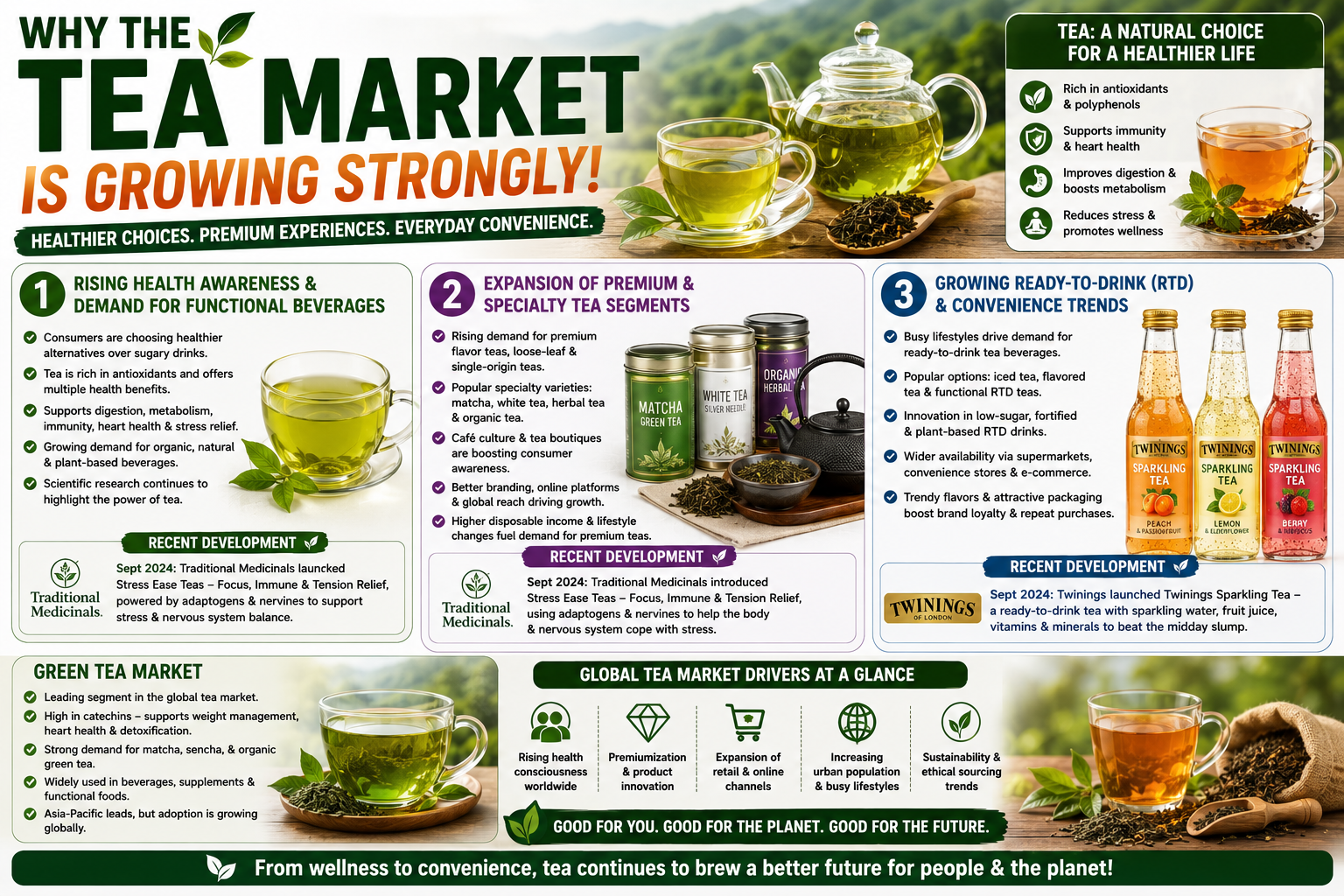
A notable example occurred in September 2024 when Traditional Medicinals introduced its Stress Ease Tea collection, featuring blends designed to support focus, immunity, and stress management through the use of adaptogens and nervines.
As scientific studies continue highlighting the potential health benefits of tea, consumer demand is expected to remain strong across both developed and emerging markets.
Premium and Specialty Tea Segments Are Expanding Rapidly
Consumer preferences are shifting beyond traditional tea products toward more sophisticated and premium offerings.
Today's tea drinkers increasingly seek:
- Loose-leaf teas
- Single-origin teas
- Organic varieties
- Matcha products
- White teas
- Herbal infusions
- Artisan tea blends
This shift reflects a broader trend toward quality-focused consumption. Many consumers are willing to pay higher prices for products that offer authenticity, superior flavor, and unique experiences.
The rise of specialty tea shops and café culture has played a significant role in educating consumers about different tea varieties and brewing methods.
Premium tea brands are also benefiting from:
- Improved branding strategies
- Digital marketing
- E-commerce expansion
- Enhanced product storytelling
As disposable incomes rise, especially in developing economies, more consumers are choosing premium tea products as part of their lifestyle choices.
The growing popularity of wellness-focused beverages has further accelerated interest in specialty teas that offer both taste and perceived health benefits.
Ready-to-Drink Tea Is Transforming Consumption Habits
Convenience has become one of the most influential factors shaping the modern beverage industry.
Consumers increasingly seek products that fit seamlessly into busy lifestyles, creating substantial opportunities for ready-to-drink (RTD) tea beverages.
Popular RTD tea categories include:
- Iced tea
- Flavored tea
- Functional tea beverages
- Low-sugar tea drinks
- Fortified tea products
Unlike traditional tea preparation methods, RTD products allow consumers to enjoy tea instantly without brewing or preparation.
The growing popularity of convenience-oriented consumption patterns is particularly evident among younger demographics and urban professionals who prioritize speed and portability.
Manufacturers are responding by introducing innovative formulations that combine tea with:
- Vitamins
- Minerals
- Fruit extracts
- Botanical ingredients
- Functional wellness compounds
In September 2024, Twinings launched Twinings Sparkling Tea, a ready-to-drink product featuring tea leaves blended with sparkling water, fruit juice, vitamins, and minerals. The product was specifically designed to provide consumers with a refreshing alternative to conventional soft drinks.
As urbanization continues worldwide, convenience-focused tea products are expected to remain a major growth driver for the industry.
Product Innovation Is Creating New Opportunities
Innovation remains at the heart of the tea market's evolution.
Tea manufacturers are increasingly experimenting with:
- Functional ingredients
- New flavor combinations
- Health-oriented formulations
- Sustainable packaging
- Premium branding
Recent product launches demonstrate how companies are adapting to changing consumer demands.
In October 2025, Tata Tea Agni introduced Tata Tea Agni Extra Josh, promoted as India's first tea containing natural caffeine enhancement designed to support modern, high-energy lifestyles.
Similarly, CHAGEE launched its popular Peach Oolong Milk Tea in Indonesia during July 2025, combining Fujian Golden Guanyin oolong tea with real peach juice while supporting the launch through promotional campaigns and limited-edition merchandise.
Lipton also expanded its portfolio in July 2025 by introducing tea concentrates and fruit-infused herbal tea varieties, reflecting the industry's ongoing focus on innovation and diversification.
These developments highlight how tea companies are moving beyond traditional offerings to attract younger consumers and expand market reach.
Green Tea Continues to Lead Health-Focused Growth
Among all tea categories, green tea remains one of the fastest-growing segments globally.
Green tea's popularity is largely driven by its association with health and wellness. Rich in catechins and other antioxidants, green tea is frequently linked to benefits involving metabolism, cardiovascular health, and immune support.
Consumers seeking:
- Weight management solutions
- Clean-label beverages
- Plant-based products
- Natural wellness options
often view green tea as an ideal choice.
Innovation has also contributed to growth through the introduction of flavored green tea varieties such as:
- Lemon green tea
- Mint green tea
- Jasmine green tea
- Matcha-based beverages
Ready-to-drink green tea products and expanded online availability have further increased accessibility for consumers worldwide.
As health consciousness continues rising, green tea is expected to remain a major contributor to overall market growth.
Specialty Stores Are Elevating Consumer Experiences
Tea specialty stores are becoming increasingly important within the premium tea ecosystem.
Unlike traditional retail outlets, specialty tea stores offer immersive experiences that include:
- Tea tastings
- Product education
- Personalized recommendations
- Artisan product selections
Consumers increasingly value experiences alongside products, making specialty tea retailers attractive destinations for enthusiasts seeking unique and premium offerings.
Many specialty stores also emphasize:
- Sustainable sourcing
- Ethical production
- Organic certifications
- Direct trade relationships
In addition, the integration of e-commerce platforms has allowed specialty retailers to reach wider audiences while maintaining personalized customer engagement.
The combination of premium products and educational experiences is helping drive growth in this segment.
Sustainable Packaging Is Becoming a Priority
As environmental concerns continue influencing purchasing decisions, sustainability has become an important focus within the tea industry.
Manufacturers are increasingly investing in:
- Recyclable materials
- Eco-friendly packaging
- Reusable containers
- Reduced plastic usage
At the same time, demand for packaged tea products continues growing.
Plastic containers remain popular because they offer:
- Durability
- Moisture protection
- Cost efficiency
- Ease of transportation
However, growing consumer awareness of environmental issues is encouraging companies to develop more sustainable packaging alternatives.
Balancing convenience, cost, and environmental responsibility will remain an important challenge for tea producers moving forward.
Regional Markets Driving Global Demand
United States
The U.S. tea market is experiencing steady growth, particularly within the ready-to-drink, organic, and functional tea segments. Consumers increasingly prefer beverages that offer health benefits while serving as alternatives to sugary soft drinks. Lipton's recent introduction of Tea Concentrates reflects the industry's focus on evolving consumer preferences.
United Kingdom
Tea remains deeply rooted in British culture, with black tea continuing to dominate household consumption. However, growing interest in wellness-oriented products has expanded demand for green, herbal, and specialty tea varieties.
India
India remains one of the world's most important tea markets due to its strong production capabilities and widespread consumption culture. Rising urbanization, increasing disposable incomes, and growing interest in flavored and premium teas are supporting continued market expansion.
Saudi Arabia
Tea plays a central role in social gatherings and hospitality traditions throughout Saudi Arabia. Growing demand for premium and specialty teas is encouraging international brands to expand their presence in the market. In February 2026, TWG Tea opened its first Salon & Boutique in Riyadh, marking its entry into Saudi Arabia.
Final Thoughts
The global tea industry is experiencing a period of dynamic transformation driven by wellness trends, premiumization, convenience, and product innovation.
With the market forecast to grow from US$ 69.26 billion in 2025 to US$ 123.22 billion by 2034, tea continues to evolve far beyond its traditional role as a simple beverage.
Consumers today increasingly seek products that combine taste, health benefits, sustainability, and convenience. Tea is uniquely positioned to satisfy all of these expectations, making it one of the most resilient and adaptable categories within the global beverage industry.
As companies continue investing in functional ingredients, ready-to-drink formats, premium experiences, and environmentally responsible practices, the future of the tea market appears exceptionally promising.
From ancient traditions to modern wellness lifestyles, tea remains a timeless beverage—and its global growth story is far from over.
About the Creator
Enjoyed the story? Support the Creator.
Subscribe for free to receive all their stories in your feed.
Comments
There are no comments for this story
Be the first to respond and start the conversation.