
Global Shrimp Market Expected to Reach US$ 103.41 Billion by 2034 as Demand for Healthy Seafood Continues Rising
Expanding aquaculture production, growing global seafood consumption, and rising demand for protein-rich diets are reshaping the international shrimp industry

The global shrimp industry is witnessing sustained expansion as consumers increasingly prioritize healthy seafood options, convenient ready-to-cook meals, and protein-rich diets.
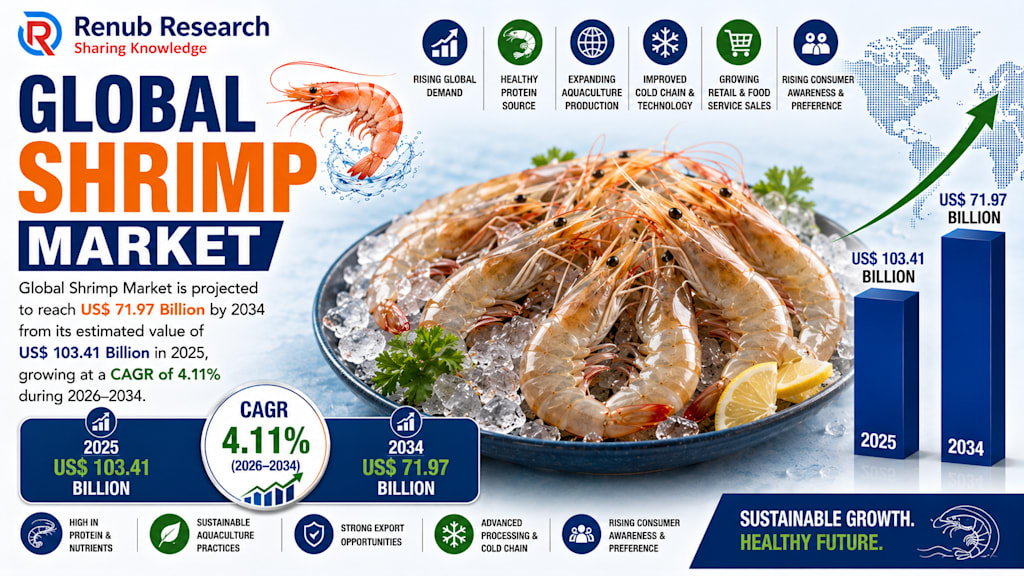
According to Renub Research, the global shrimp market is projected to grow from US$ 71.97 billion in 2025 to US$ 103.41 billion by 2034, registering a CAGR of 4.11% during 2026–2034.
The market’s growth is being driven by rising seafood consumption, rapid expansion of aquaculture production, technological advancements in shrimp farming, and increasing global demand for processed and frozen seafood products.
From premium restaurant menus to frozen ready-to-eat meals, shrimp has become one of the world’s most widely consumed seafood products because of its nutritional value, versatility, and ease of preparation.
Shrimp Consumption Is Rising Across Global Markets
Shrimp remains one of the most popular seafood products worldwide due to its:
- High protein content
- Low fat levels
- Rich nutritional profile
- Culinary versatility
Shrimp is naturally rich in:
- Omega-3 fatty acids
- Selenium
- Iodine
- Vitamins
- Lean proteins
The product is widely used in cuisines across:
- Asia
- North America
- Europe
- Latin America
- Mediterranean countries
Consumers increasingly view shrimp as a healthier alternative to red meat and processed protein products.
The growing popularity of diets such as:
- Keto diets
- Paleo diets
- Low-calorie nutrition plans
has also contributed significantly to increased shrimp consumption worldwide.
Shrimp’s convenience and adaptability further strengthen consumer demand because it can be prepared through:
- Grilling
- Frying
- Boiling
- Steaming
- Sautéing
As middle-class populations expand globally and disposable incomes rise, more consumers are adding premium seafood products like shrimp to their diets.
Rising Demand for High-Protein Foods Is Driving

One of the strongest growth drivers behind the shrimp market is the increasing global demand for high-protein and nutritious foods.
Health-conscious consumers are increasingly prioritizing foods that support:
- Weight management
- Heart health
- Muscle development
- Balanced nutrition
Shrimp is especially attractive because it delivers high protein content with relatively low calorie levels.
According to the report, Pacific white shrimp (Litopenaeus vannamei) typically contains approximately 30–40% protein, while black tiger shrimp (Penaeus monodon) may require up to 50% protein in cultivation systems.
As awareness about healthy eating continues spreading worldwide, seafood consumption is expected to remain a major long-term growth trend.
Aquaculture Expansion Is Transforming Global Supply
The rapid development of aquaculture has become one of the most important factors supporting growth in the global shrimp market.
Modern shrimp farming technologies have dramatically improved production efficiency, sustainability, and year-round supply capabilities.
Countries such as:
- India
- Ecuador
- Vietnam
- Indonesia
- China
have emerged as major global shrimp producers due to large-scale aquaculture investments.
Advanced farming technologies now include:
- Biofloc systems
- Recirculating Aquaculture Systems (RAS)
- Genetic breeding improvements
- Disease management technologies
These innovations help improve shrimp survival rates, productivity, and environmental sustainability.
Governments and private companies worldwide continue investing heavily in aquaculture expansion to meet rising seafood demand.
In March 2024, Laitram Machinery acquired the shrimp peeling business line from Martak, strengthening its position in shrimp processing technology, particularly in the cold-water shrimp category.
Processed and Frozen Shrimp Demand Continues Growing
The increasing popularity of processed seafood products is another major contributor to shrimp market growth.
Consumers increasingly prefer convenient seafood options such as:
- Frozen shrimp
- Peeled shrimp
- Deveined shrimp
- Breaded shrimp
- Ready-to-cook shrimp
- Pre-seasoned seafood products
Busy urban lifestyles and growing demand for convenience foods have significantly boosted the popularity of frozen and processed shrimp products.
Advancements in:
- Cold chain logistics
- Refrigeration systems
- Packaging technologies
- Transportation infrastructure
have improved product freshness, shelf life, and international distribution capabilities.
According to the report, frozen shrimp accounted for approximately:
- 40.19% of Indian shrimp export volume
- 66.12% of export value
India exported around 716,004 metric tons of frozen shrimp valued at approximately US$ 4.88 billion.
The continued expansion of supermarkets, online grocery platforms, and restaurant chains is expected to further strengthen demand for processed shrimp globally.
Breaded Shrimp Market Benefits from Convenience Trends
The breaded shrimp segment is experiencing strong growth as consumers increasingly seek ready-to-cook seafood products.
Breaded shrimp products feature seasoned coatings and are widely popular in:
- Fast-food restaurants
- Casual dining chains
- Frozen retail food sections
These products are especially attractive because they combine:
- Convenience
- Taste enhancement
- Quick meal preparation
The segment remains highly popular across North America and Europe where frozen convenience foods continue gaining market share.
Urbanization and fast-paced lifestyles are expected to further support long-term growth in the breaded shrimp category.
Cooked Shrimp Products Gain Momentum
Cooked shrimp products are becoming increasingly popular among consumers seeking healthier and time-saving meal options.
These products are commonly sold:
- Pre-cooked
- Cleaned
- Frozen
- Packaged for convenience
Cooked shrimp is widely used in:
- Salads
- Pasta dishes
- Sushi
- Sandwiches
- Ready meals
The growing preference for high-protein, low-fat convenience foods continues driving adoption globally.
Technologies such as Individually Quick Frozen (IQF) processing help preserve freshness, taste, and nutritional value.
Online grocery retail and improved cold chain logistics are also making cooked shrimp products more accessible worldwide.
Pacific White Shrimp Dominates Global Production
The Litopenaeus vannamei (Pacific white shrimp) segment remains the largest shrimp category globally.
This species dominates aquaculture production because of:
- Fast growth rates
- Disease resistance
- Adaptability
- High farming efficiency
Pacific white shrimp is especially popular in international export markets because of its:
- Mild flavor
- Soft texture
- Culinary flexibility
Modern aquaculture technologies have significantly improved production efficiency for this species.
Growing demand across North America, Europe, and Asia-Pacific continues strengthening its market leadership.
Black Tiger Shrimp Maintains Premium Position
The Penaeus monodon (black tiger shrimp) market continues attracting strong demand within premium seafood segments.
Black tiger shrimp is highly valued because of its:
- Large size
- Rich flavor
- Firm texture
- Premium appearance
This variety is especially popular in:
- Fine dining restaurants
- Luxury hospitality sectors
- Premium export markets
Major producing countries include:
- India
- Bangladesh
- Thailand
- Vietnam
- Indonesia
Although production costs are generally higher compared to Pacific white shrimp, rising demand for premium seafood products continues supporting market growth.
Disease Risks and Environmental Concerns Remain Major Challenges
Despite strong growth opportunities, the shrimp industry continues facing several critical challenges.
Disease outbreaks remain one of the biggest threats to shrimp farming operations.
Common diseases affecting aquaculture include:
- Early Mortality Syndrome (EMS)
- White Spot Syndrome Virus (WSSV)
- Acute Hepatopancreatic Necrosis Disease (AHPND)
These diseases can cause severe financial losses for shrimp producers.
Environmental concerns also continue drawing attention from regulators and sustainability organizations.
Issues such as:
- Mangrove deforestation
- Water pollution
- Antibiotic overuse
- Coastal ecosystem damage
are increasing pressure on the industry to adopt more sustainable aquaculture practices.
Climate change and rising water temperatures also pose long-term risks to shrimp farming productivity.
Price Volatility and Trade Barriers Continue Affecting the Industry
The global shrimp market remains highly sensitive to:
- Feed price fluctuations
- Fuel costs
- Trade regulations
- Shipping disruptions
- Currency fluctuations
International seafood trade can also be affected by:
- Tariffs
- Anti-dumping measures
- Food safety regulations
- Import restrictions
Maintaining cold chain logistics adds additional operational complexity and cost for exporters.
Pandemics, geopolitical instability, and economic slowdowns can further disrupt demand from restaurants and hospitality sectors.
Smaller producers often face the greatest challenges in meeting strict international compliance standards.
United States Remains the Largest Shrimp Consumer Market
The United States continues to rank among the world’s largest shrimp-consuming markets.
American consumers increasingly prefer shrimp because of its:
- Nutritional value
- Convenience
- Versatility
The country relies heavily on shrimp imports from:
- India
- Ecuador
- Vietnam
- Indonesia
Demand is particularly strong within:
- Retail supermarkets
- Foodservice chains
- Frozen seafood segments
The rising popularity of ready-to-cook and value-added seafood products is further accelerating market growth.
In July 2025, Prime Shrimp introduced its new Prime Shrimp Burgers containing approximately 80% shrimp without sodium tripolyphosphate (STPP).
The product targets both retail and foodservice customers seeking premium frozen seafood alternatives.
United Kingdom Expands Seafood Consumption
The United Kingdom shrimp market continues growing steadily as consumers increasingly seek convenient and healthy seafood products.
Shrimp products are widely consumed in dishes such as:
- Prawn cocktails
- Curries
- Stir-fry meals
The UK relies heavily on imported shrimp products because domestic production remains limited.
Consumer demand for low-fat, high-protein foods continues supporting seafood market expansion.
Sustainability certifications and ethical sourcing practices are also becoming increasingly important purchasing considerations.
In a major development, Swansea-based Three-Sixty Aquaculture partnered with celebrity chef Marcus Wareing to expand operations internationally through a new indoor shrimp farm in Oostende, Belgium.
India Strengthens Its Global Export Leadership
India remains one of the world’s leading shrimp producers and exporters.
The country’s shrimp industry benefits from strong aquaculture development across coastal states such as:
- Andhra Pradesh
- Gujarat
- Tamil Nadu
India continues exporting large volumes of Pacific white shrimp to international markets including:
- United States
- Europe
- Japan
At the same time, domestic shrimp consumption is also increasing due to:
- Urbanization
- Rising disposable incomes
- Expanding retail infrastructure
- Growth in the hospitality industry
In March 2025, India’s Marine Products Export Development Authority (MPEDA) launched the SHAPHARI certification logo and Aqua Trace GIS portal to strengthen global confidence in Indian shrimp exports.
Saudi Arabia Expands Aquaculture Investments
Saudi Arabia’s shrimp market is growing steadily due to rising seafood demand and increasing investment in aquaculture development.
The country’s Vision 2030 initiative is strongly supporting food security and sustainable seafood production.
Consumers increasingly favor shrimp because of its:
- Nutritional benefits
- Premium positioning
- International culinary appeal
In April 2025, NEOM partnered with Tabuk Fisheries Company to establish Topian Aquaculture, supporting Saudi Arabia’s target of producing 600,000 tonnes of fish products annually by 2030.
Major Companies Operating in the Market
Several major companies continue shaping the global shrimp industry, including:
- Avanti Feeds Ltd.
- High Liner Foods Inc.
- Thai Union Group
- Royal Greenland
- Maruha Nichiro Corporation
- Mowi ASA
- Charoen Pokphand Foods PCL
These companies continue investing in sustainable aquaculture, processing innovation, cold chain logistics, and premium seafood product development.
Final Thoughts
The global shrimp market is entering a period of sustained expansion driven by rising seafood consumption, healthier dietary preferences, and rapid growth in aquaculture production.
Technological innovation, improved cold chain infrastructure, and increasing demand for convenient seafood products are reshaping the future of the industry.
Although disease outbreaks, environmental concerns, and trade disruptions remain important challenges, the long-term outlook for the shrimp market remains highly positive.
As consumers worldwide continue prioritizing nutritious and protein-rich diets, shrimp is expected to remain one of the most important and widely consumed seafood products through 2034.
About the Creator
Enjoyed the story? Support the Creator.
Subscribe for free to receive all their stories in your feed.
Comments
There are no comments for this story
Be the first to respond and start the conversation.