
Global Potato Chips Market Set for Steady Growth Amid Innovation and Changing Consumer Preferences
Market Forecast Signals Consistent Expansion Through 2034

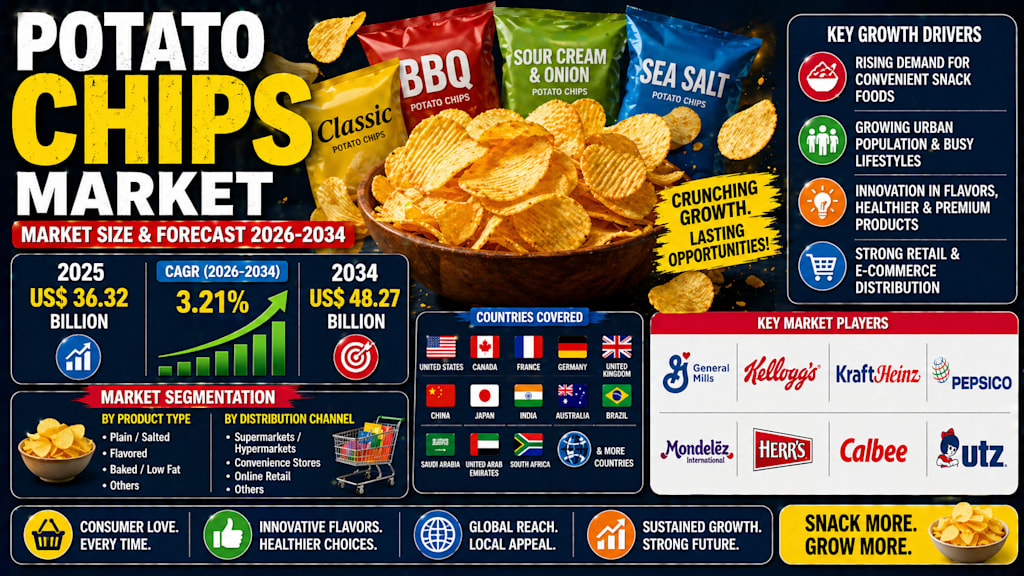
The global potato chips market is entering a phase of stable and sustained growth, driven by evolving consumer lifestyles, flavor innovation, and expanding retail ecosystems. According to Renub Research insights, the market is projected to grow from US$ 36.32 billion in 2025 to US$ 48.27 billion by 2034, registering a CAGR of 3.21% during 2026–2034.
This growth trajectory reflects the continued dominance of potato chips as one of the most preferred ready-to-eat snack categories globally. While the market is relatively mature in developed regions, emerging economies are unlocking new growth opportunities through urbanization, rising disposable income, and a growing appetite for packaged convenience foods.
Understanding the Popularity of Potato Chips
Potato chips have long maintained their position as a staple snack due to their simplicity, affordability, and versatility. These thinly sliced potatoes, fried or baked to achieve a crispy texture, are seasoned in countless ways to appeal to regional and global tastes.
From classic salted chips to gourmet kettle-cooked variants and health-focused baked options, the category has evolved significantly. Consumers across age groups enjoy chips during leisure activities, social gatherings, travel, and even as quick meal substitutes.
The global appeal of potato chips lies in three core factors:
- Convenience: Ready-to-eat with no preparation required
- Variety: Wide range of flavors and textures
- Accessibility: Available across retail and digital platforms
As modern lifestyles become increasingly fast-paced, the demand for such convenient snacking solutions continues to rise.

Key Growth Drivers Shaping the Market
1. Rising Demand for Convenience Foods
One of the strongest growth drivers for the potato chips market is the increasing preference for convenient, ready-to-consume food options. Urbanization, longer working hours, and busy daily routines have reshaped eating habits globally.
Consumers now seek:
- Portable snacks
- Long shelf-life products
- Quick energy sources
Potato chips meet all these requirements, making them a go-to option for students, professionals, and travelers alike. Additionally, the trend of “snacking replacing traditional meals” in certain demographics further boosts demand.
The expansion of premium snack offerings—such as gourmet chips with exotic flavors—also reflects a shift toward more experiential snacking.
2. Flavor Innovation and Product Diversification
Innovation is at the heart of the potato chips industry. Manufacturers are constantly introducing new flavors inspired by:
- Regional cuisines
- Global food trends
- Fusion taste profiles
From spicy and tangy to cheesy and herb-infused options, the variety keeps consumers engaged and encourages repeat purchases.
Key innovation trends include:
- Limited-edition flavors to create urgency and excitement
- Health-oriented variants like low-fat, baked, or organic chips
- Premium product lines with artisanal processing techniques
Such diversification not only attracts new consumers but also helps brands differentiate themselves in a highly competitive market.
3. Expansion of Retail and E-commerce Channels
The growth of organized retail and digital commerce has significantly enhanced product accessibility.
Offline channels:
- Supermarkets and hypermarkets
- Convenience stores
- Specialty snack outlets
- Online channels:
- E-commerce platforms
- Grocery delivery apps
- Direct-to-consumer (D2C) websites
Retail stores drive impulse purchases through attractive packaging and strategic product placement, while online platforms offer:
- Wider product variety
- Competitive pricing
- Home delivery convenience
Digital marketing, influencer promotions, and targeted advertising further amplify consumer engagement, especially among younger audiences.
Market Challenges Hindering Growth
1. Health Concerns and Nutritional Scrutiny
Despite its popularity, the potato chips market faces increasing scrutiny due to health-related concerns.
- Chips are often associated with:
- High salt content
- Excess fat and calories
Risk of lifestyle diseases such as obesity and hypertension
Governments and health organizations are promoting healthier eating habits, which has led to:
- Stricter labeling regulations
- Restrictions on advertising unhealthy foods
Although companies are developing healthier alternatives, changing long-standing consumer perceptions remains a challenge.
2. Volatility in Raw Material Prices
The market is highly sensitive to fluctuations in raw material costs, particularly:
- Potatoes
- Cooking oils
- Packaging materials
Factors such as weather conditions, crop diseases, and supply chain disruptions can significantly impact production costs.
This volatility leads to:
- Reduced profit margins
- Price increases for consumers
- Supply inconsistencies
Managing these uncertainties requires efficient sourcing strategies and continuous investment in supply chain optimization.
Segment Analysis: Understanding Market Dynamics
Plain Potato Chips
Plain chips continue to hold a strong position due to their universal appeal. Their simplicity and balanced taste make them a preferred choice across all age groups.
They are often used:
- As standalone snacks
- Paired with dips
- As a base for culinary experimentation
Their cost-effectiveness and mass appeal ensure steady demand.
Flavored Potato Chips
Flavored chips represent the fastest-growing segment, driven by consumer demand for novelty and variety.
Popular flavor categories include:
- Barbecue
- Cheese
- Sour cream
- Chili and spice blends
This segment particularly appeals to younger consumers seeking unique and adventurous snacking experiences. It also offers higher profit margins due to premium positioning.
Distribution Channel Insights
1. Convenience Stores
Convenience stores play a crucial role due to their accessibility and high footfall. Small pack sizes and strategic placement near checkout counters drive impulse buying.
2. Online Stores
Online platforms are rapidly gaining traction, offering:
- Broader product selection
- Discounts and subscription models
- Easy price comparisons
3. Specialty Stores
These outlets focus on gourmet and artisanal chips, catering to niche audiences seeking premium and health-focused options.
Regional Market Insights
United States
The U.S. remains one of the largest and most mature markets for potato chips. High per capita snack consumption and strong product innovation drive growth.
Trends include:
- Demand for non-GMO and healthier options
- Frequent launch of limited-edition flavors
- Integration of regional taste influences
United Kingdom
The UK market, commonly referred to as the “crisps market,” is highly innovation-driven. Consumers show strong interest in:
- Spicy and unique flavors
- Premium quality products
- Low-salt and baked alternatives
Flavor experimentation remains a key growth factor in this region.
India
India is emerging as a high-growth market due to:
- Rapid urbanization
- Rising disposable incomes
- A large young population
Local flavor preferences—such as masala and chili—play a significant role in product development. Affordable pricing and small pack sizes further drive mass adoption.
The expansion of retail infrastructure and increasing digital penetration are also accelerating market growth.
Brazil
Brazil’s market is expanding due to:
- Growing middle-class population
- Urban lifestyle changes
- Increased availability of packaged snacks
Both international and domestic brands compete by offering diverse flavors and price points.
Saudi Arabia
A young demographic and increasing demand for convenience foods are key drivers in Saudi Arabia. Spicy flavors dominate consumer preferences, while local production capabilities are improving through technological advancements.
Competitive Landscape and Key Players
The potato chips market is highly competitive, with both global giants and regional players vying for market share.
Major companies include:
- PepsiCo Inc.
- Kellogg’s Company
- Mondelez International
- The Kraft Heinz Company
- General Mills
- Utz Brands, Inc.
- Calbee Inc.
These companies focus on:
- Product innovation
- Strategic partnerships
- Expansion into emerging markets
- Digital marketing and brand positioning
Continuous investment in R&D and supply chain efficiency is critical to maintaining competitive advantage.
Future Outlook: What Lies Ahead
The future of the potato chips market will be shaped by a combination of innovation, health trends, and digital transformation.
Key trends to watch:
- Healthier formulations (low-fat, organic, baked chips)
- Premiumization with gourmet and artisanal offerings
- Sustainable packaging solutions
- Expansion of online retail channels
- Localization of flavors for regional markets
While challenges such as health concerns and cost volatility persist, the industry’s ability to adapt and innovate ensures continued growth.
Final Thoughts
The global potato chips market is a compelling example of how a simple product can evolve into a dynamic and resilient industry. With a projected value of US$ 48.27 billion by 2034, the sector is poised for steady expansion, supported by changing consumer lifestyles and continuous innovation.
As brands navigate the balance between indulgence and health, and between affordability and premiumization, the winners will be those that understand shifting consumer expectations and respond with agility.
About the Creator
Enjoyed the story? Support the Creator.
Subscribe for free to receive all their stories in your feed.
Comments
There are no comments for this story
Be the first to respond and start the conversation.