
Global Lobster Market Set for Significant Growth as Premium Seafood Demand Surges Worldwide
Rising consumer interest in luxury dining, expanding seafood retail channels, and growing demand for high-protein foods are driving strong growth across the global lobster industry.

Introduction: A Luxury Seafood Category Enters a New Growth Phase
The global seafood industry is experiencing a period of remarkable transformation as consumers increasingly seek premium dining experiences, healthier protein sources, and convenient access to high-quality seafood products. Among the many seafood categories benefiting from these trends, lobster remains one of the most sought-after and valuable products worldwide.
Traditionally associated with luxury dining and special occasions, lobster has expanded beyond high-end restaurants and exclusive hospitality venues. Improvements in cold-chain logistics, online seafood retailing, and international trade have made lobster more accessible to consumers across a wide range of markets.
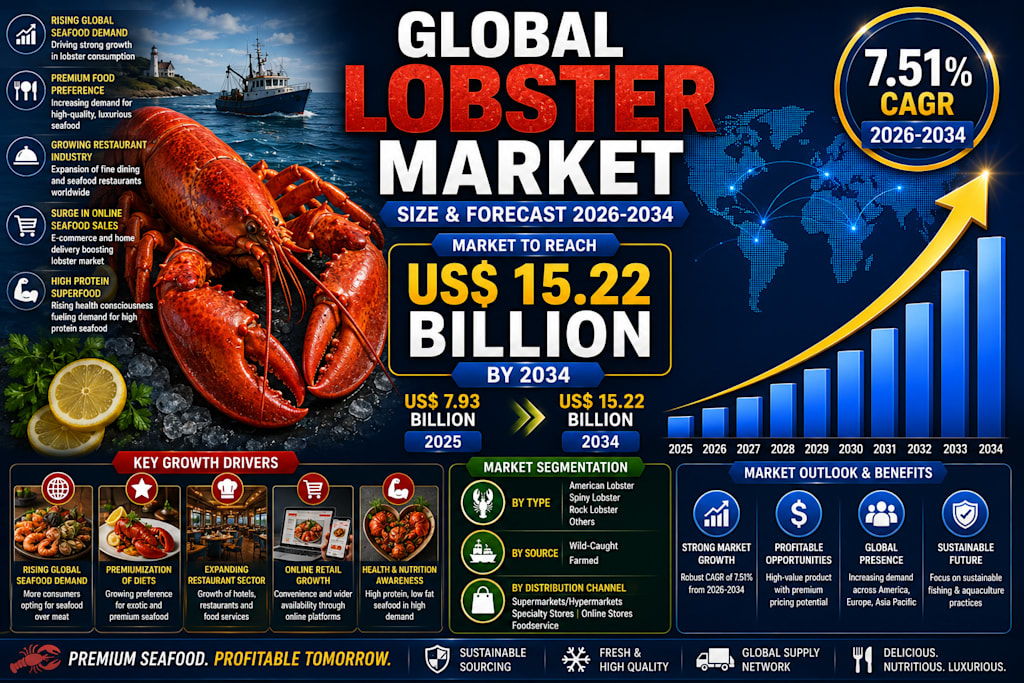
According to Renub Research, the Global Lobster Market is expected to grow from US$ 7.93 billion in 2025 to US$ 15.22 billion by 2034, registering a compound annual growth rate (CAGR) of 7.51% between 2026 and 2034. Rising demand for premium seafood, increasing consumer preference for protein-rich foods, expanding restaurant industries, and improvements in seafood distribution networks are among the major factors fueling market expansion.
As global food preferences evolve and seafood consumption continues to rise, lobster is positioned to remain one of the most attractive segments within the premium seafood industry.
Understanding Lobster's Global Appeal
Lobster is a marine crustacean recognized for its hard shell, elongated body, and distinctive claws. Found primarily in cold and temperate ocean waters, lobsters are commonly harvested in North America, Europe, and several regions of Asia-Pacific.
The meat obtained from lobster tails and claws is highly prized for its rich flavor, tender texture, and nutritional value. Lobster contains significant amounts of protein, vitamins, minerals, and beneficial nutrients, making it attractive not only as a luxury food item but also as a healthy dietary option.
For decades, lobster has been closely associated with premium dining experiences. It is commonly featured in upscale restaurants, luxury resorts, cruise lines, and special event menus. However, improvements in distribution systems and retail availability have broadened its consumer base considerably.
Today, consumers can purchase lobster through supermarkets, specialty seafood stores, and online seafood platforms, making the product more accessible than ever before.
Premium Seafood Consumption Continues to Rise
One of the strongest drivers behind the growth of the lobster market is the increasing demand for premium seafood products.
As disposable incomes rise across both developed and emerging economies, consumers are becoming more willing to spend on high-quality food products that offer superior taste, nutritional benefits, and unique dining experiences. Lobster fits perfectly within this trend because it is widely viewed as a luxury seafood product with strong culinary appeal.
The growing popularity of experiential dining has also contributed significantly to market growth. Consumers increasingly view food as an experience rather than simply a necessity. Special occasions, celebrations, and fine dining experiences frequently feature lobster-based dishes, supporting consistent demand from restaurants and hospitality providers.
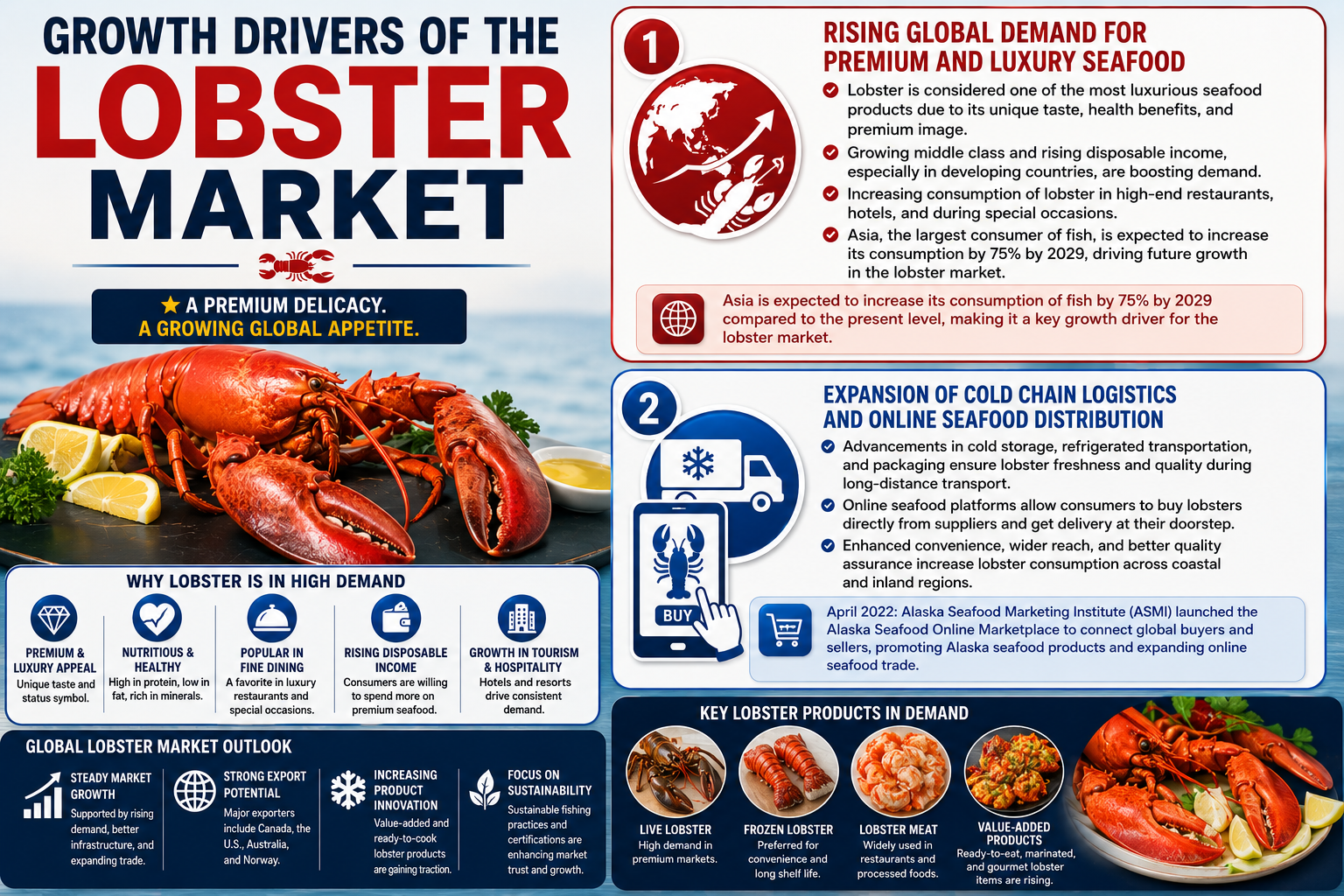
The report highlights that Asia remains a particularly important growth market. Seafood consumption across the region is expected to increase substantially over the coming years, creating significant opportunities for lobster suppliers and exporters.
As international culinary preferences continue evolving, demand for premium seafood products such as lobster is expected to remain strong.
Health-Conscious Consumers Are Choosing Seafood
Changing dietary preferences are creating additional opportunities for the lobster industry.
Consumers worldwide are increasingly focused on healthy eating habits and nutritional balance. Seafood products are often viewed as healthier alternatives to red meat because they typically contain lower levels of saturated fat while providing high-quality protein and essential nutrients.
Lobster is rich in protein, vitamin B12, vitamin E, phosphorus, selenium, zinc, magnesium, and copper. It also contains beneficial omega-3 fatty acids that support cardiovascular health and overall wellness. These nutritional advantages are helping drive demand among health-conscious consumers.
Healthcare professionals and nutrition experts frequently recommend seafood as part of a balanced diet. As awareness of healthy eating continues to increase, more consumers are incorporating seafood products into their regular meal planning.
The growing popularity of high-protein diets is expected to further strengthen lobster consumption globally.
Online Seafood Retail Is Expanding Consumer Access
The rise of e-commerce has transformed the way consumers purchase seafood products.
Traditionally, lobster purchases were largely limited to restaurants, seafood markets, and coastal regions. Today, advances in online retailing allow consumers to order fresh, frozen, and processed lobster products directly from suppliers and have them delivered to their homes.
This transformation has significantly expanded the addressable market for lobster producers and distributors.
Consumers now benefit from greater product variety, easier price comparisons, enhanced convenience, and improved access to premium seafood regardless of geographic location. Online platforms also provide detailed product information, sustainability certifications, and customer reviews that help build purchasing confidence.
As digital commerce continues to expand globally, online seafood retail is expected to remain a major growth driver for the lobster industry.
Cold Chain Logistics Are Strengthening Global Distribution
One of the most important developments supporting lobster market growth is the improvement of cold chain infrastructure.
Lobster is a highly perishable product that requires specialized storage, transportation, and handling conditions to maintain quality and freshness. Advances in refrigerated transportation, cold storage facilities, insulated packaging, and logistics technologies have dramatically improved the ability to transport lobster across long distances.
These improvements have expanded market reach far beyond traditional coastal consumption regions. Fresh and frozen lobster products can now be shipped efficiently to inland markets and international destinations while maintaining product integrity.
Enhanced cold chain capabilities have also reduced spoilage risks, improved supply chain reliability, and supported the growth of online seafood sales.
As infrastructure investments continue, global lobster distribution networks are expected to become even more efficient.
American Lobster Remains a Dominant Market Segment
The American lobster segment continues to represent one of the most established and profitable areas within the global market.
Harvested primarily along the Atlantic coast of North America, American lobster is highly valued for its sweet flavor, tender texture, and large claws. It enjoys strong demand across the United States, Canada, Europe, and Asia.
American lobster is available in various formats, including live lobster, frozen products, and processed seafood offerings. Well-developed fishing infrastructure, transportation systems, and storage capabilities help support stable supply and international trade.
Government regulations and sustainable fishing practices also contribute to maintaining healthy lobster populations and long-term industry stability.
The continued popularity of premium seafood products is expected to support steady growth within this segment.
Spiny Lobster Demand Continues to Expand
Spiny lobster represents another important segment experiencing growing international demand.
Unlike American lobsters, spiny lobsters lack large claws and are primarily valued for their meaty tails. They are commonly harvested in tropical waters throughout the Caribbean, Australia, South Africa, and Asia-Pacific regions.
Spiny lobster products are particularly popular within export markets because frozen lobster tails are relatively easy to transport and store. Demand remains strong among restaurants, hospitality providers, and consumers seeking premium seafood options.
The increasing popularity of seafood consumption throughout Asia-Pacific has created substantial opportunities for suppliers specializing in spiny lobster products.
Advancements in processing technologies and logistics infrastructure continue to improve market accessibility and product quality.
Mid-Sized Lobsters Offer Strong Commercial Potential
The 0.76 to 3.0-pound lobster segment remains one of the most commercially attractive categories within the market.
This size range provides an optimal balance between meat yield, portion size, affordability, and culinary versatility. Restaurants frequently prefer medium-sized lobsters because they are well suited for individual servings and menu presentations.
Consumers also appreciate this category because it offers manageable portion sizes and easier preparation compared to larger specimens.
The continued growth of home cooking, seafood retailing, and food service operations is expected to support demand for this segment over the forecast period.
Retail Channels Are Becoming Increasingly Important
The lobster retail market is growing rapidly as consumers become more comfortable preparing seafood at home.
Retailers now offer lobster in multiple formats, including live, chilled, frozen, whole, and processed products. Improvements in packaging, storage technologies, and product presentation have made lobster more accessible to everyday consumers.
Supermarkets and specialty seafood retailers are expanding their product selections to accommodate growing demand. At the same time, online seafood platforms continue to broaden consumer access.
The combination of rising disposable incomes, increased health awareness, and improved distribution systems is expected to support continued expansion of retail lobster sales.
Regional Markets Continue to Drive Growth
United States
The United States remains one of the largest lobster markets globally. Strong domestic demand, advanced seafood infrastructure, and robust export activity continue to support market growth. The country's hospitality sector, retail seafood industry, and consumer preference for protein-rich diets all contribute to sustained demand.
United Kingdom
The United Kingdom's lobster market continues to expand due to growing seafood consumption and rising demand from restaurants and tourism-related businesses. Improvements in online seafood retail and increasing interest in premium dining experiences are supporting growth throughout the country.
India
India's lobster market is benefiting from increasing seafood exports, rising disposable incomes, and the expansion of the hospitality sector. Growing interest in premium seafood among urban consumers and improvements in seafood logistics infrastructure are creating favorable conditions for future growth.
Saudi Arabia
Saudi Arabia is witnessing growing demand for premium seafood products due to rising living standards, expanding tourism activities, and increasing investments in hospitality and food service industries. Lobster continues to gain popularity among consumers seeking high-quality seafood experiences.
Sustainability and Cost Challenges Remain
Despite positive growth prospects, the lobster industry faces several challenges.
Environmental sustainability remains a significant concern. Overfishing, climate change, habitat degradation, and changing ocean temperatures can affect lobster populations and long-term supply stability. Governments and environmental organizations have implemented fishing quotas and sustainability regulations to protect marine ecosystems.
While these measures are necessary for conservation, they can also increase operational costs and limit supply availability.
Price volatility presents another challenge. Lobster harvesting, transportation, refrigeration, and processing require substantial investment. Factors such as fuel prices, labor shortages, seasonal supply fluctuations, and trade restrictions can significantly influence market prices.
These challenges may affect affordability and limit consumption in price-sensitive markets.
Leading Companies Driving Industry Growth
The global lobster market includes numerous established seafood companies focused on harvesting, processing, distribution, and international trade.
Key players highlighted in the report include Boston Lobster, Clearwater Seafoods, High Liner Foods Incorporated, Thai Union Manufacturing Company Ltd., East Coast Seafood Group, Geraldton Fishermen’s Co-operative, PESCANOVA ESPAÑA SL, Supreme Lobster, and Tangier Lobster. These organizations continue investing in sustainability initiatives, cold chain infrastructure, product innovation, and international market expansion.
Their efforts are helping improve product quality, strengthen supply chains, and support long-term industry development.
Final Thoughts
The global lobster market is entering a period of substantial growth driven by rising seafood consumption, increasing demand for luxury dining experiences, expanding online retail channels, and growing awareness of the nutritional benefits associated with seafood.
With the market projected to grow from US$ 7.93 billion in 2025 to US$ 15.22 billion by 2034, opportunities continue to emerge across food service, retail, hospitality, and export markets. Improvements in cold chain logistics and digital commerce are making lobster products more accessible than ever before, while evolving consumer preferences continue to support premium seafood consumption.
Although sustainability concerns and price fluctuations remain important challenges, the industry's long-term outlook remains highly positive. As consumers continue seeking healthier diets and elevated culinary experiences, lobster is expected to maintain its position as one of the world's most desirable and valuable seafood products
About the Creator
Enjoyed the story? Support the Creator.
Subscribe for free to receive all their stories in your feed.
Comments
There are no comments for this story
Be the first to respond and start the conversation.