
Global Ice Cream Market Set for Steady Growth as Premium Flavors and Health-Conscious Innovations Reshape Consumer Preferences
Rising demand for indulgent desserts, expanding cold-chain infrastructure, and growing interest in plant-based and low-sugar alternatives are driving the future of the global ice cream industry.

Ice cream has long held a special place in the hearts of consumers worldwide. Whether enjoyed as a childhood treat, a summer refreshment, a comfort food, or a premium dessert experience, ice cream remains one of the most beloved food products across cultures and generations.
Today, however, the industry is undergoing a remarkable transformation. Consumers are no longer satisfied with traditional vanilla and chocolate offerings alone. Modern buyers are seeking premium ingredients, innovative flavors, healthier formulations, and sustainable packaging options. At the same time, improvements in cold-chain logistics and retail infrastructure are making ice cream more accessible than ever before.
As urbanization accelerates and disposable incomes continue rising in many regions, the global ice cream market is entering a new phase of growth fueled by innovation, convenience, and changing consumer lifestyles.
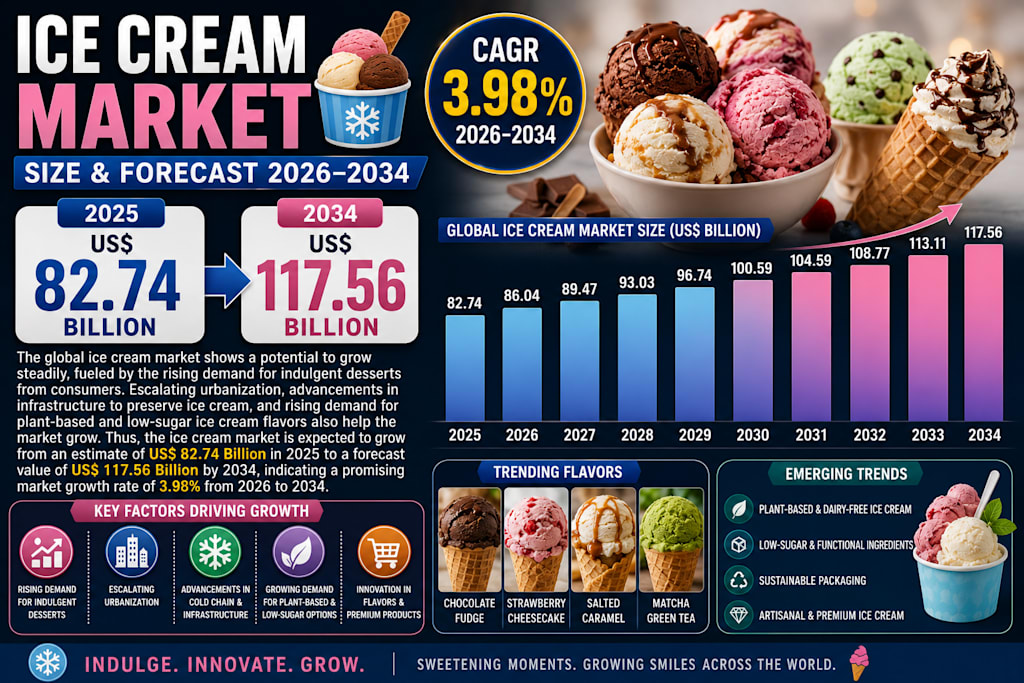
According to Renub Research, the Global Ice Cream Market is expected to grow from US$82.74 billion in 2025 to US$117.56 billion by 2034, registering a compound annual growth rate (CAGR) of 3.98% between 2026 and 2034. Increasing demand for indulgent desserts, premium products, plant-based alternatives, and expanded retail access are expected to support this steady market expansion.
Ice Cream Remains One of the World's Most Popular Desserts
Few food products enjoy the universal appeal of ice cream.
Made primarily from milk, cream, sugar, and flavoring ingredients, ice cream has evolved into a diverse category that includes gelato, frozen yogurt, sorbet, soft serve, dairy-free alternatives, and numerous specialty products.
Consumers enjoy ice cream not only as a dessert but also as a snack, celebratory treat, and comfort food. Its versatility allows manufacturers to continually introduce new flavors, textures, and formats that appeal to different tastes and demographics.
From premium artisanal creations to affordable impulse purchases, ice cream remains deeply embedded in global food culture.
Its emotional connection with consumers, often associated with happiness, nostalgia, and celebration, continues to strengthen market demand across all age groups.
Demand for Premium and Indulgent Desserts Is Growing
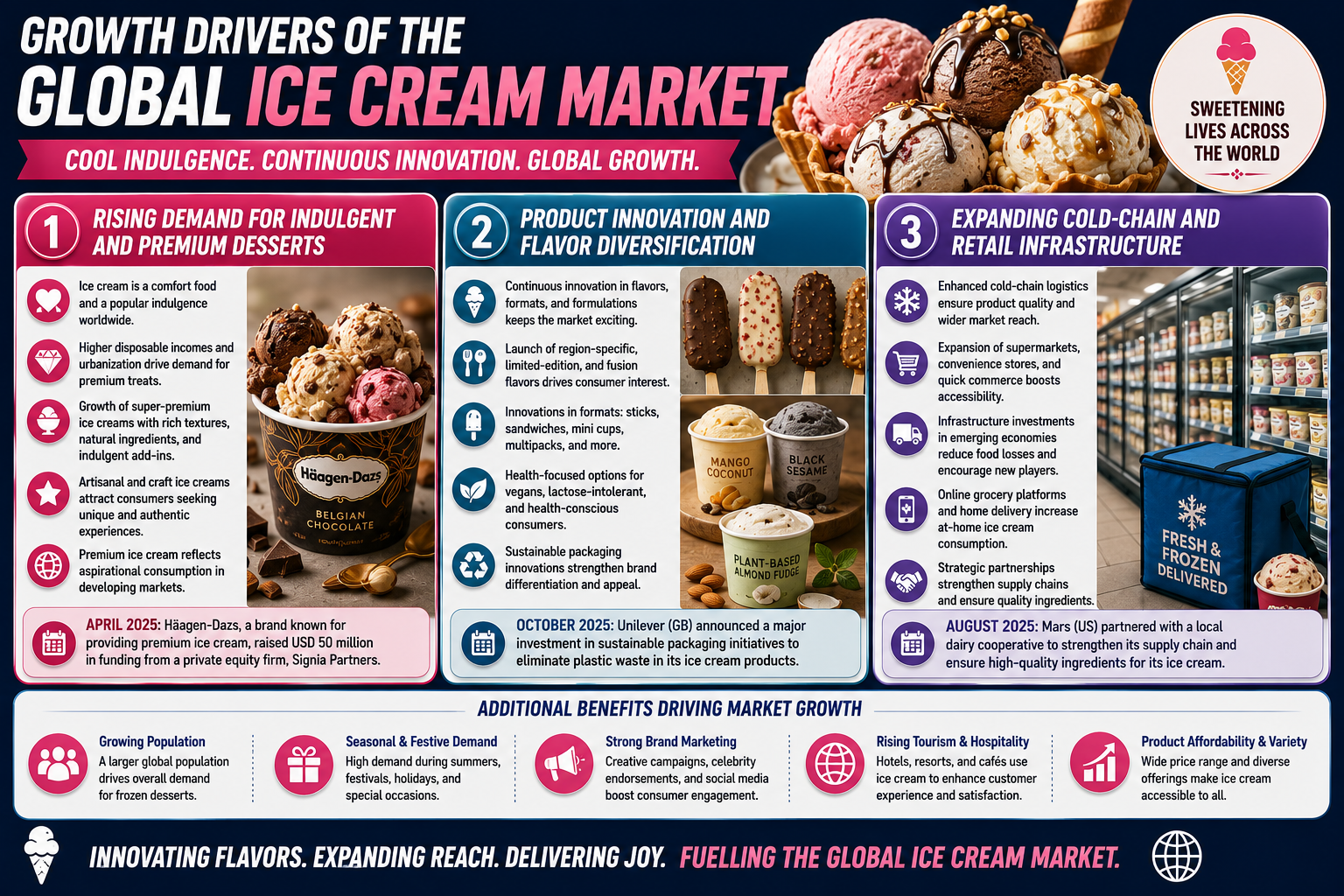
One of the strongest drivers of the global ice cream market is the increasing consumer desire for indulgent experiences.
Modern consumers are increasingly willing to spend more on premium food products that offer superior quality, unique flavors, and memorable sensory experiences.
This trend has fueled demand for super-premium ice cream products featuring gourmet ingredients, handcrafted production methods, exotic flavors, and luxurious inclusions such as chocolate chunks, caramel swirls, nuts, cookies, and fruit preparations.
Premiumization has become a particularly important strategy for manufacturers seeking to differentiate themselves in competitive markets.
Consumers increasingly view premium ice cream as an affordable luxury—a small indulgence that delivers enjoyment without the expense associated with other luxury products.
As disposable incomes continue rising globally, demand for premium frozen desserts is expected to remain strong.
Product Innovation Continues to Transform the Industry
Innovation remains one of the most important growth engines within the ice cream sector.
Manufacturers constantly introduce new flavors, textures, formats, and formulations to capture consumer attention and maintain brand relevance.
Limited-edition offerings, seasonal releases, region-specific flavors, and fusion products have become common strategies for generating excitement and encouraging repeat purchases.
Innovation extends beyond flavor development. Companies are also experimenting with new formats such as ice cream sandwiches, mini portions, layered desserts, filled cones, frozen bites, and multipack products.
These innovations help brands appeal to changing consumer preferences while expanding consumption occasions.
As competition intensifies, continuous product development will remain essential for sustaining market growth.
Health-Conscious Consumers Are Changing Product Development
Although ice cream is traditionally associated with indulgence, growing health awareness is reshaping the industry.
Consumers increasingly seek products that align with healthier lifestyles while still delivering enjoyable taste experiences.
This shift has encouraged manufacturers to develop low-sugar, reduced-fat, high-protein, lactose-free, and plant-based ice cream options.
The rise of wellness-focused eating habits has created opportunities for products that balance indulgence with nutritional considerations.
Many brands now emphasize clean-label ingredients, natural flavorings, and reduced artificial additives.
While traditional ice cream remains dominant, health-oriented alternatives are becoming an increasingly important segment of the market.
Plant-Based Ice Cream Gains Momentum
The growing popularity of plant-based diets is creating significant opportunities within the ice cream industry.
Consumers are increasingly exploring dairy-free alternatives for reasons related to health, sustainability, lactose intolerance, and ethical considerations.
Manufacturers have responded by introducing products made from almond milk, oat milk, coconut milk, soy milk, and other plant-based ingredients.
Advancements in food technology have dramatically improved the taste, texture, and creaminess of dairy-free products, making them more appealing to mainstream consumers.
What was once a niche category has evolved into one of the fastest-growing segments within the frozen dessert market.
As consumer interest in plant-based foods continues to expand, dairy-free ice cream is expected to experience sustained growth.
Cold-Chain Infrastructure Supports Market Expansion
Ice cream's success depends heavily on effective cold-chain logistics.
Unlike many food products, ice cream requires precise temperature control throughout production, transportation, storage, and retail distribution.
Recent investments in refrigeration technology, cold storage facilities, and temperature-controlled transportation networks have significantly improved product availability worldwide.
These advancements have been particularly important in emerging markets where limited cold-chain infrastructure previously restricted market growth.
Improved logistics systems allow manufacturers to expand into new geographic regions while maintaining product quality and safety.
As cold-chain infrastructure continues improving globally, market penetration is expected to increase further.
Urbanization Is Expanding Consumer Demand
Urbanization remains a powerful force supporting growth within the ice cream market.
As populations migrate toward cities, consumers gain greater access to modern retail formats, convenience stores, supermarkets, and foodservice establishments that offer a wide variety of frozen desserts.
Urban lifestyles also encourage on-the-go consumption and impulse purchases, both of which favor ice cream sales.
Higher disposable incomes, changing dietary habits, and increased exposure to international food trends further contribute to rising consumption.
Emerging economies experiencing rapid urban development represent particularly attractive opportunities for ice cream manufacturers seeking long-term growth.
Cones and Cups Continue to Dominate Convenience Consumption
Among product formats, cones and cups remain some of the most popular options worldwide.
Consumers appreciate these formats because they offer convenience, portability, and portion control.
Cones provide additional sensory appeal through texture and crunch, while cups offer flexibility and ease of consumption across different age groups.
Manufacturers continue innovating within this segment by introducing waffle cones, chocolate-coated varieties, premium toppings, and visually appealing packaging.
The combination of convenience and affordability ensures that cones and cups remain a cornerstone of the global ice cream market.
Dairy-Based Ice Cream Maintains Market Leadership
Despite the rapid growth of plant-based alternatives, dairy-based ice cream continues to dominate global sales.
Consumers often associate dairy products with rich flavor, creamy texture, and authentic ice cream experiences.
Traditional dairy formulations remain particularly popular in North America, Europe, and many parts of Asia where dairy consumption is deeply embedded in food culture.
The widespread availability of dairy ingredients and established production systems further support this segment's leadership position.
While alternative products are expanding, dairy-based ice cream is expected to remain the market's largest category throughout the forecast period.
Impulse Purchases Drive Significant Sales
Impulse consumption remains one of the most important factors influencing ice cream sales.
Single-serve products such as bars, sticks, cones, and novelty items are frequently purchased on impulse, particularly during warm weather conditions.
Convenience stores, kiosks, vending machines, and street vendors play critical roles in supporting this category.
Eye-catching packaging, promotional campaigns, and limited-edition products often encourage spontaneous purchases.
The impulse segment benefits particularly from urban lifestyles and increasing mobility among consumers.
As retail accessibility improves, impulse consumption is expected to remain a major contributor to industry growth.
Chocolate Remains the World's Favorite Flavor
Among all flavor categories, chocolate continues to hold a dominant position within the global ice cream market.
Its universal appeal spans generations, cultures, and geographic regions.
Chocolate ice cream is available in numerous variations, including milk chocolate, dark chocolate, fudge swirl, chocolate chip, brownie-infused, and premium gourmet formulations.
Manufacturers frequently combine chocolate with other popular ingredients such as nuts, caramel, cookies, and fruit inclusions to create differentiated products.
The enduring popularity of chocolate ensures that it remains a core component of nearly every major ice cream portfolio worldwide.
Convenience Stores Strengthen Market Accessibility
Convenience stores play an increasingly important role in ice cream distribution.
Their strategic locations, extended operating hours, and focus on quick purchases make them ideal channels for frozen dessert sales.
Manufacturers often collaborate with convenience store chains to launch exclusive products, promotional campaigns, and seasonal offerings.
In both developed and emerging markets, convenience stores continue expanding their freezer capacity to accommodate growing consumer demand.
This channel is particularly important for impulse purchases and single-serve formats.
As convenience retail continues evolving, its contribution to ice cream sales is expected to increase.
The United States Remains a Global Market Leader
The United States represents one of the largest and most mature ice cream markets globally.
American consumers demonstrate strong demand for premium products, artisanal offerings, indulgent flavors, and innovative frozen desserts.
The market continues benefiting from advancements in plant-based alternatives, low-sugar products, and functional nutrition-focused formulations.
Seasonal demand remains important, but year-round consumption is supported by home indulgence trends and widespread retail availability.
Strong brand loyalty, continuous innovation, and sophisticated distribution networks continue to support market growth throughout the country.
The United Kingdom Embraces Premium and Ethical Products
The United Kingdom's ice cream market is increasingly shaped by sustainability and premiumization trends.
Consumers are showing growing interest in ethically sourced ingredients, environmentally friendly packaging, and locally produced products.
Demand for vegan, dairy-free, and reduced-calorie alternatives is also increasing rapidly.
Retailers have responded by expanding their premium product ranges and introducing innovative frozen dessert concepts.
These trends are expected to continue influencing purchasing behavior throughout the forecast period.
India Emerges as a High-Growth Market
India's ice cream industry is experiencing robust growth driven by urbanization, rising incomes, and changing consumer lifestyles.
Young consumers, expanding retail networks, and improved cold-chain infrastructure are creating favorable market conditions.
Traditional flavors such as vanilla, chocolate, and mango remain highly popular, while international and fusion flavors are gaining traction among urban consumers.
Quick-commerce platforms and organized retail channels are further improving accessibility.
India's large population and growing middle class position it as one of the most promising markets for future expansion.
Saudi Arabia Benefits from Climate and Lifestyle Trends
Saudi Arabia's hot climate naturally supports strong demand for frozen desserts.
Urbanization, increasing disposable incomes, and expanding foodservice sectors are contributing to market growth throughout the country.
International brands continue expanding their presence, while tourism and hospitality developments create additional consumption opportunities.
As economic diversification initiatives progress, demand for premium and innovative ice cream products is expected to increase further.
Challenges Continue to Shape the Industry
Despite positive growth prospects, the ice cream market faces several challenges.
One of the most significant concerns is the industry's dependence on cold-chain infrastructure. Temperature-sensitive products require substantial investments in refrigeration, transportation, and storage systems.
Energy costs and sustainability concerns add additional operational complexity.
The industry also faces growing regulatory pressure related to sugar content, nutritional labeling, and marketing practices.
At the same time, manufacturers must respond to increasing consumer demand for healthier products without compromising taste and texture.
Balancing indulgence with wellness expectations remains a critical challenge.
Final Thoughts
The global ice cream market continues to evolve as changing consumer preferences, technological innovation, and expanding retail infrastructure create new opportunities for growth.
While traditional favorites remain popular, premiumization, health-conscious formulations, plant-based alternatives, and innovative product formats are reshaping the competitive landscape.
With the market projected to grow from US$82.74 billion in 2025 to US$117.56 billion by 2034, manufacturers, retailers, and investors have substantial opportunities to capitalize on evolving consumption trends.
Although challenges related to health concerns, cold-chain costs, and sustainability remain, continued innovation and strong consumer demand suggest a promising future for the industry.
As consumers around the world continue seeking moments of indulgence, comfort, and enjoyment, ice cream is expected to remain one of the most beloved and enduring desserts for generations to come.
About the Creator
Enjoyed the story? Support the Creator.
Subscribe for free to receive all their stories in your feed.
Comments
There are no comments for this story
Be the first to respond and start the conversation.