
Global Hazelnut Market Growth Surges as Demand for Premium Snacks and Plant-Based Foods Rises
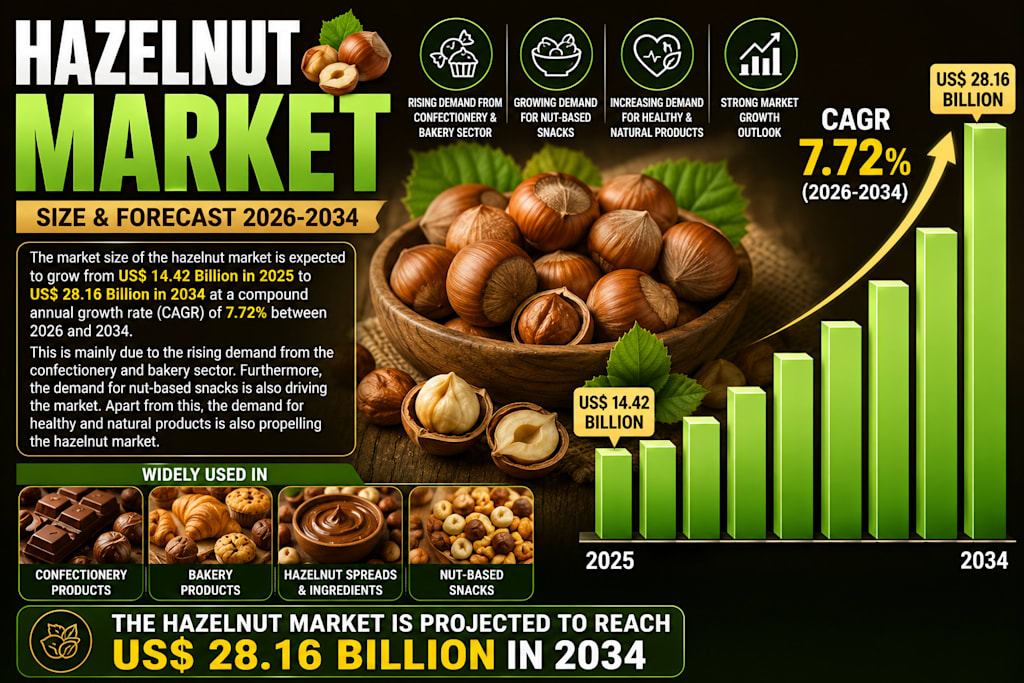
Renub Research forecasts the global hazelnut market to expand from US$ 14.42 billion in 2025 to US$ 28.16 billion by 2034, driven by growing demand from confectionery, bakery, and health-focused food industries.

Hazelnuts Are Becoming a Global Favorite in Premium and Health-Focused Foods
Consumer preferences in the global food industry are evolving rapidly. Health awareness, premium snacking trends, plant-based diets, and demand for natural ingredients are reshaping what people eat and how food manufacturers develop products. Among the ingredients benefiting strongly from these changes, hazelnuts are emerging as one of the fastest-growing categories across confectionery, bakery, snack foods, dairy alternatives, and functional nutrition products.
According to Renub Research, the global hazelnut market is expected to grow from US$ 14.42 billion in 2025 to US$ 28.16 billion by 2034, registering a strong compound annual growth rate (CAGR) of 7.72% during 2026–2034. This impressive growth reflects the expanding role of hazelnuts in both indulgent premium foods and healthier lifestyle-oriented products.
Hazelnuts have long been associated with chocolates and desserts, but their use is now expanding far beyond traditional confectionery. They are increasingly found in plant-based beverages, energy bars, granola, bakery products, gourmet snacks, cosmetics, and nutraceutical products. Their combination of rich flavor, nutritional benefits, and versatility is making hazelnuts a highly attractive ingredient for modern consumers and food manufacturers alike.
Why Hazelnuts Are Gaining Popularity Worldwide
Hazelnuts are edible nuts derived from the hazel tree, scientifically known as Corylus avellana. They are widely appreciated for their sweet, buttery flavor and nutritional profile. Hazelnuts contain healthy fats, plant-based protein, dietary fiber, vitamin E, magnesium, antioxidants, and several other nutrients associated with overall wellness and heart health.
Consumers increasingly prefer foods that combine indulgence with health benefits, and hazelnuts fit perfectly into this trend. Unlike highly processed snack products, hazelnuts are often perceived as natural, wholesome, and nutrient-dense. This positioning has helped them gain popularity among health-conscious consumers looking for cleaner and more nutritious food options.
The ingredient’s versatility also contributes significantly to its market growth. Hazelnuts are used in chocolates, pralines, spreads, cereals, cakes, cookies, snack bars, dairy alternatives, and premium desserts. Hazelnut oil is also increasingly used in gourmet cooking and personal care products. These broad applications are helping expand the market across multiple industries beyond traditional confectionery.
Confectionery and Bakery Industries Continue Driving Demand
One of the strongest growth drivers for the hazelnut market is the rising demand from the confectionery and bakery sectors. Hazelnuts are considered premium ingredients in chocolates, spreads, pralines, pastries, cookies, and gourmet desserts because of their rich flavor and texture.
Hazelnut-based spreads and chocolates have become globally popular products, especially in Europe and North America where premium confectionery consumption remains strong. Food manufacturers increasingly use hazelnuts to differentiate premium product offerings and enhance taste profiles. The popularity of hazelnut-filled chocolates, gourmet bakery products, and snack innovations continues to support steady demand growth worldwide.
The file highlights examples such as BelVita’s launch of Duo Crunch Choco Hazelnut breakfast biscuits, showing how major brands are incorporating hazelnuts into new convenience and snack formats. These innovations demonstrate how hazelnuts are becoming important ingredients in both indulgent and functional food categories.
As consumers continue seeking premium experiences in snacks and desserts, demand from the confectionery and bakery sectors is expected to remain one of the market’s strongest long-term growth engines.
Health-Conscious Consumers Are Expanding the Market
Growing awareness about nutrition and healthy eating habits is another major factor driving the hazelnut market. Consumers increasingly prefer natural and minimally processed foods that offer nutritional benefits while supporting active lifestyles. Hazelnuts are viewed as healthy snack options because they provide protein, fiber, healthy fats, and antioxidants.
Modern consumers are increasingly replacing traditional processed snacks with nuts and plant-based foods perceived as healthier alternatives. Hazelnuts are benefiting from this shift because they align with several modern dietary trends, including clean-label eating, heart-healthy diets, and plant-based nutrition.
The increasing popularity of preventive healthcare and wellness-focused lifestyles is also influencing purchasing behavior. Consumers now look for foods that provide functional benefits in addition to taste. Hazelnuts are increasingly used in energy bars, granola, healthy snack mixes, and nutraceutical products aimed at promoting wellness and long-term health.
This transition toward healthier snacking habits is expected to remain a major driver for hazelnut consumption globally over the coming decade.
Plant-Based Food Trends Are Creating New Opportunities
The rapid expansion of plant-based and vegan diets is opening entirely new growth opportunities for the hazelnut industry. Hazelnuts are increasingly used in plant-based dairy alternatives such as hazelnut milk, vegan spreads, and dairy-free desserts.
Consumers are becoming more interested in plant-based foods not only for health reasons but also because of sustainability and environmental concerns. Hazelnuts are being incorporated into vegan products that emphasize natural ingredients and nutritional value. Food companies are responding by developing innovative hazelnut-based products targeting consumers seeking dairy-free and plant-forward alternatives.
The file references companies such as CRAVERS, which are building product portfolios around plant-based hazelnut snacks designed to combine wellness with premium taste experiences. This reflects a broader industry movement where plant-based food innovation is becoming one of the strongest growth areas within the global food market.
As vegan and flexitarian lifestyles continue gaining traction worldwide, hazelnuts are expected to play a growing role in alternative dairy and plant-based nutrition categories.
Whole Hazelnuts Are Becoming Popular as Premium Snacks
Whole hazelnuts represent one of the most important product categories within the market. Consumers increasingly purchase whole hazelnuts in raw or roasted forms as healthy snacks or ingredients for home cooking and baking.
The growing popularity of minimally processed foods is benefiting this segment significantly. Many consumers now prefer snacks with simple ingredients and natural nutritional value rather than highly processed alternatives. Whole hazelnuts fit perfectly into this trend because they are perceived as natural, clean-label, and protein-rich snack options.
Whole hazelnuts are also widely used in desserts, cereals, gourmet dishes, and premium chocolate products, helping maintain strong demand from both consumers and foodservice providers.
Hazelnut Oil Is Expanding Beyond Food Applications
Hazelnut oil is another rapidly growing segment due to its nutritional properties and versatility. In the food industry, hazelnut oil is valued for its flavor and healthy fat composition, making it attractive for gourmet cooking and specialty food applications.
At the same time, hazelnut oil is increasingly being used in personal care and cosmetic products such as moisturizers, massage oils, and hair care formulations. Its light texture and nourishing properties make it appealing for natural beauty and skincare products.
As consumers increasingly seek organic and plant-based cosmetic ingredients, the demand for hazelnut oil is expected to rise further across the personal care industry.
Hazelnut Paste Continues to Power Premium Food Innovation
Hazelnut paste remains one of the most important ingredients in the food processing and confectionery sectors. Produced by grinding roasted hazelnuts into a smooth paste, it is widely used in premium spreads, fillings, chocolates, desserts, and bakery products.
The global popularity of chocolate-hazelnut spreads has significantly boosted this segment. Food manufacturers increasingly use hazelnut paste to create premium flavor profiles and richer textures in confectionery products.
Plant-based food trends are also increasing the use of hazelnut paste in vegan and dairy-free applications. As innovation continues across premium snacks and alternative food products, hazelnut paste is expected to remain a core ingredient in many new product launches.
Food and Beverage Industry Remains the Largest Application Segment
The food and beverage sector accounts for the largest share of hazelnut consumption globally. Hazelnuts are widely used in chocolates, cereals, bakery products, snack bars, desserts, spreads, and dairy alternatives.
The rise of premium snacking trends and healthier food preferences is particularly benefiting this segment. Hazelnuts provide flavor, texture, and nutritional value, making them highly attractive to food manufacturers aiming to create differentiated products.
Hazelnut milk is also becoming increasingly popular due to growing demand for plant-based beverages. As consumers continue seeking healthier and more natural ingredients, the food and beverage segment is expected to remain the dominant driver of market growth.
Hazelnuts Are Entering Pharmaceutical and Nutraceutical Markets
The pharmaceutical and nutraceutical industries are increasingly exploring the health benefits of hazelnuts. Rich in antioxidants, vitamins, healthy fats, and essential nutrients, hazelnut extracts and oils are now used in dietary supplements and wellness products.
These products are often marketed for heart health, skin wellness, inflammation management, and preventive healthcare applications. As consumers continue embracing natural and herbal wellness products, hazelnuts are becoming increasingly valuable ingredients in functional nutrition and nutraceutical formulations.
This expansion into health-focused applications highlights the growing versatility of hazelnuts beyond traditional food categories.
Regional Markets Continue Expanding Globally
The United States remains one of the strongest hazelnut markets due to high demand from confectionery, snack foods, and plant-based dairy alternatives. Consumers increasingly view hazelnuts as healthy ingredients suitable for daily diets and premium foods.
The United Kingdom market is benefiting from rising demand for premium confectionery and plant-based products, while India is emerging as a fast-growing market due to urbanization, rising disposable income, and growing interest in premium food experiences.
Saudi Arabia is also witnessing rising demand driven by health awareness, premium snacking trends, and increasing consumption of Western-style confectionery products. These regional developments show that hazelnut consumption is becoming increasingly global across both developed and emerging markets.
Supply Chain and Climate Risks Remain Major Challenges
Despite strong growth prospects, the hazelnut market faces several important challenges. Hazelnut cultivation depends heavily on suitable climate conditions, including stable rainfall and temperature patterns. Frost, droughts, and other extreme weather events can negatively impact crop yields and create supply shortages.
Production costs are also relatively high because hazelnut cultivation and harvesting require specialized labor, land, machinery, and processing infrastructure. Transportation, storage, and supply chain management further increase operational costs.
Since hazelnut production is concentrated in specific regions globally, disruptions caused by climate events or supply chain instability can create price volatility for manufacturers and consumers alike. Addressing these supply challenges will remain important for ensuring stable long-term market growth.
Final Thoughts
The global hazelnut market is benefiting from powerful consumer trends centered around premium foods, healthy snacking, plant-based diets, and natural ingredients. Hazelnuts are evolving from niche confectionery ingredients into versatile components used across food, beverage, nutraceutical, and personal care industries.
Renub Research’s projection of the market growing from US$ 14.42 billion in 2025 to US$ 28.16 billion by 2034 reflects the strong long-term demand outlook for hazelnut-based products worldwide. As consumers continue prioritizing wellness, premium taste experiences, and sustainable food choices, hazelnuts are expected to remain one of the most dynamic categories in the global food and nutrition industry for years to come.
About the Creator
Enjoyed the story? Support the Creator.
Subscribe for free to receive all their stories in your feed.
Comments
There are no comments for this story
Be the first to respond and start the conversation.