
Global Halal Food Market Set for Robust Expansion as Demand Surges Worldwide
Rising Muslim population, ethical food preferences, and global certification systems fuel a multi-trillion-dollar industry boom through 2034

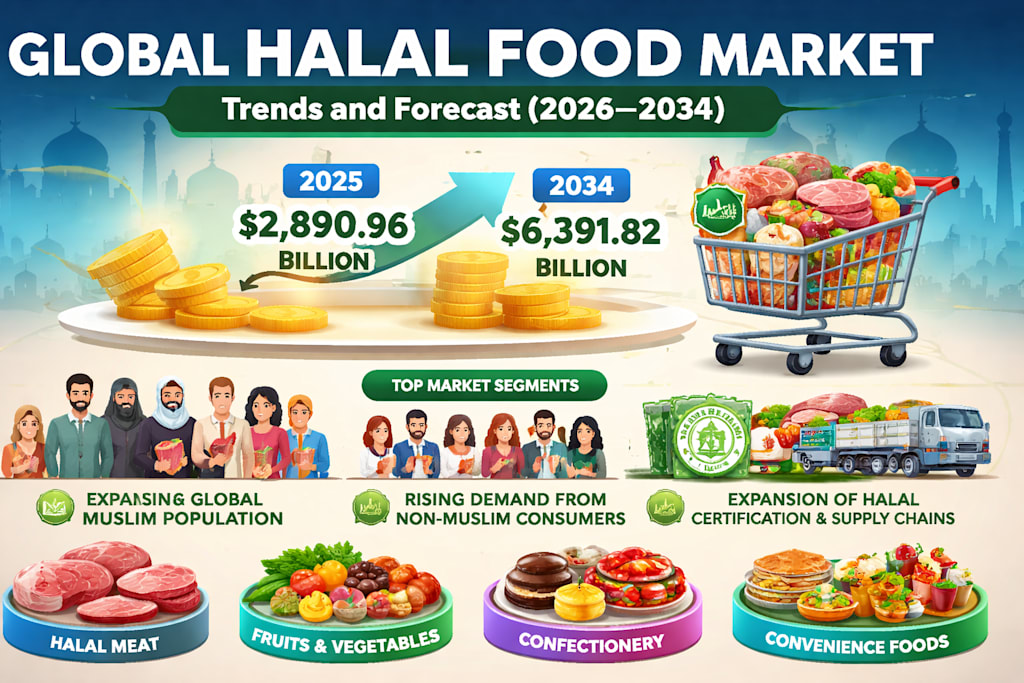
The global halal food market is entering a powerful growth phase, driven by demographic expansion, evolving consumer preferences, and increasing globalization of food standards. Once considered a niche segment catering primarily to Muslim consumers, halal food has now become a mainstream global industry, appealing to a broader audience seeking quality, hygiene, and ethical sourcing.
According to Renub Research, the halal food market is projected to grow from US$ 2,890.96 billion in 2025 to US$ 6,391.82 billion by 2034, expanding at a CAGR of 9.14% between 2026 and 2034. This remarkable growth reflects not only rising consumption among Muslim populations but also increasing acceptance among non-Muslim consumers worldwide.
Understanding Halal Food and Its Global Appeal
Halal food refers to products prepared and processed according to Islamic dietary laws outlined in the Quran. The term “halal” translates to “permissible,” encompassing strict guidelines related to ingredient sourcing, food preparation, hygiene, and ethical animal treatment.
Beyond religious compliance, halal food has gained recognition for its high standards of cleanliness, safety, and traceability. These qualities have positioned halal certification as a symbol of trust and quality assurance in the global food industry.
Today, halal products are widely consumed across regions such as the Middle East, Southeast Asia, Europe, and North America. The expansion of halal-certified restaurants, packaged foods, and multinational brand offerings has further accelerated its global reach.
Key Growth Drivers Transforming the Market
1. Expanding Global Muslim Population
One of the most significant drivers of the halal food market is the rapid growth of the global Muslim population. With Muslims expected to represent nearly 30% of the global population by 2050, demand for halal-certified products is rising steadily.
Urbanization and rising income levels are also influencing consumption patterns. Younger consumers, in particular, are seeking diverse, convenient, and ready-to-eat halal food options, pushing manufacturers to innovate and expand their product portfolios.
This demographic shift is not limited to Muslim-majority nations. Countries with growing Muslim populations are witnessing increased retail and foodservice demand, encouraging global brands to incorporate halal-certified offerings.
2. Rising Demand Among Non-Muslim Consumers
A notable trend reshaping the market is the growing acceptance of halal food among non-Muslim consumers. Increasingly, halal products are perceived as:
Cleaner and safer
Ethically produced
Higher in quality
This perception is driving demand in regions such as Europe and North America. In fact, surveys indicate that a significant proportion of non-Muslim consumers have tried halal food due to its perceived health and ethical benefits.
As a result, halal certification is evolving beyond a religious requirement into a universal standard of quality and trust, encouraging mainstream food brands to enter the segment.
3. Expansion of Certification and Global Supply Chains
The growth of halal certification bodies and improved global logistics networks has played a crucial role in market expansion. Standardized certification processes help build consumer trust while enabling cross-border trade.
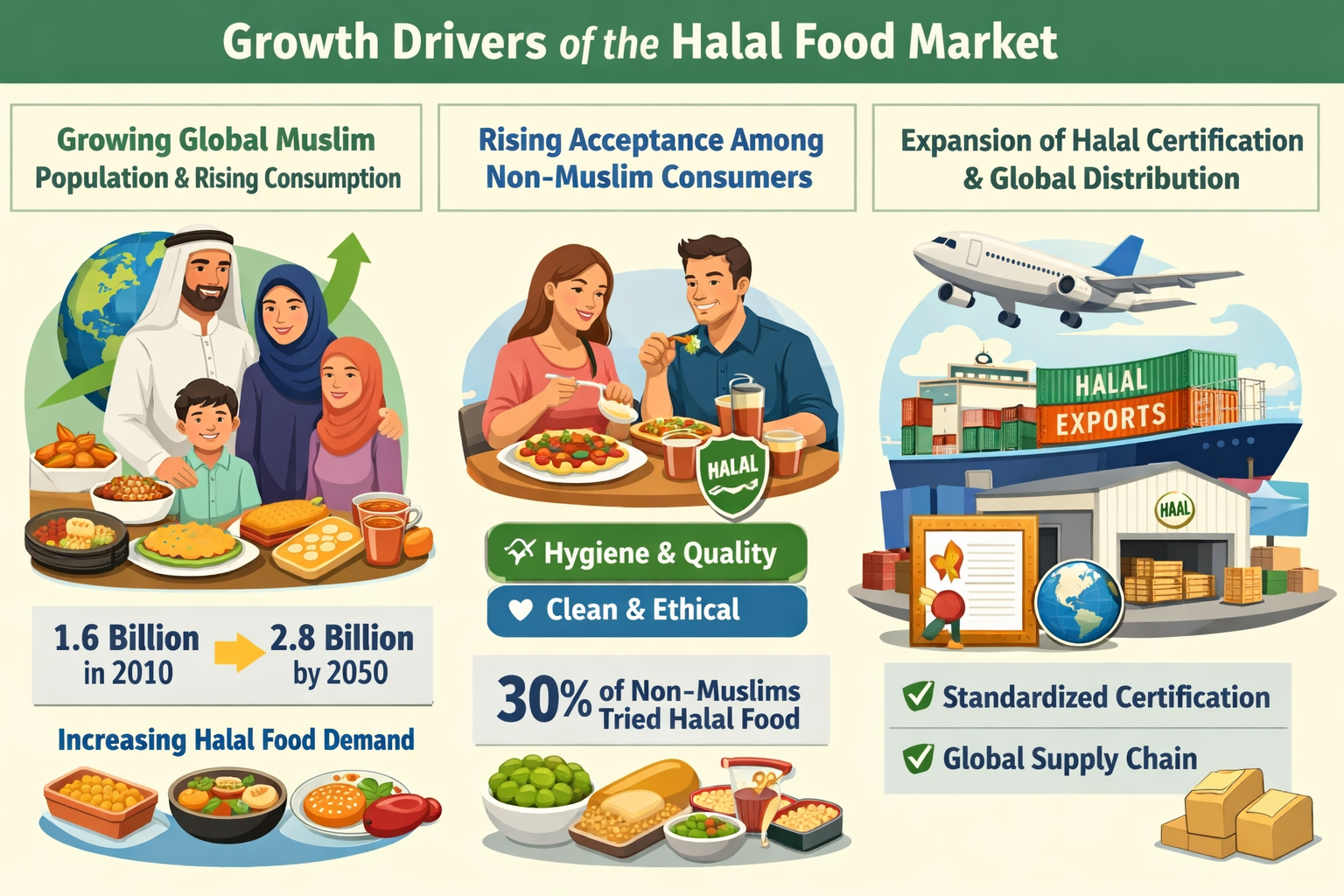
Governments and private organizations are investing in halal ecosystems, including:
Certification frameworks
Halal industrial parks
Specialized logistics and transportation systems
Advancements in e-commerce and modern retail have further enhanced accessibility, allowing halal products to reach global consumers efficiently.
Market Challenges Hindering Growth
Despite strong momentum, the halal food market faces several structural challenges.
Lack of Unified Global Standards
One of the biggest hurdles is the absence of a universal halal certification standard. Different countries and certification bodies often follow varying interpretations of halal guidelines, leading to:
Increased compliance costs
Trade barriers
Confusion among manufacturers
Companies operating globally must often obtain multiple certifications, which can slow expansion and increase operational complexity.
Supply Chain Integrity and Contamination Risks
Maintaining halal integrity across the supply chain is critical. Cross-contamination with non-halal substances during processing, storage, or transportation can compromise product authenticity.
Ensuring strict segregation, traceability, and monitoring requires significant investment. Any breach in compliance can severely impact brand reputation and consumer trust.
Segment Analysis: Key Areas of Growth
Halal Meat Market: The Dominant Segment
The halal meat segment remains the backbone of the industry. It includes poultry, beef, mutton, and lamb products processed according to Islamic guidelines.
Demand is driven by:
Population growth
Rising meat consumption
Increasing awareness of halal certification
Additionally, consumers often associate halal meat with better hygiene and ethical practices, further boosting demand.
Halal Fruits and Vegetables
While naturally halal, fruits and vegetables are increasingly being certified to ensure compliance during processing and packaging.
Growth in this segment is fueled by:
Demand for packaged fresh produce
Rising food safety awareness
Export opportunities to Muslim-majority regions
Halal Confectionery
The halal confectionery market is gaining traction as consumers seek certified chocolates, candies, and desserts.
Ingredients such as gelatin and emulsifiers require strict verification, making certification essential. Product innovation and premium offerings are further expanding this segment.
Convenience Stores and Retail Expansion
Urbanization and busy lifestyles are driving demand for halal convenience foods. Halal-certified convenience stores offer ready-to-eat meals, snacks, and beverages, catering to modern consumers.
Similarly, hypermarkets and supermarkets are expanding halal sections, making products more accessible and boosting consumer confidence.
Regional Insights: A Global Growth Story
United States
The halal food market in the U.S. is expanding steadily, supported by a diverse population and increasing demand for ethical food options.
Retailers and food brands are introducing halal-certified products across categories, while e-commerce and delivery platforms are improving accessibility nationwide.
United Kingdom
The UK boasts one of the most developed halal food markets in Europe. Strong infrastructure, widespread availability, and growing consumer awareness are driving growth.
Supermarkets are expanding private-label halal products, while innovation continues to shape the market landscape.
India
India plays a dual role as both a major consumer and exporter of halal food. The country’s large Muslim population and robust food processing industry support domestic demand and global trade.
Government policies and certification frameworks are strengthening export capabilities, particularly to the Middle East and Southeast Asia.
Saudi Arabia
As a predominantly Muslim country, Saudi Arabia represents a mature halal market where compliance is mandatory.
Strong demand for imported and processed food products, combined with government regulations, ensures high standards and consistent growth.
Competitive Landscape: Key Industry Players
The halal food market is highly competitive, with major global and regional players expanding their portfolios. Leading companies are focusing on:
Product innovation
Global distribution expansion
Strategic partnerships
Certification compliance
Key players include multinational corporations and regional specialists offering a wide range of halal-certified products, from meat and dairy to snacks and ready-to-eat meals.
Future Outlook: A Transformative Decade Ahead
The halal food market is poised for sustained growth over the next decade, driven by a combination of demographic, economic, and cultural factors.
Key trends shaping the future include:
Digitalization of halal certification and traceability
Growth of halal e-commerce platforms
Increased investment in halal tourism and hospitality
Expansion into new product categories such as plant-based halal foods
As consumer awareness continues to rise, halal food is expected to evolve into a global benchmark for ethical and high-quality consumption.
Final Thoughts
The global halal food market is no longer confined to religious boundaries—it has transformed into a dynamic and rapidly expanding industry with universal appeal. Driven by population growth, ethical consumption trends, and global trade integration, the market is on track to nearly double in size by 2034.
While challenges such as certification inconsistencies and supply chain risks persist, ongoing innovation and regulatory advancements are expected to address these issues.
For businesses, the message is clear: halal is not just a niche—it is a global opportunity. Companies that invest in quality, transparency, and certification will be well-positioned to capitalize on this multi-trillion-dollar market.
About the Creator
Enjoyed the story? Support the Creator.
Subscribe for free to receive all their stories in your feed.
Comments
There are no comments for this story
Be the first to respond and start the conversation.