
Global Ginger Market Set for Robust Growth as Demand for Natural Health Ingredients Continues to Rise
Increasing use of ginger in food, beverages, pharmaceuticals, and traditional medicine is driving strong global market expansion through 2034.

For centuries, ginger has been valued across cultures for its unique flavor, medicinal properties, and versatility in cooking. From traditional remedies in Asia and the Middle East to modern wellness beverages in North America and Europe, this humble rhizome has become one of the world's most widely used natural ingredients.
Today, ginger is experiencing a global resurgence. Consumers are increasingly seeking natural, plant-based ingredients that support health and wellness, while food manufacturers, pharmaceutical companies, and nutraceutical brands continue to expand their use of ginger in innovative products.
As demand for clean-label foods, herbal supplements, and functional beverages grows, ginger is emerging as one of the most sought-after natural ingredients in the global marketplace.
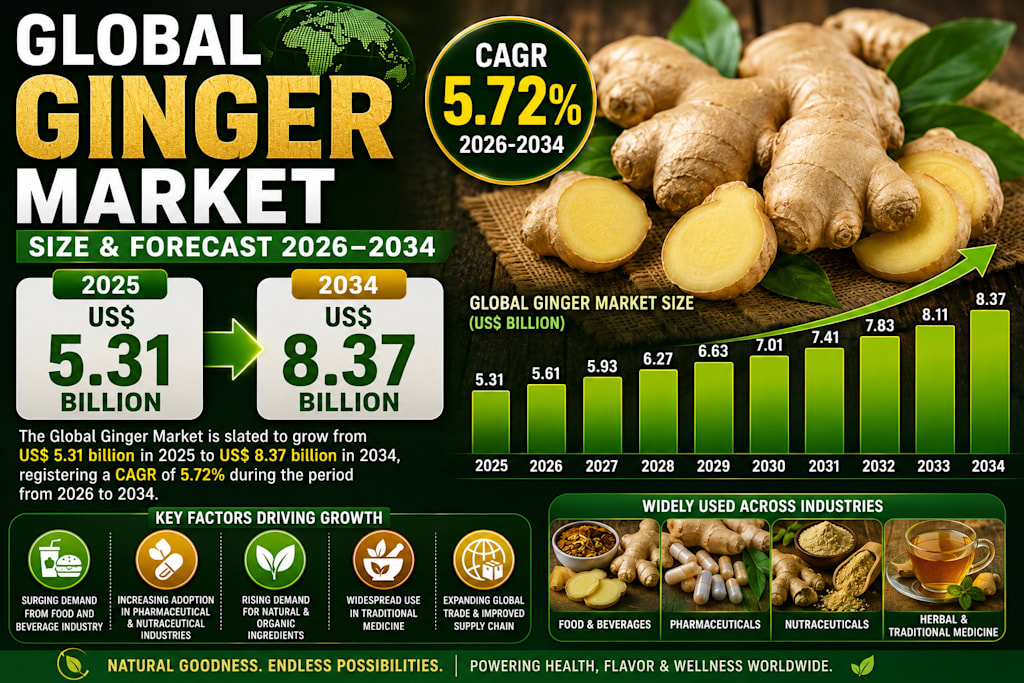
According to Renub Research, the Global Ginger Market is projected to grow from US$5.31 billion in 2025 to US$8.37 billion by 2034, registering a compound annual growth rate (CAGR) of 5.72% between 2026 and 2034. Rising consumer awareness of health benefits, expanding industrial applications, and growing popularity of traditional medicine are expected to drive this impressive growth.
Ginger's Unique Appeal Continues to Drive Global Demand
Ginger is much more than a culinary spice. Derived from the rhizome of the ginger plant, it has long been recognized for its distinctive aroma, spicy flavor, and therapeutic properties.
The active compounds found in ginger, including gingerol and shogaol, are known for their antioxidant, anti-inflammatory, and immune-supporting characteristics. These properties have contributed to ginger's enduring popularity in both traditional and modern healthcare systems.
Today, ginger is available in multiple forms, including fresh, dried, powdered, preserved, pickled, crystallized, and concentrated extracts. This versatility enables manufacturers to incorporate it into a wide range of products across numerous industries.
From herbal teas and health supplements to bakery products and pharmaceuticals, ginger continues to demonstrate remarkable commercial value.
Health-Conscious Consumers Are Fueling Market Growth
One of the strongest drivers behind the global ginger market is the growing focus on health and wellness.
Consumers worldwide are becoming increasingly aware of the relationship between diet and overall health. This shift has encouraged greater demand for natural ingredients that offer functional benefits beyond basic nutrition.
Ginger has benefited significantly from this trend because it is widely associated with digestive support, immune health, inflammation management, and general wellness.
Many consumers view ginger as a natural alternative to synthetic ingredients and pharmaceutical products, making it particularly attractive in today's health-focused marketplace.
As preventive healthcare and wellness lifestyles continue gaining popularity, demand for ginger-based products is expected to increase steadily.
Functional Foods Are Creating New Opportunities
The global functional food movement has become one of the most important growth drivers for the ginger industry.
Consumers increasingly seek foods and beverages that provide additional health benefits beyond traditional nutrition. Products containing ginger are often marketed as supporting digestion, immunity, and overall well-being.
This has led to growing demand for ginger-infused beverages, wellness shots, herbal teas, snacks, soups, sauces, and nutritional supplements.
Manufacturers are responding by developing innovative products that incorporate ginger as a key functional ingredient.
As consumer interest in wellness-focused foods continues to expand, the role of ginger within the functional food sector is expected to grow significantly.
Food and Beverage Applications Continue Expanding
The food and beverage industry remains one of the largest consumers of ginger worldwide.
Its distinctive flavor profile makes it a popular ingredient in a wide variety of products, including baked goods, confectionery items, sauces, marinades, soups, beverages, and ready-to-eat meals.
Ginger is particularly valued because it can enhance flavor while simultaneously providing health-related benefits.
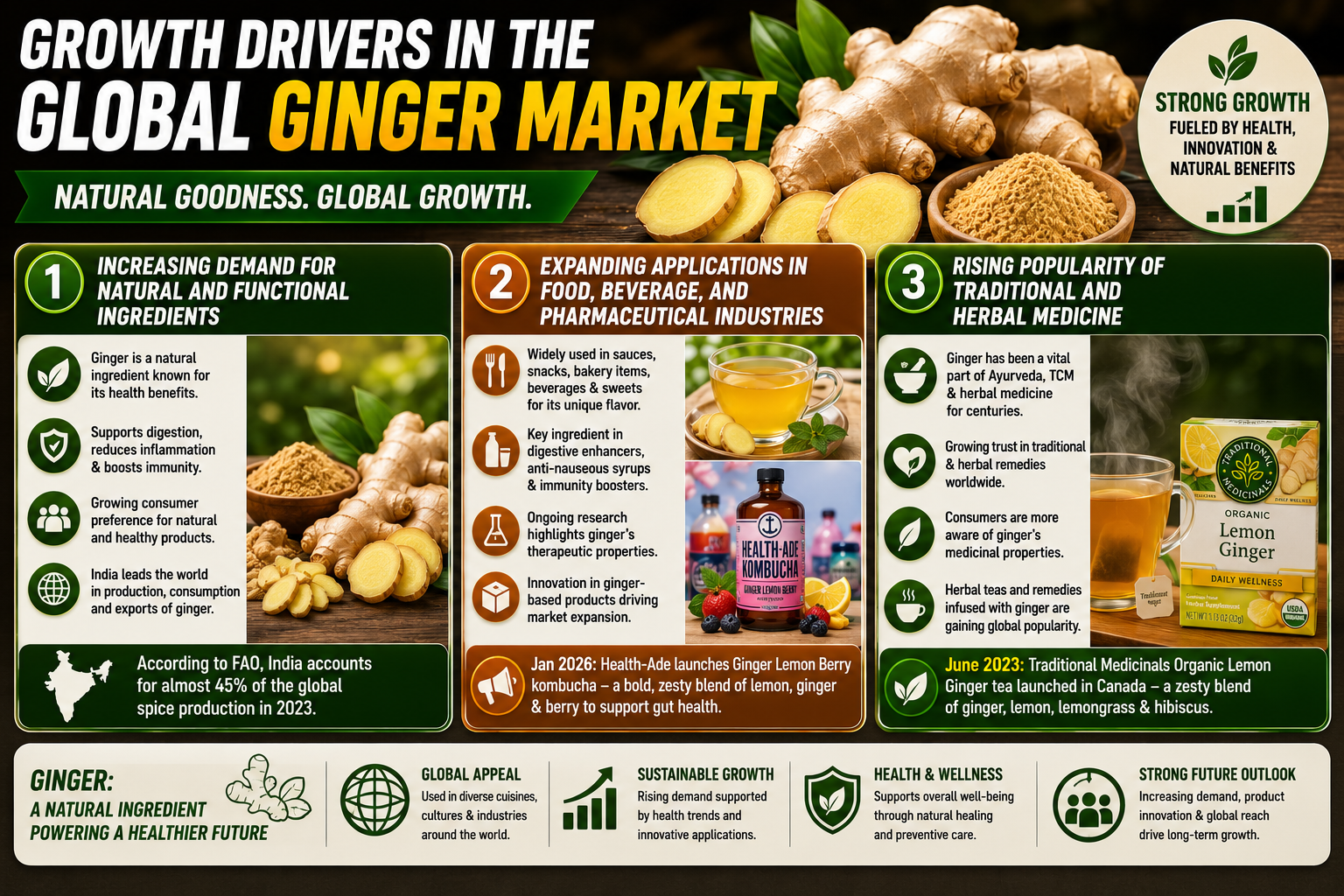
Beverage manufacturers have increasingly embraced ginger in products such as kombucha, herbal teas, flavored waters, functional drinks, and premium wellness beverages.
The growing popularity of natural flavors and clean-label products has further strengthened demand for ginger across food and beverage applications.
As consumers continue seeking healthier alternatives, ginger's role within the industry is expected to expand even further.
Pharmaceuticals and Nutraceuticals Drive New Growth
The pharmaceutical and nutraceutical industries are becoming increasingly important contributors to ginger market growth.
Research continues to highlight ginger's potential role in supporting digestive health, reducing nausea, managing inflammation, and promoting immune function. These findings have encouraged manufacturers to incorporate ginger into a growing range of health products.
Today, ginger is commonly used in dietary supplements, digestive aids, anti-nausea formulations, herbal remedies, and immunity-support products.
The global trend toward preventive healthcare has further accelerated demand for natural health ingredients.
Consumers are increasingly willing to invest in products that support long-term wellness, creating substantial opportunities for ginger-based nutraceutical innovations.
Traditional Medicine Continues to Influence Consumption
The resurgence of traditional and herbal medicine is another major factor supporting market growth.
For thousands of years, ginger has played a central role in traditional healing systems such as Ayurveda, Traditional Chinese Medicine, and various herbal medicine practices throughout Asia, Africa, and the Middle East.
These systems have long recognized ginger's therapeutic potential for treating digestive disorders, respiratory conditions, inflammation, and general health concerns.
Today, many consumers are rediscovering traditional remedies and integrating them into modern wellness routines.
This renewed interest in herbal medicine has significantly increased demand for ginger products worldwide.
As trust in natural remedies continues to grow, ginger's importance within traditional and complementary healthcare systems is expected to remain strong.
Fresh Ginger Maintains Strong Global Demand
Fresh ginger remains one of the most widely consumed forms of the product.
Households, restaurants, foodservice providers, and traditional medicine practitioners all rely on fresh ginger because of its intense flavor, aroma, and bioactive compounds.
Fresh ginger is particularly popular among consumers seeking minimally processed ingredients and natural food solutions.
Growing interest in fresh cooking, healthy eating, and plant-based diets has contributed to increasing demand for fresh ginger across both developed and emerging markets.
Although fresh ginger requires careful storage and handling due to its perishability, its popularity remains strong due to its perceived authenticity and nutritional value.
Ginger Powder Offers Convenience and Versatility
Among processed ginger products, ginger powder continues to experience strong growth.
Its long shelf life, ease of storage, and versatility make it highly attractive for both consumers and manufacturers.
Ginger powder is widely used in baking, spice blends, nutritional supplements, beverages, and packaged food products.
Its convenience aligns well with modern consumer lifestyles and industrial manufacturing requirements.
As global demand for convenience foods continues to increase, ginger powder is expected to remain one of the fastest-growing segments within the market.
Pickled and Preserved Ginger Benefit from Global Cuisine Trends
The increasing popularity of international cuisine is creating new opportunities for specialized ginger products.
Pickled ginger, commonly associated with Japanese cuisine and sushi, has gained widespread acceptance beyond traditional markets. Consumers appreciate its unique flavor and digestive properties, making it a popular accompaniment to various dishes.
Preserved ginger also continues to maintain steady demand, particularly within confectionery, bakery, and festive food categories.
These specialty products benefit from growing consumer interest in global flavors and authentic culinary experiences.
As international cuisine becomes increasingly mainstream, demand for value-added ginger products is expected to grow steadily.
India Remains a Global Ginger Powerhouse
India occupies a uniquely important position within the global ginger market.
The country is among the world's largest producers, consumers, and exporters of ginger. Ginger plays an essential role in Indian cuisine, traditional medicine, and cultural practices.
Government initiatives supporting spice cultivation and exports have further strengthened India's position within the global market.
The country's rich agricultural expertise and extensive production capacity continue to support international supply chains.
As global demand for ginger grows, India is expected to remain a key supplier and market influencer.
The United States Embraces Functional Ingredients
The United States ginger market continues to benefit from growing consumer interest in natural health products and functional foods.
American consumers increasingly use ginger in cooking, herbal teas, nutritional supplements, wellness beverages, and digestive health products.
The popularity of kombucha, immunity-support drinks, and plant-based wellness products has significantly increased ginger consumption.
Restaurants specializing in Asian and fusion cuisine also contribute to market growth by incorporating ginger into a wide range of dishes.
As awareness of natural health ingredients continues expanding, the U.S. market is expected to experience sustained growth.
The United Kingdom Sees Rising Demand
The United Kingdom is another important market experiencing increasing ginger consumption.
Health-conscious consumers are driving demand for ginger-infused teas, herbal beverages, baked goods, and wellness products.
The growing popularity of Asian, Caribbean, and Middle Eastern cuisines has also expanded ginger's role in home cooking and foodservice applications.
Retailers have responded by offering a broader range of ginger-based products across multiple categories.
As wellness trends continue influencing consumer behavior, the UK market is expected to maintain steady growth.
Saudi Arabia Benefits from Culinary and Wellness Trends
Saudi Arabia's ginger market is supported by both traditional culinary practices and increasing health awareness.
Ginger remains a common ingredient in Middle Eastern cuisine and herbal remedies. Rising demand for immunity-supporting ingredients and natural wellness products has further strengthened consumption.
The country's growing expatriate population has also contributed to greater demand for international cuisines that frequently utilize ginger.
These factors position Saudi Arabia as an increasingly important market within the broader Middle Eastern region.
Supply Chain Challenges Continue to Affect the Market
Despite strong growth prospects, the ginger industry faces several important challenges.
One of the most significant concerns is price volatility caused by weather conditions, crop diseases, and seasonal fluctuations. Because ginger production depends heavily on agricultural conditions, supply disruptions can have a substantial impact on availability and pricing.
Extreme weather events, changing climate patterns, and crop diseases can reduce harvest volumes and create market instability.
These challenges affect farmers, processors, exporters, and manufacturers throughout the supply chain.
Improving supply chain resilience remains a critical priority for the industry.
Quality and Regulatory Compliance Remain Important
Maintaining consistent product quality is another key challenge.
Variations in cultivation methods, harvesting practices, processing techniques, and storage conditions can significantly affect ginger quality, potency, and shelf life.
Additionally, producers must comply with increasingly strict food safety regulations regarding pesticide residues, contaminants, labeling requirements, and quality standards.
Meeting these requirements often increases production costs and operational complexity.
However, compliance is essential for maintaining consumer trust and accessing international markets.
Final Thoughts
The global ginger market is entering a period of sustained growth driven by changing consumer preferences, expanding industrial applications, and growing awareness of natural health solutions.
As demand for functional foods, herbal remedies, clean-label products, and wellness-focused ingredients continues to rise, ginger is positioned to play an increasingly important role across multiple industries.
With the market projected to grow from US$5.31 billion in 2025 to US$8.37 billion by 2034, opportunities remain substantial for farmers, processors, exporters, manufacturers, and investors worldwide.
While challenges related to supply chain stability, quality management, and regulatory compliance persist, continued innovation and growing consumer demand are expected to support long-term market expansion.
From traditional medicine and culinary applications to cutting-edge wellness products, ginger's remarkable versatility ensures that it will remain one of the world's most valuable and widely utilized natural ingredients for years to come.
About the Creator
Enjoyed the story? Support the Creator.
Subscribe for free to receive all their stories in your feed.
Comments
There are no comments for this story
Be the first to respond and start the conversation.