
Global Game-based Learning Market Is Entering a New Growth Era
Rising demand for digital classrooms, interactive corporate training, and AI-powered learning tools is turning game-based learning from a niche concept into a mainstream global education strategy.

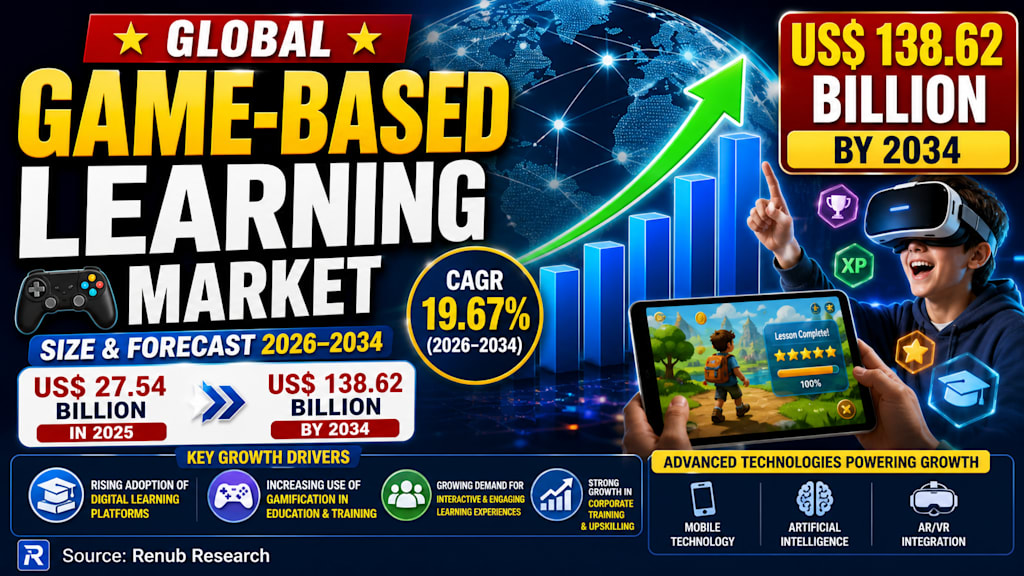
The global game-based learning market is moving into one of its strongest growth phases yet. According to Renub Research, the market is expected to rise from US$ 27.54 billion in 2025 to US$ 138.62 billion by 2034, expanding at a CAGR of 19.67% from 2026 to 2034. That scale of growth reflects more than a temporary trend. It signals a structural shift in how schools, universities, training departments, and consumer learning platforms approach education. Interactive learning is no longer a novelty. It is becoming a standard expectation.
At its core, game-based learning uses challenges, rewards, competition, storytelling, levels, and progress-based mechanics to make education more active and memorable. Instead of simply reading or listening, learners participate. They solve problems, unlock milestones, receive immediate feedback, and build confidence through repetition and progression. The model works across digital platforms, apps, simulations, and hybrid learning formats, and it is now widely used in academic learning, workforce development, and self-paced consumer education.
Why game-based learning is gaining momentum
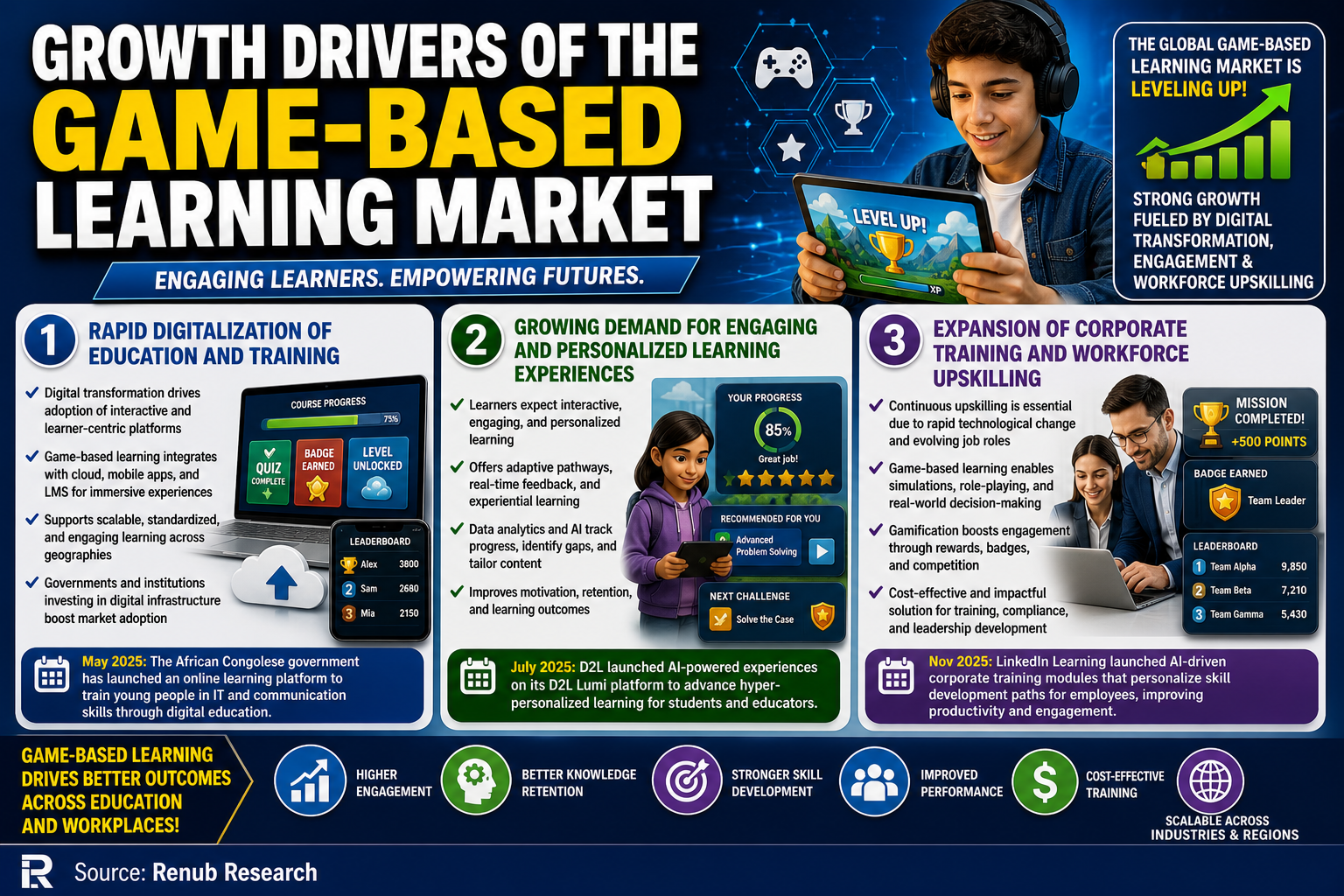
One of the biggest reasons behind the market’s rise is the rapid digitalization of education and training. Schools and companies are increasingly shifting away from traditional one-way instruction and toward tools that are more interactive, more measurable, and easier to scale. Game-based learning fits that shift perfectly because it combines technology with engagement. Cloud platforms, mobile apps, and learning management systems are now integrating quizzes, scenarios, simulations, and leaderboards into regular teaching and training workflows.
The demand for more engaging and personalized learning is also pushing adoption forward. Modern learners, especially younger digital natives, expect content that is dynamic and responsive to their pace. Game-based learning delivers that through adaptive difficulty, real-time feedback, and progress tracking. AI and analytics further strengthen this approach by helping platforms identify skill gaps and adjust the learning path accordingly. That makes the experience more relevant and improves retention.
Corporate training is another major engine of growth. As businesses face constant technological change, they need faster and more effective ways to upskill and reskill employees. Game-based learning is especially useful here because it can simulate real-world decision-making, leadership situations, compliance tasks, and technical challenges in a low-risk environment. Badges, rewards, and competitive elements also improve participation in training programs that might otherwise feel routine or mandatory.
Challenges remain, especially around cost and adoption
Despite its potential, game-based learning is not without obstacles. High development costs remain a major barrier, especially for advanced platforms that require instructional designers, subject experts, developers, and UX specialists working together. Building a strong educational game is far more complex than creating a standard online lesson. Content also needs frequent updates to stay aligned with curriculum changes, industry standards, or new training goals, which adds recurring expense.
Adoption resistance is another issue. In some schools and organizations, decision-makers still see games as entertainment rather than serious learning tools. Others worry about screen time, unfamiliar interfaces, or a lack of clear proof of results. These concerns slow adoption, especially where budgets are tight or digital literacy is uneven. Yet as more institutions report measurable improvements in motivation, participation, and retention, resistance is likely to soften over time.
Services, online delivery, cloud deployment, and AI are shaping the market
The market is not just about software products. The services segment is a major part of the value chain because many institutions and businesses need help with consultation, custom development, integration, localization, and ongoing support. Service providers play a key role in turning a good idea into a practical and effective learning product. This is especially important for organizations that want solutions aligned with business objectives such as compliance training, leadership development, or academic performance.
The online game-based learning market is expanding quickly because it works well in remote and hybrid environments. Learners can access content from anywhere, and organizations can roll out standardized programs across locations without being limited by physical classrooms. Social features such as multiplayer modes and competition add more value by improving engagement and retention.
Cloud deployment is also becoming increasingly important. Cloud-based game-based learning solutions offer scalability, faster updates, lower upfront costs, and real-time analytics. They are easier to maintain than on-premise systems and can integrate with learning management systems, HR tools, and collaboration platforms. For schools and businesses trying to modernize quickly, cloud delivery is often the most practical model.
AI is emerging as one of the most powerful growth levers in the market. AI-based game-based learning platforms can adapt in real time to learner performance, adjusting content and challenge levels dynamically. They can also provide predictive insights, automate assessments, and support more personalized learning journeys. In education and corporate training alike, that means better engagement and more efficient skill development.
Education and consumer learning are expanding the addressable market
Within the broader market, game-based education learning remains one of the most important segments. Schools and universities use educational games to teach math, science, language, and history in ways that are more interactive and memorable. The format helps teachers reach different types of learners and supports competency-based instruction. Digital classrooms and classroom technology initiatives are further boosting adoption.
The consumer learning segment is also growing as more individuals seek flexible ways to learn outside formal institutions. Language learning, financial literacy, coding basics, and brain training are all popular areas for game-based apps. Consumers respond well to short, rewarding, mobile-first experiences that fit into daily routines. Subscription models and freemium formats make these platforms accessible, while progress tracking and social competition keep users engaged over time.
Regional outlook: the U.S., France, India, and Saudi Arabia stand out
The United States remains one of the most advanced markets for game-based learning. Strong digital infrastructure, high education spending, and a mature corporate training ecosystem all support growth. U.S. schools and universities use these tools to improve engagement and STEM outcomes, while enterprises use them for onboarding, compliance, and leadership training. The market is also benefiting from AI, analytics, cloud platforms, and AR/VR innovation.
In France, growth is steady and increasingly structured. Schools and universities are adopting game-based tools for curriculum support, language learning, and problem-solving, while businesses are using them for professional development and employee engagement. The emphasis in France tends to be on pedagogical quality, academic alignment, and culturally relevant content, which creates strong demand for localized solutions.
India is one of the fastest-growing markets because of its young population, expanding smartphone use, and strong demand for accessible education. Game-based learning is widely used in K–12 education, exam preparation, language learning, and skill development. Mobile-first platforms and affordable pricing models are especially important in this market, where scalability and accessibility matter greatly.
In Saudi Arabia, game-based learning is gaining traction as part of broader education modernization efforts. Schools, universities, vocational programs, and government-linked training initiatives are adopting interactive tools to improve engagement and skill development. High smartphone penetration and growing acceptance of e-learning are helping the market mature, while localization and cultural relevance remain important for long-term success.
The strategic picture for investors and providers
From a market perspective, game-based learning sits at the intersection of education, technology, and behavioral design. That makes it one of the more attractive categories in edtech because it does not rely on a single use case. It can serve students, employees, government agencies, and consumers. It also benefits from multiple technology trends at once: mobile learning, cloud computing, AI, analytics, and immersive experiences such as AR and VR.
The competition is also becoming more visible. The market includes companies such as Badgeville (CallidusCloud), Bunchball (BI WORLDWIDE), Classcraft Studios Inc., Six Waves Inc., Recurrence, Inc., Gametize Pte. Ltd., Kuato Studios, BreakAway Ltd., Inc., Filament Games, and LearningWare, Inc. These players reflect the broad ecosystem behind the market, from platform development to gamified learning solutions and services.
Recent developments in the file also point to how fast the sector is evolving. Universities, nonprofits, governments, and learning platforms are actively launching or expanding initiatives tied to AI-powered personalization, play-based learning, and digital skills development. That shows the market is not only expanding in size but also deepening in sophistication.
Final thoughts
The global game-based learning market is no longer just about making lessons more fun. It is about making learning more effective, measurable, adaptable, and scalable. As digital education becomes more mainstream and organizations continue to invest in workforce development, game-based learning is likely to move even further into the center of modern education and training strategy. With Renub Research projecting growth from US$ 27.54 billion in 2025 to US$ 138.62 billion by 2034, the opportunity is both large and long-term.
About the Creator
Enjoyed the story? Support the Creator.
Subscribe for free to receive all their stories in your feed.
Comments
There are no comments for this story
Be the first to respond and start the conversation.